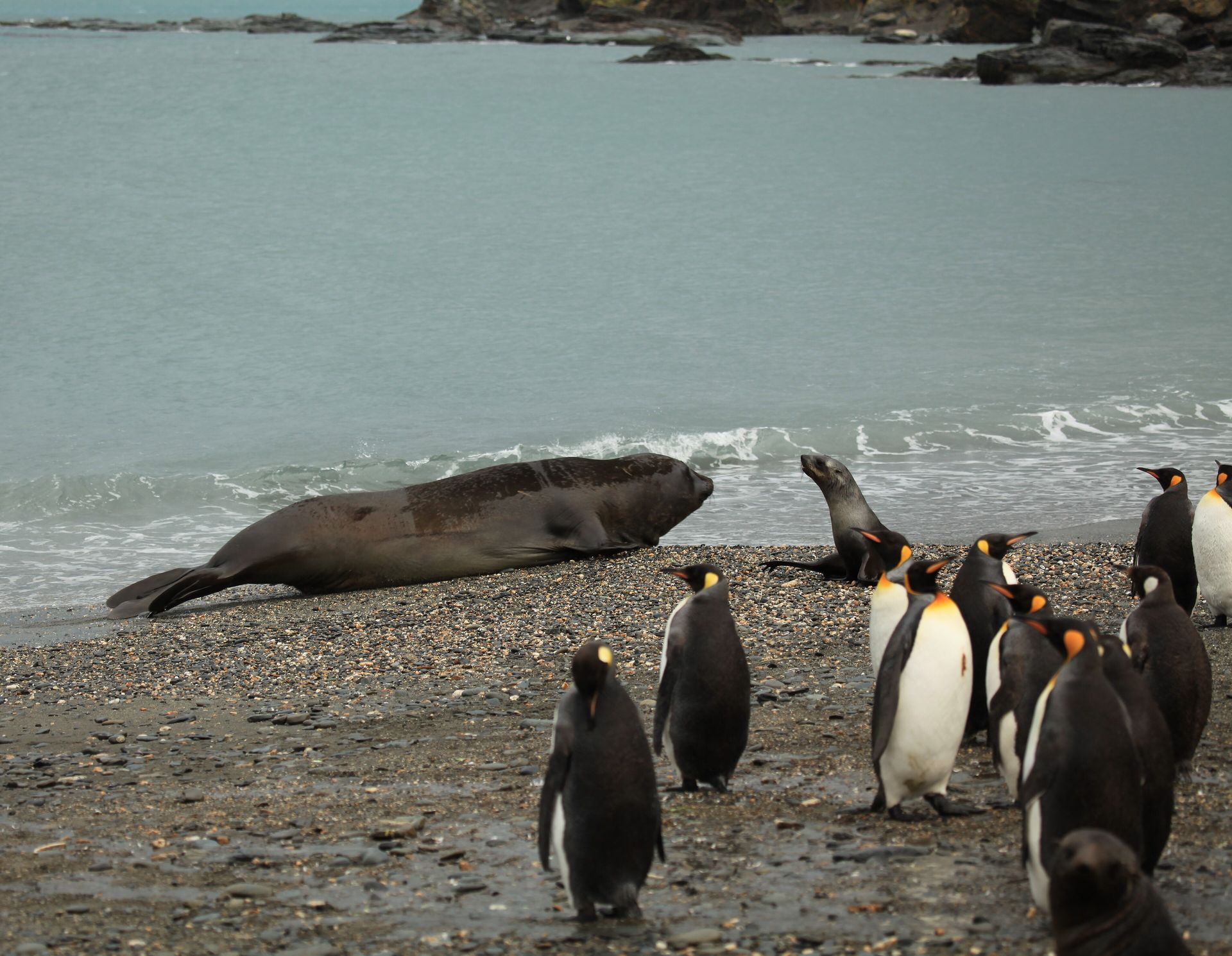
Wildlife of Antarctica
What animals live in Antarctica and where travelers see them: penguins, seals, whales and seabirds on the Peninsula, South Georgia, the Falklands and the Ross Sea, with a month-by-month wildlife calendar and trip prices.
What animals live in Antarctica?
Penguins, seals, whales and seabirds, nearly all of them feeding in the sea. Antarctica has no native land mammals; one of the largest animals living entirely on the continent is a springtail under a tenth of an inch long. Around it live five breeding penguin species, six seals, eight large whales and over 100 million breeding seabirds, all fed by an estimated 400 million tonnes of krill.
Facts checked October 15, 2026 against 51 sources.
Wildlife of Antarctica facts
- July: no trips
- August: no trips
- September: no trips
- October: no trips
- November: best
- December: best
- January: best
- February: best
- March: best
- April: no trips
- May: no trips
- June: no trips
Best Season
- Where to see
- Mostly at sea and on the coast: the Antarctic Peninsula and South Shetland Islands, the Weddell and Ross seas, and the sub-Antarctic islands of South Georgia and the Falklands.
- Best months
- November to March
- Population
- Over 100 million breeding seabirds; about 20 million breeding pairs of penguins in the Antarctic region; about 15 million crabeater seals; an estimated 400 million tonnes of Antarctic krill
- Status
- Varies by species (IUCN): in April 2026 the IUCN announced the emperor penguin and Antarctic fur seal as Endangered and the southern elephant seal as Vulnerable; the Antarctic blue whale is listed as a Critically Endangered subspecies
Antarctica's animals live in and around the sea, not on the land.1 The penguins, seals and seabirds a visitor comes for all feed at sea and come ashore or onto the ice mainly to breed, rest or molt. Which ones you see depends mostly on where your ship goes (the Antarctic Peninsula, South Georgia, the Falkland Islands or the Ross Sea) and on the month. This page is the overview; each group links to its own guide.
What animals live in Antarctica?
Penguins, seals, whales and seabirds, nearly all of them fed directly or indirectly by Antarctic krill, a shrimp-like crustacean at the base of the food web.1 There is an estimated 400 million tonnes of it in the Southern Ocean.2
| Group | What you can see | Scale |
|---|---|---|
| Penguins | Emperor, Adélie, chinstrap, gentoo and macaroni in Antarctica; king, rockhopper and Magellanic on the way | About 20 million breeding pairs in the Antarctic region3 |
| Seals | Weddell, crabeater, leopard, Ross, Antarctic fur and southern elephant seals | Crabeaters alone number about 15 million4 |
| Whales | Humpback, minke, killer, fin, blue, sei, southern right and sperm whales | About 515,000 Antarctic minkes (IWC estimate for 1991/92 to 2003/04)5 |
| Flying seabirds | Albatrosses, petrels, prions, skuas, gulls and terns | Over 100 million breeding birds6 |
| Fish | Icefish, which have no red blood cells, and fish with antifreeze in their blood1 | Not counted |
| Land animals | Springtails, mites, nematode worms, tardigrades | Mites and springtails at several thousand per square meter on some islands7 |
Are there land animals in Antarctica?
Only tiny ones. There are no naturally occurring land mammals, reptiles or amphibians on the Antarctic continent, and one of the largest animals to live its whole life there is a springtail under a tenth of an inch (1 to 2 mm) long.1 The most common land animals are nematode worms, water bears (tardigrades), rotifers, springtails and mites, and many survive temperatures below freezing without freezing themselves.7 The "land animals" you will photograph are sea animals ashore: penguins, seals and nesting seabirds.
Which penguins live in Antarctica?
Five breed in Antarctica: the emperor and the Adélie, the only two that make the continent their true home, and the chinstrap, gentoo and macaroni on the northern tip of the Peninsula.3 Voyages that call at South Georgia and the Falklands add three more. Our penguin species guide compares all 18; each of these has its own page:
| Penguin | Where travelers see it | Our guide |
|---|---|---|
| Emperor | Breeds on sea ice around the continent; helicopter voyages try for the Snow Hill Island colony in November and December38 | Emperor penguin, Snow Hill Island |
| Adélie | Antarctic coasts; Cape Adare in the Ross Sea is the largest Adélie colony in Antarctica, 504,332 pairs in 20189 | Adélie penguin |
| Chinstrap and gentoo | With the Adélie, the penguins Quark names for its South Shetland and Peninsula landings10 | Chinstrap penguin, gentoo penguin |
| King | South Georgia, about 450,000 pairs, present all year because breeding takes 14 months11 | King penguin |
| Macaroni | South Georgia's most abundant penguin, with more than 1 million pairs11 | Macaroni penguin |
| Rockhopper and Magellanic | The Falklands, where they breed with gentoo, king and macaroni penguins12 | Rockhopper penguin, Magellanic penguin |
What seals live in Antarctica?
Six. Four live on the sea ice (Weddell, crabeater, leopard and Ross seals), and two breed in dense colonies on beaches north of the pack ice (the Antarctic fur seal and the southern elephant seal).13 With no land predators, Antarctic seals show little fear of people.13
| Seal | Size | Where travelers see it | Pups born | IUCN status |
|---|---|---|---|---|
| Weddell | About 10 ft (3 m), 880 to 1,100 lb (400 to 500 kg)14 | Coastal fast ice; the most southerly mammal living permanently on the continent; 50 to 100 at Larsen Harbour, South Georgia1411 | October14 | Least Concern |
| Crabeater | About 8 ft (2.5 m), 880 lb (400 kg)4 | Pack-ice floes, where it spends its whole life; the Southern Ocean's most abundant seal4 | Late September to early November4 | Least Concern |
| Leopard | Females about 10 ft (3 m) and 815 lb (370 kg), slightly larger than males15 | Pack ice and near penguin colonies; a winter visitor to South Georgia1511 | November15 | Least Concern |
| Ross | About 10 ft (3 m), 440 lb (200 kg)16 | Rare and little known; lives mainly on the densest pack ice16 | Not stated by the AAD | Least Concern |
| Antarctic fur seal | Males up to 440 lb (200 kg), females about 90 lb (40 kg)17 | South Georgia beaches above all; also the South Shetlands1117 | Late November to early January17 | Endangered |
| Southern elephant seal | Males up to 8,800 lb (4,000 kg)13 | South Georgia, with about 400,000, roughly half the world's; Sea Lion Island in the Falklands; Hannah Point, South Shetlands, in March111819 | October on South Georgia11 | Vulnerable |
Status is each species' IUCN category as published on GBIF, read October 15, 2026.20 Two changed in April 2026: the Antarctic fur seal fell from an estimated 2,187,000 mature seals in 1999 to 944,000 in 2025 as warming seas pushed krill deeper, and avian flu killed more than 90% of newborn elephant seal pups in some colonies.21 Treat older fur seal counts with care. The South Georgia government's 2023 description of the island still gives about 4 million there, 95% of the world's breeding population; the IUCN's 944,000 counts only mature seals, so the two are not directly comparable, but on our reading the older figure is now too high.1121
The Weddell seal lets you look longest (the Australian Antarctic Division calls it incredibly placid); the fur seal is the one to watch on South Georgia beaches in the breeding season, when males defend their territories fiercely.1411
Which whales live in Antarctica?
Humpbacks and Antarctic minkes are the whales a Peninsula cruise is most likely to show you, killer whales are common, and fin, blue, sei, southern right and sperm whales complete the list.2223 Our whales of Antarctica page covers each species with its numbers and status, the killer whale types, the best bays, how close boats may go, and the March whale voyages.
What seabirds will you see in Antarctica?
Albatrosses and giant petrels follow the ships across the Drake Passage, where a long-running survey recorded 50 seabird species, and the biggest colonies are on South Georgia, where rats and reindeer have been eradicated.2411
| Bird | Where you see it | Numbers | IUCN status |
|---|---|---|---|
| Wandering albatross | At sea; breeds on South Georgia, mostly in the northwest, with a wingspan of 10 ft (3 m)11 | 1,278 pairs on South Georgia in 2014/15, still declining at some sites11 | Vulnerable |
| Black-browed albatross | The Falklands from September to April; the Drake near South America2524 | About 500,000 pairs in the Falklands, 70% of the world's25 | Least Concern |
| Grey-headed albatross | South Georgia, in the northwest11 | About half the world's population, down 44% between 2003/04 and 2014/1511 | Endangered |
| Northern and southern giant petrels | Near penguin and seal colonies, which they scavenge11 | 15,398 northern pairs on South Georgia, the world's largest population, and 8,803 southern pairs (2005 to 2007 survey)11 | Least Concern |
| Antarctic prion | South Georgia11 | Up to 22 million pairs by some estimates; thought to be the island's most abundant bird11 | Least Concern |
| South polar skua | Breeds on the Antarctic continent; often follows ships26 | Arrives at colonies late October to mid-December26 | Least Concern |
| South Georgia pipit | Only in the South Georgia territory11 | The only songbird in the Antarctic region, recovering fast since rats were removed11 | Least Concern |
IUCN categories are from the Red List dataset on GBIF, read October 15, 2026.2027 On the Drake, the mix shifts as you cross: black-browed albatrosses and southern giant petrels dominate on the South American side, cape petrels and northern giant petrels near Antarctica.24
When is the best time to see wildlife in Antarctica?
December to February, for penguin chicks, seal pups and whale numbers near their peak at once; November is for eggs and emperor trips, March for whales.31728 Each cell cites its source:
| Month | Penguins | Seals | Whales and seabirds |
|---|---|---|---|
| October | Macaronis arrive at South Georgia late in the month3 | Weddell pups14 and crabeater pups4; elephant seal births and bull fights on South Georgia11 | Black-browed albatrosses lay in the Falklands25; south polar skuas start arriving at colonies26 |
| November | Adélie eggs mid-month, chinstrap eggs late3; Oceanwide's emperor helicopter voyages sail November 15 and 25 and December 5, 20268 | Leopard seal pups on the ice15; fur seal pups from late November17 | About 4,100 humpbacks in the Gerlache and Bransfield straits from late November to mid-December 201928; killer whales at Sea Lion Island from mid-month29 |
| December | Adélie chicks hatch late in the month3 | Fur seal pups17 | About 19,100 humpbacks in the same straits in late December 201928; skua eggs start hatching26 |
| January | Chinstrap chicks hatch early in the month3 | Fur seal pupping ends early in the month17 | Humpback numbers level off at a high by mid-month28 |
| February | Adélie chicks at sea by mid-February3 | Fur seal pups growing, suckled for about 4 months17 | Whales well fed and easier to spot, according to Quark19 |
| March | Chinstrap chicks fledge about two months after hatching3 | Elephant seals at Hannah Point, a restricted area earlier in the season19 | Dedicated whale voyages8; fin whale feeding groups off Elephant Island30 |
| April | Kings still on South Georgia, as in every month11 | Fur seal pups near the end of about 4 months of suckling17 | Black-browed albatross chicks left by their parents; adults gone from the Falklands by month's end25 |
Our best time to visit Antarctica guide adds weather, daylight and fares, and the emperor penguin page has the emperor's winter calendar.
What is the main predator in Antarctica?
The killer whale, which the whale biologist Robert Pitman calls the top of the food chain at the bottom of the world.31 Antarctic killer whales are known to eat fish and squid, Adélie and emperor penguins, Weddell, crabeater and leopard seals, and minke and other baleen whales.32 The other top hunter is the leopard seal, whose only natural predator is the killer whale: it catches penguins in the water and takes the pups of crabeater, Weddell and fur seals.15 On land, a healthy adult penguin has no natural predators; skuas and giant petrels take eggs and chicks.3
What animals are only found in Antarctica?
The animals most closely tied to Antarctica are the emperor and Adélie penguins and the ice seals: crabeater, Weddell and Ross. The emperor and the Adélie are the only penguins that make the continent their true home.3 The crabeater spends its entire life in the pack ice around Antarctica, the Ross seal lives mainly in the densest pack, and Weddell seals are very rarely seen as far away as New Zealand and Australia.41614 On land, the springtail Cryptopygus antarcticus completes its whole life cycle on the continent.1 Farther north, the South Georgia pipit lives only in the South Georgia territory.11
Are Antarctic animals dangerous to visitors?
Rarely, if you keep your distance and give way. The ones to respect are fur seals and sea lions, which move fast on land and may charge, and potentially bite, if approached too closely; skuas and terns, which dive-bomb people near their nests; and seal bulls when they fight.33 Antarctic Treaty guidelines set a general minimum of 16 ft (5 m) from wildlife on land, and the IAATO guidelines add species distances:3433
| Animal | Minimum distance |
|---|---|
| Seals ashore | 16 to 33 ft (5 to 10 m); 82 ft (25 m) from bulls fighting |
| Nesting seabirds | 16 to 33 ft (5 to 10 m) |
| Albatrosses on South Georgia | 33 ft (10 m) from nests; 82 ft (25 m) from displaying birds |
| Nesting giant petrels | 82 to 164 ft (25 to 50 m) where possible |
If a skua dives at you, retreat the way you came.33 And do not sit, squat, kneel or lie down at wildlife sites, or put gear on the ground: IAATO requires this of visitors to keep avian flu from spreading.51 The whales page has the distances for boats near whales, and our guide to Antarctica's visitor rules covers the rest.
Can humans swim in Antarctica?
Briefly, as a supervised polar plunge, where your ship offers one. Quark schedules a plunge once per voyage, from the gangway, a Zodiac or the shore, with plungers in a tethered harness and the ship's doctor attending; Oceanwide plunges only from a beach, never from the ship or a Zodiac, when conditions allow.3536 Which operators offer it, and the age and health rules, are in our kayaking, camping and polar plunge guide. For bathing in volcanic hot water at the shoreline, see our Deception Island page.
Which Antarctic animals are endangered?
Several, and the list grew in April 2026, when the IUCN announced that the emperor penguin and the Antarctic fur seal are now Endangered and the southern elephant seal Vulnerable.21 The threatened species a traveler can see, by IUCN category:
| IUCN category | Animals | Main threat named in our sources |
|---|---|---|
| Critically Endangered | Antarctic blue whale (as a subspecies) | Whaling left probably under 2,000 of some 225,00037 |
| Endangered | Emperor penguin (announced April 2026), Antarctic fur seal, blue whale (as a species), sei whale, grey-headed albatross | Sea-ice loss for the emperor, krill moving deeper for the fur seal, past whaling, fisheries bycatch for the albatross213811 |
| Vulnerable | Southern elephant seal, fin and sperm whales, macaroni and southern rockhopper penguins, wandering albatross, white-chinned petrel | Avian flu for the elephant seal, past whaling, longline fishing for the albatross213039 |
Categories are from the IUCN Red List dataset on GBIF, read October 15, 2026, with two exceptions.2027 The emperor's new assessment is due on the published Red List on November 26, 2026; until then the dataset still shows Near Threatened.2740 And the Antarctic blue whale has its own subspecies listing, Critically Endangered, the label the British Antarctic Survey and the South Georgia government use; the whales page explains who says what.414243 Humpbacks, by contrast, are Least Concern, and those that feed at South Georgia are back to about 93% of their pre-whaling numbers.2044
Are there polar bears in Antarctica?
No. Polar bears range only across the Arctic, in Canada, the United States, Russia, Norway and Greenland, and Antarctica has no native land mammals of any kind.451 Seeing polar bears and penguins takes two trips; our polar bear page covers the Arctic side.
Which trip is best for seeing Antarctic wildlife?
For the most species on one voyage, one that adds South Georgia and the Falklands to the Peninsula; for the lowest price, a Peninsula trip in March; for emperors or the Ross Sea, the voyage built around them. Each region has a different cast:
| Region | Animals you can expect | Lowest fare we found |
|---|---|---|
| Antarctic Peninsula and South Shetland Islands | Gentoo, chinstrap and Adélie penguins; Weddell, crabeater and leopard seals, and fur seals, which breed in the South Shetlands; humpbacks feeding in the Gerlache Strait, and minkes10172822 | $7,050 per person for a berth in a shared four-berth cabin (two women's berths left) on Oceanwide's 10-day whale voyage on Plancius, March 26, 2027; no flights; read Oct 15, 20268 |
| Weddell Sea | Emperor penguins at Snow Hill Island and Adélies at Devil Island46; with the Ross Sea, home to the largest emperor colonies, of more than 15,000 breeding pairs47 | $12,100 per person for a berth in a shared four-berth cabin on Oceanwide's 11-day helicopter voyage on Ortelius, November 25 or December 5, 2026 (was $13,450); read Oct 15, 20268 |
| South Georgia and the Falklands | King, macaroni and gentoo penguins, fur and elephant seals, albatrosses and humpbacks on South Georgia1143; rockhopper and Magellanic penguins, black-browed albatrosses, and killer whales hunting seal pups off Sea Lion Island from mid-November to late December, in the Falklands122529 | $10,731 per person, two sharing, on HX's 18-day voyage on MS Fram, March 12, 2027 (was $15,732, with 130th anniversary discounts, the extra one for bookings by November 9, 2026); Santiago hotel night and flight to Punta Arenas included; read Oct 14, 20264849 |
| Ross Sea | Adélies at Cape Adare, the largest Adélie colony in Antarctica; emperor penguins, Weddell seals, and the Ross Sea killer whale, the smallest type9471431 | $30,725 per person in an Oceanview stateroom on Swan Hellenic's SH Minerva voyage from Ushuaia to Dunedin, February 3, 2027 (33 nights); read Oct 15, 202650 |
Our pick for a first trip: a voyage with South Georgia if you can afford the extra days; is South Georgia worth it? weighs the cost. On the South Georgia government's figures, no other stop puts as many animals in front of you: about 450,000 king penguin pairs, more than 1 million macaroni pairs and 400,000 elephant seals, besides the fur seals.11 If you can only do the Peninsula, go between late December and February for chicks and whales together, and read our Antarctica trip cost guide for what the rest of the trip adds.
Where to see wildlife of antarctica
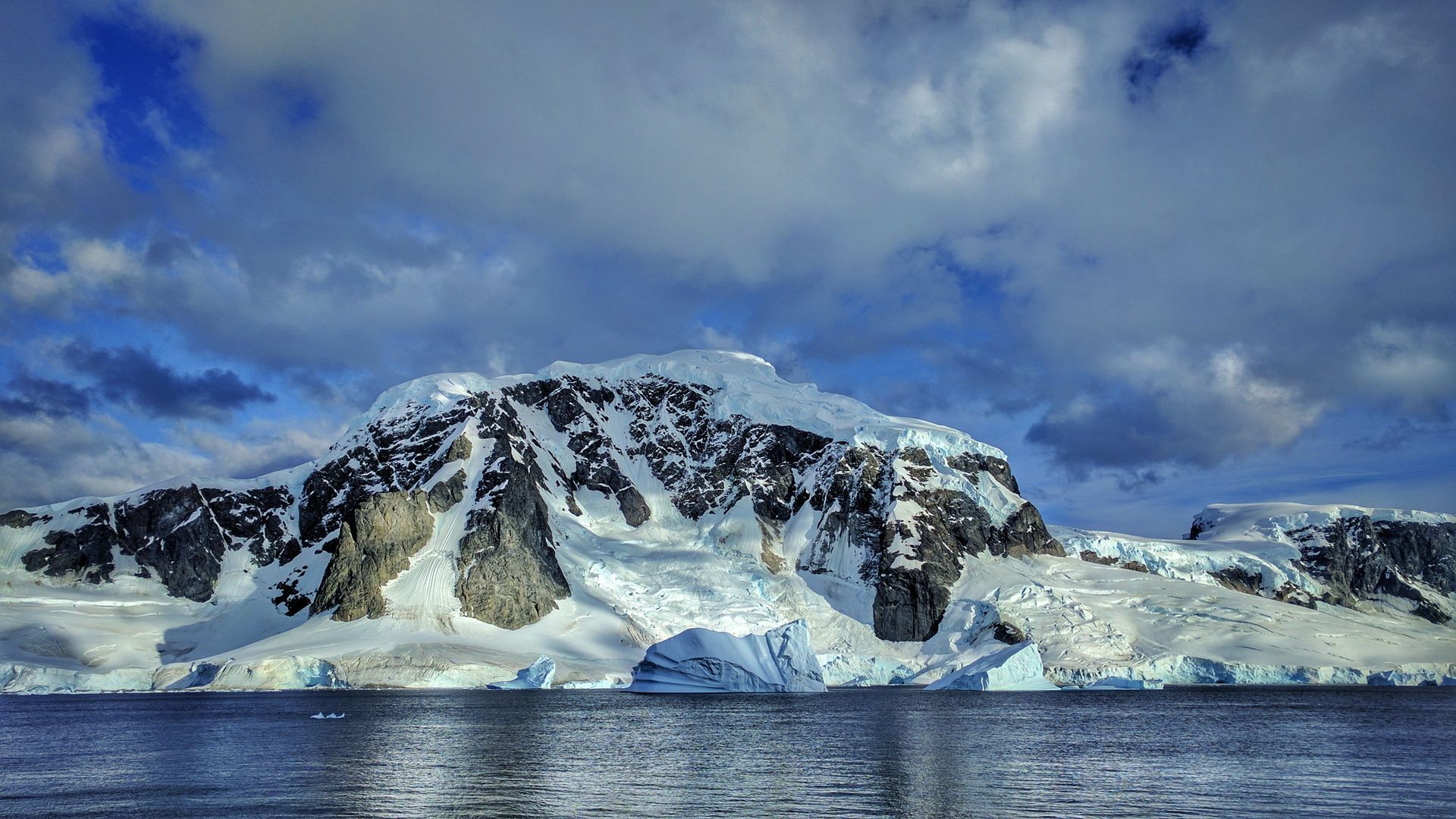
Antarctica
How to plan a trip to Antarctica: which trip suits you, which region to visit, how to get there, when to go, how long it takes and what it costs.
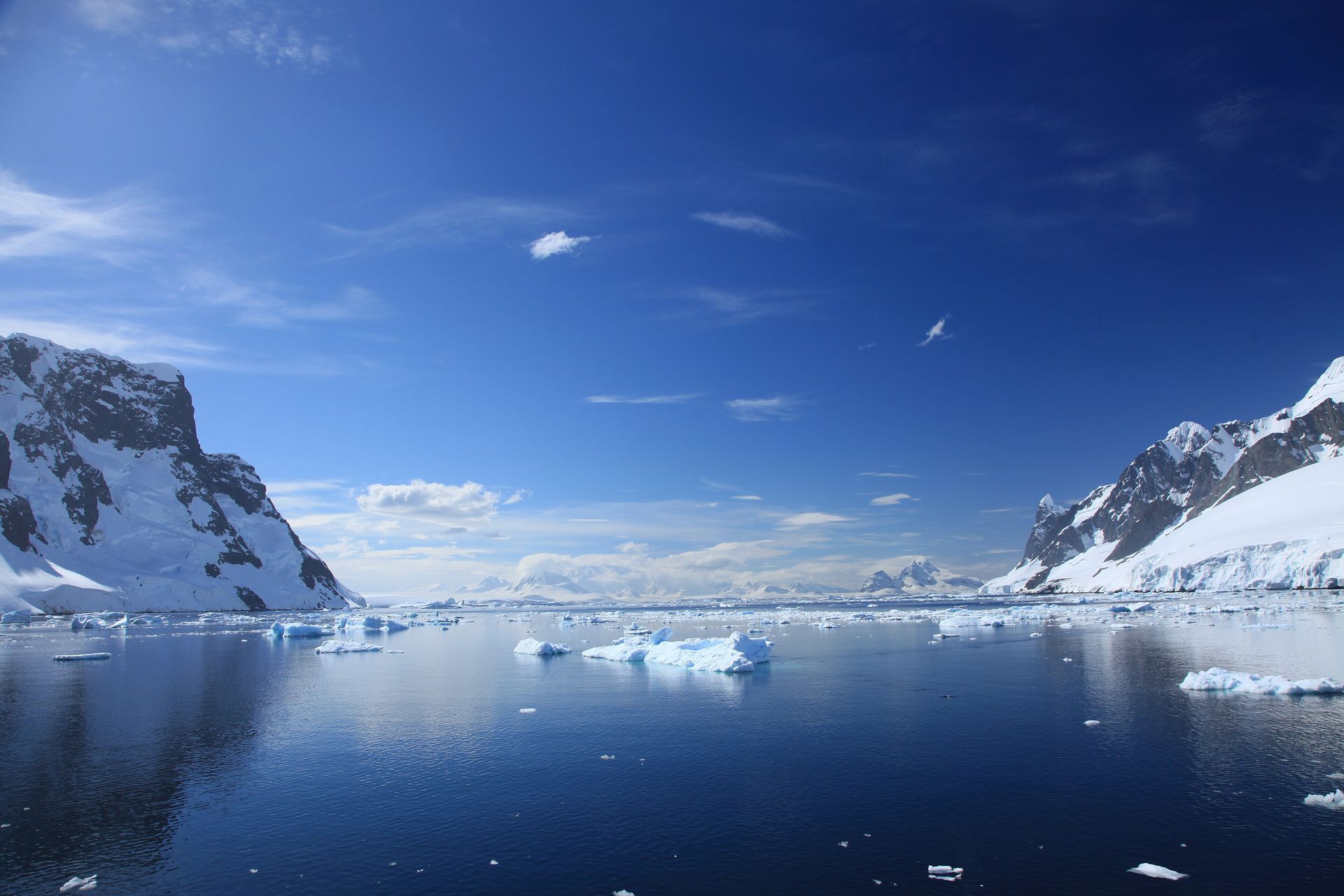
Antarctic Peninsula
Planning an Antarctic Peninsula cruise: how long trips last, where ships land, the best month by temperature and wildlife, landing rules, ship sizes and starting fares.
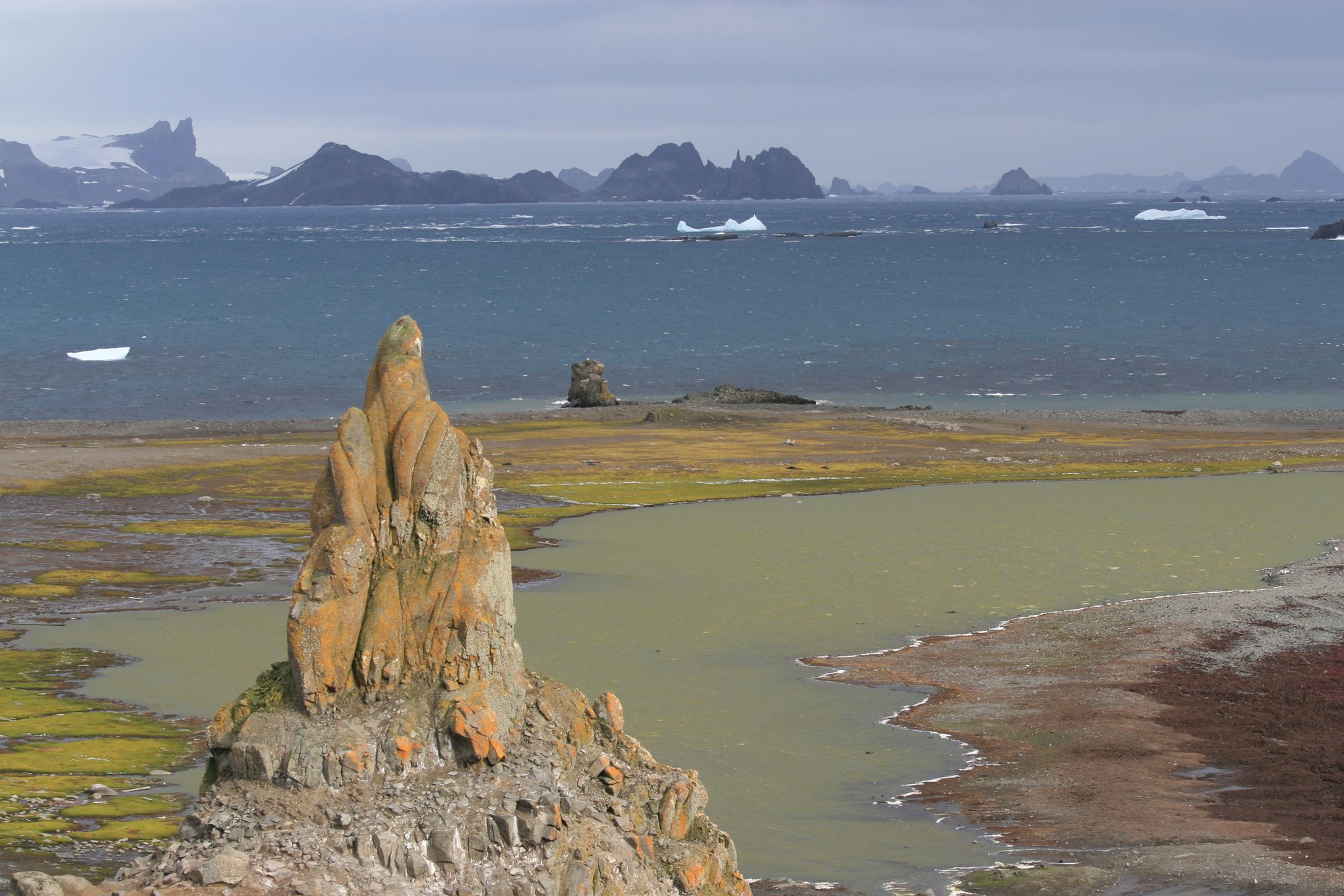
South Shetland Islands
The island chain most Antarctic cruises reach first: where it is, its dozen landing sites and how busy each is, the penguins and seals, the research stations and how to get there.
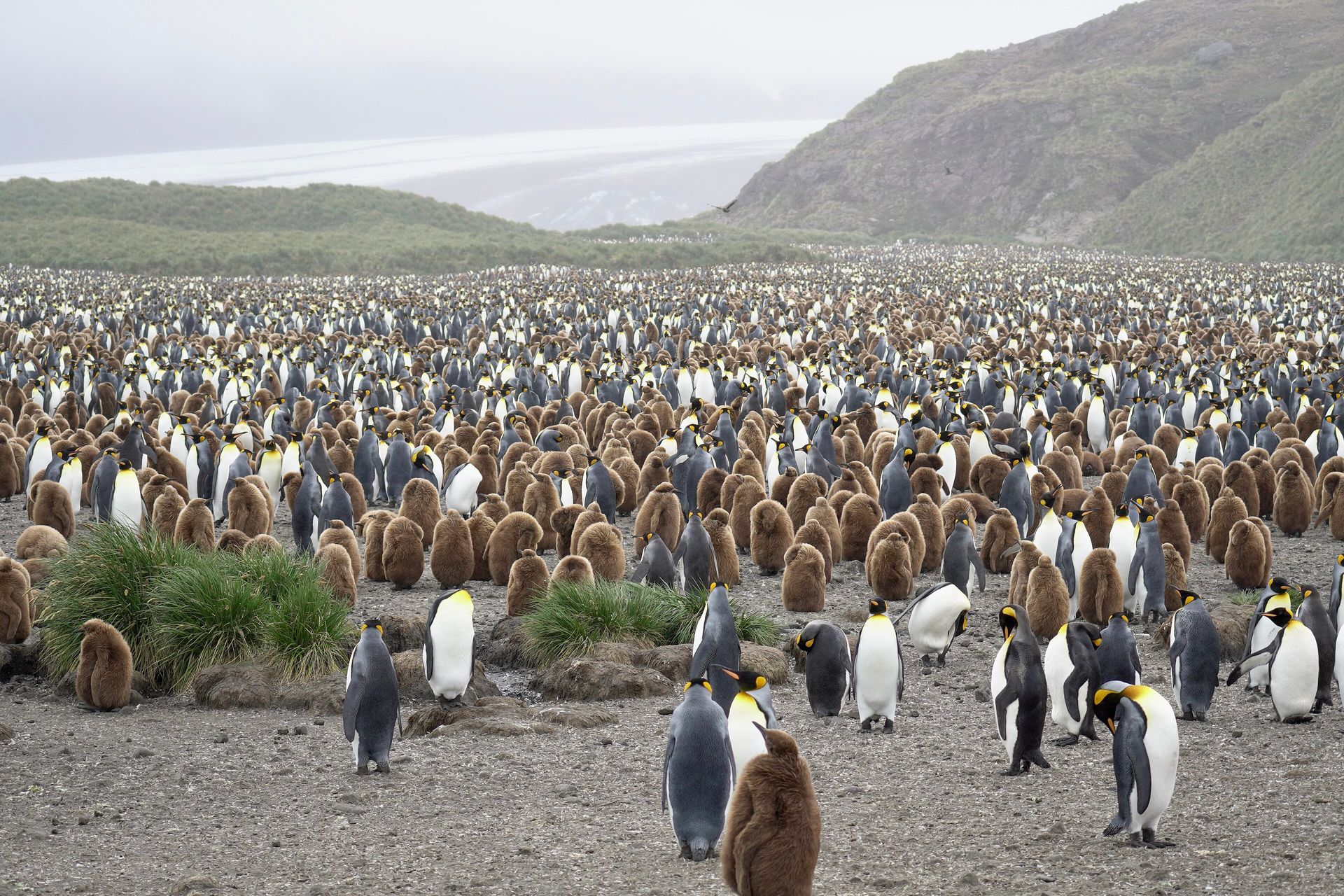
South Georgia
Where South Georgia is and how to visit it: which voyages go and what they cost, whether the extra week is worth it, the best months, the wildlife and the government's rules.
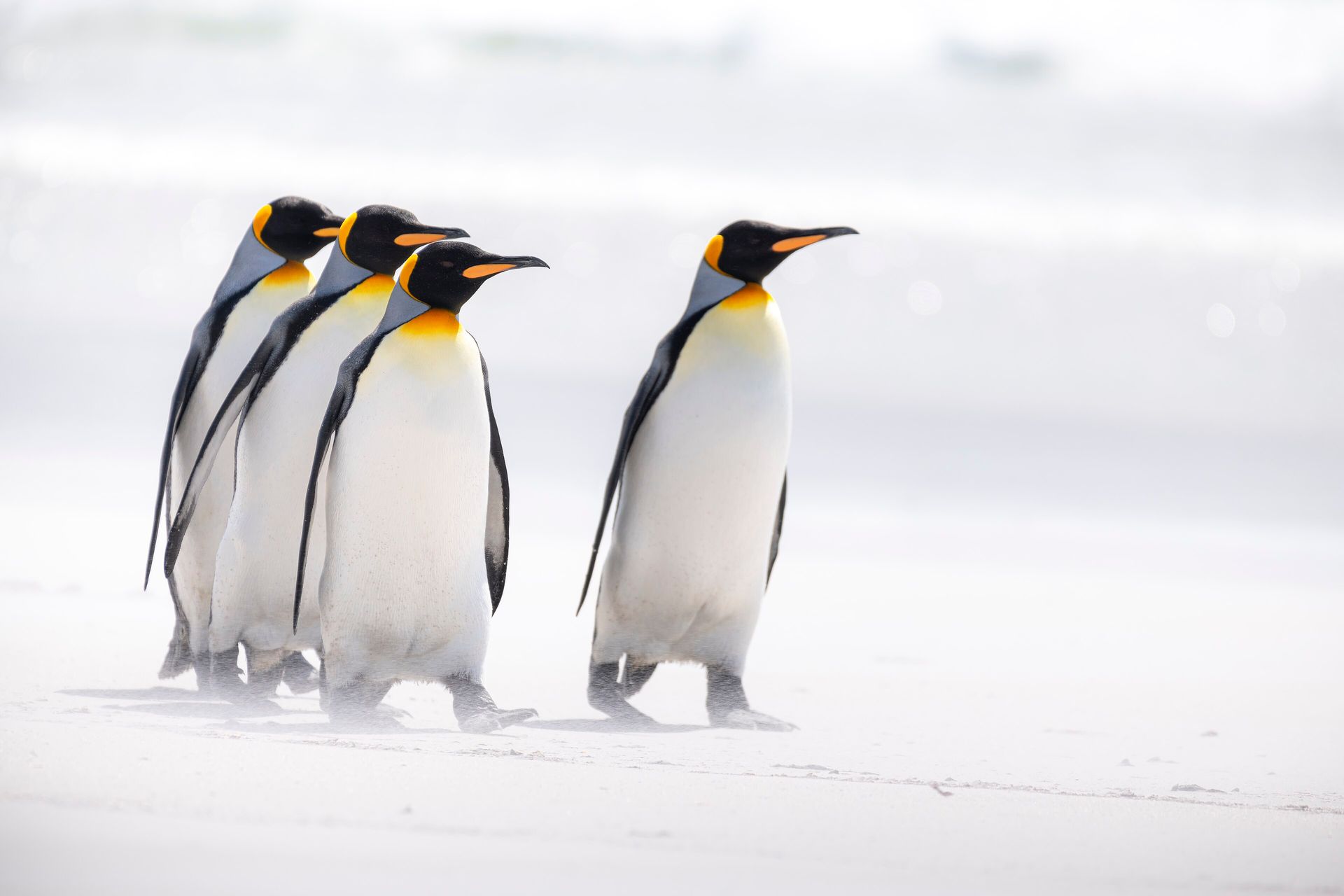
Falkland Islands
How to visit the Falkland Islands and what it costs: the weekly flight from Chile, the UK airbridge, the cruises that stop and their fares, the best penguin sites and months, and the rules.
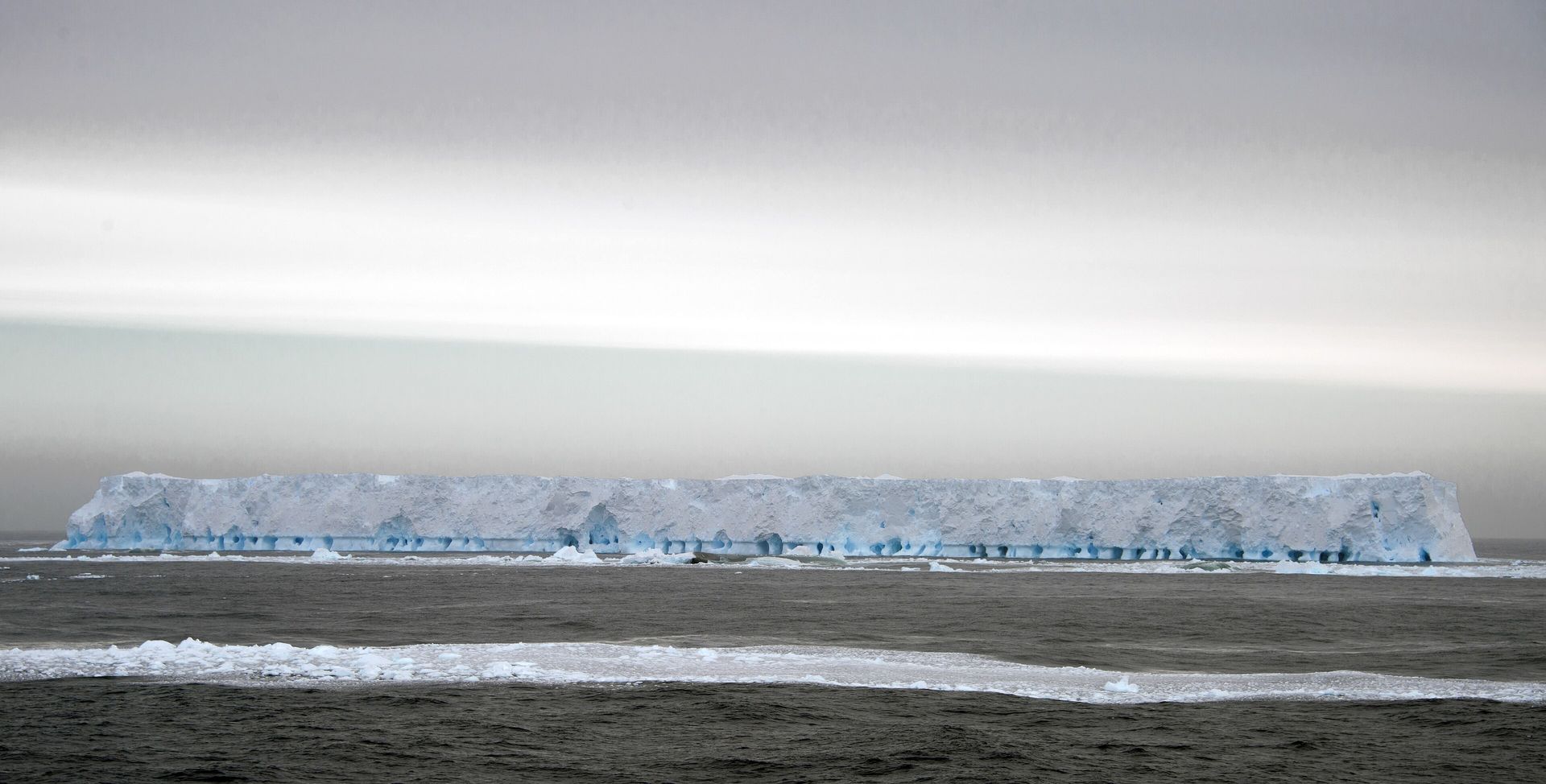
Weddell Sea
The ice-bound sea east of the Antarctic Peninsula: which voyages go in and what they cost, the odds of reaching the Snow Hill emperor penguins, and where Shackleton's Endurance lies.
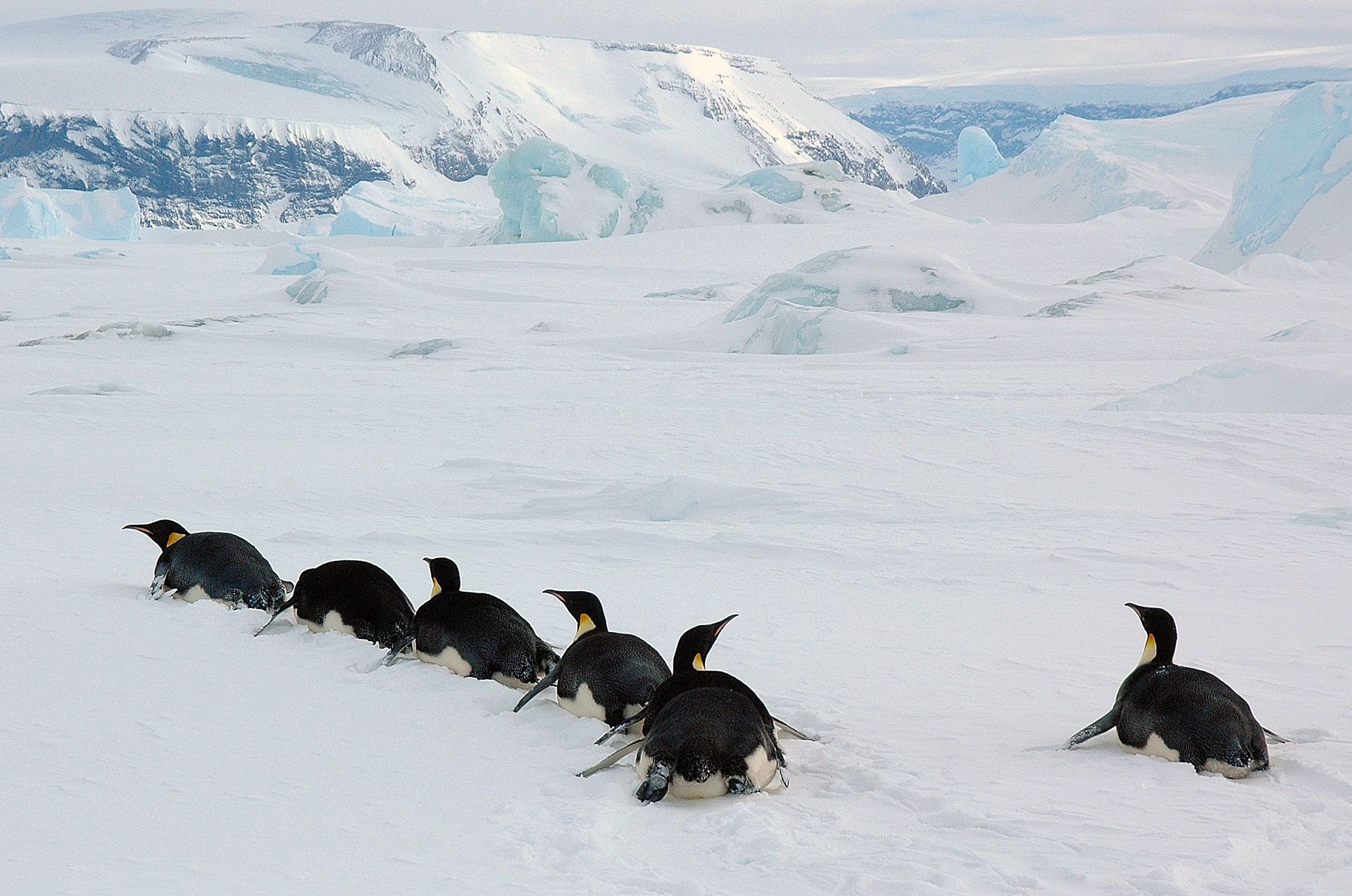
Snow Hill Island
Visiting Snow Hill Island in the Weddell Sea: the northernmost emperor penguin colony, how many birds it holds, how helicopter visits work, the odds of getting in, Nordenskjöld's hut and the 2026-27 voyages.
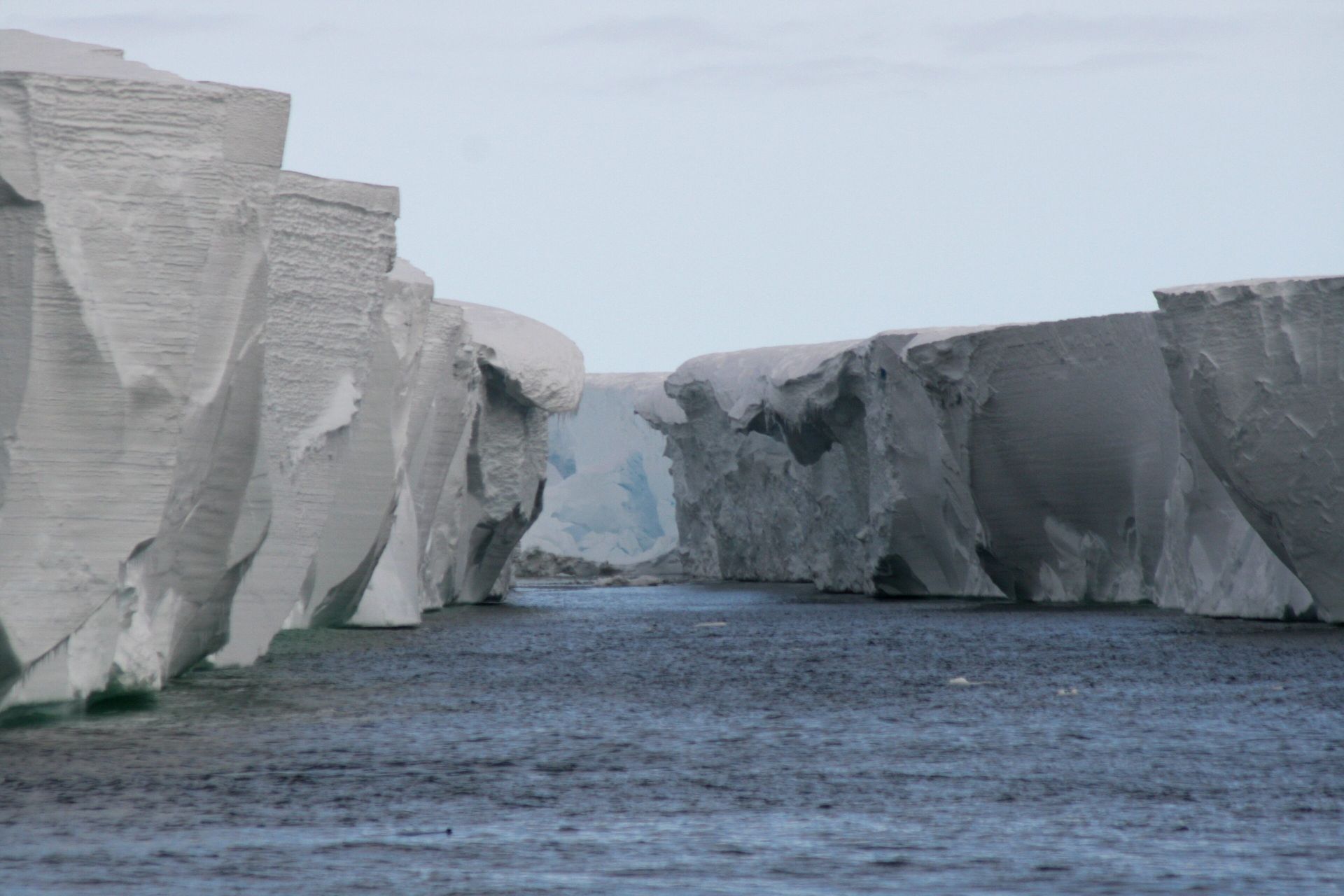
Ross Sea
The far side of Antarctica, south of New Zealand: the few ships that go and what they cost, Scott's and Shackleton's huts, McMurdo, Mount Erebus and the Ross Sea's wildlife.
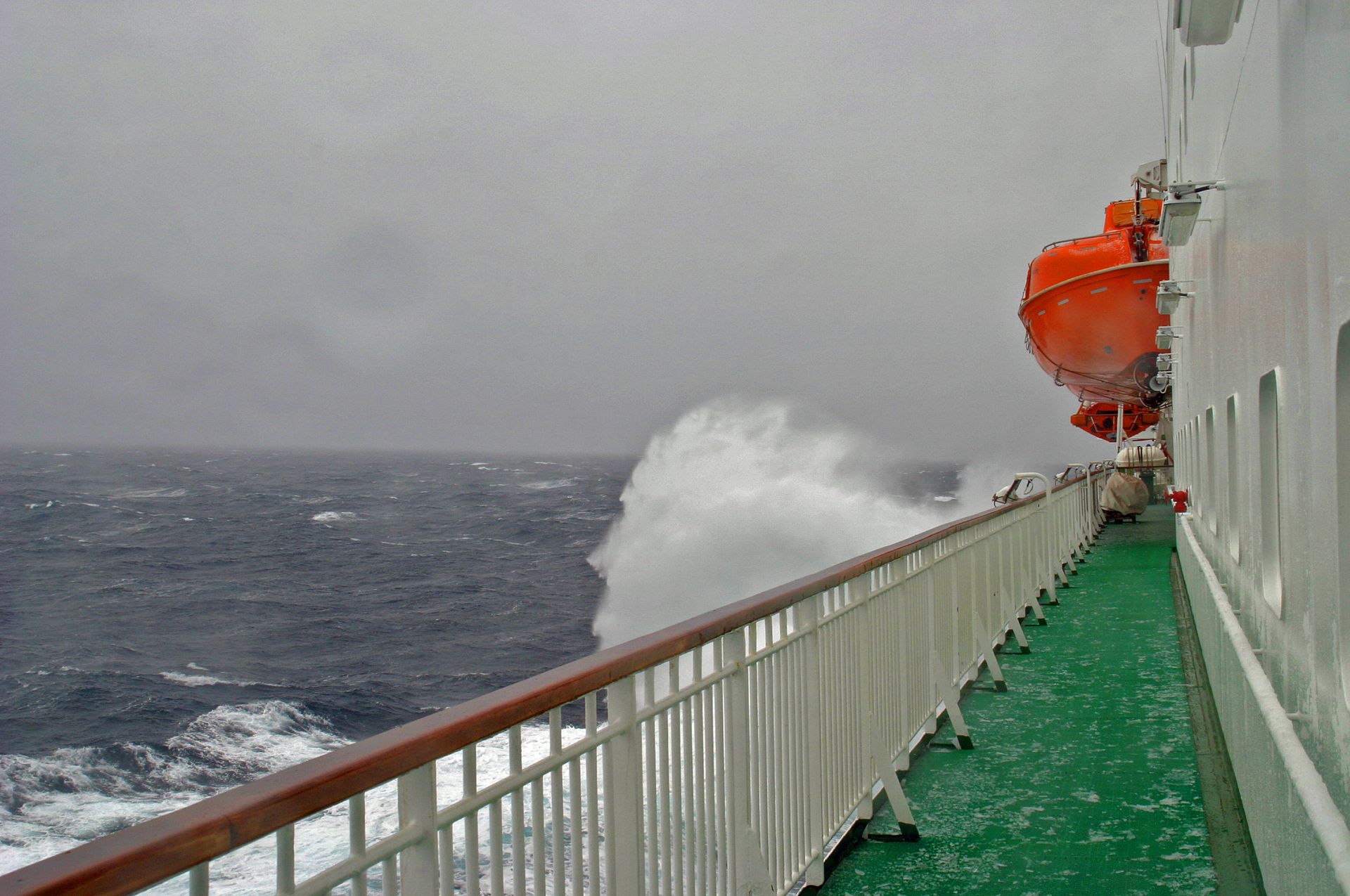
Drake Passage
How rough the Drake Passage really is, month by month, from 16 years of wave data, plus its weather, crossing times, seasickness remedies, flying over it and whether ships sink.
More polar wildlife
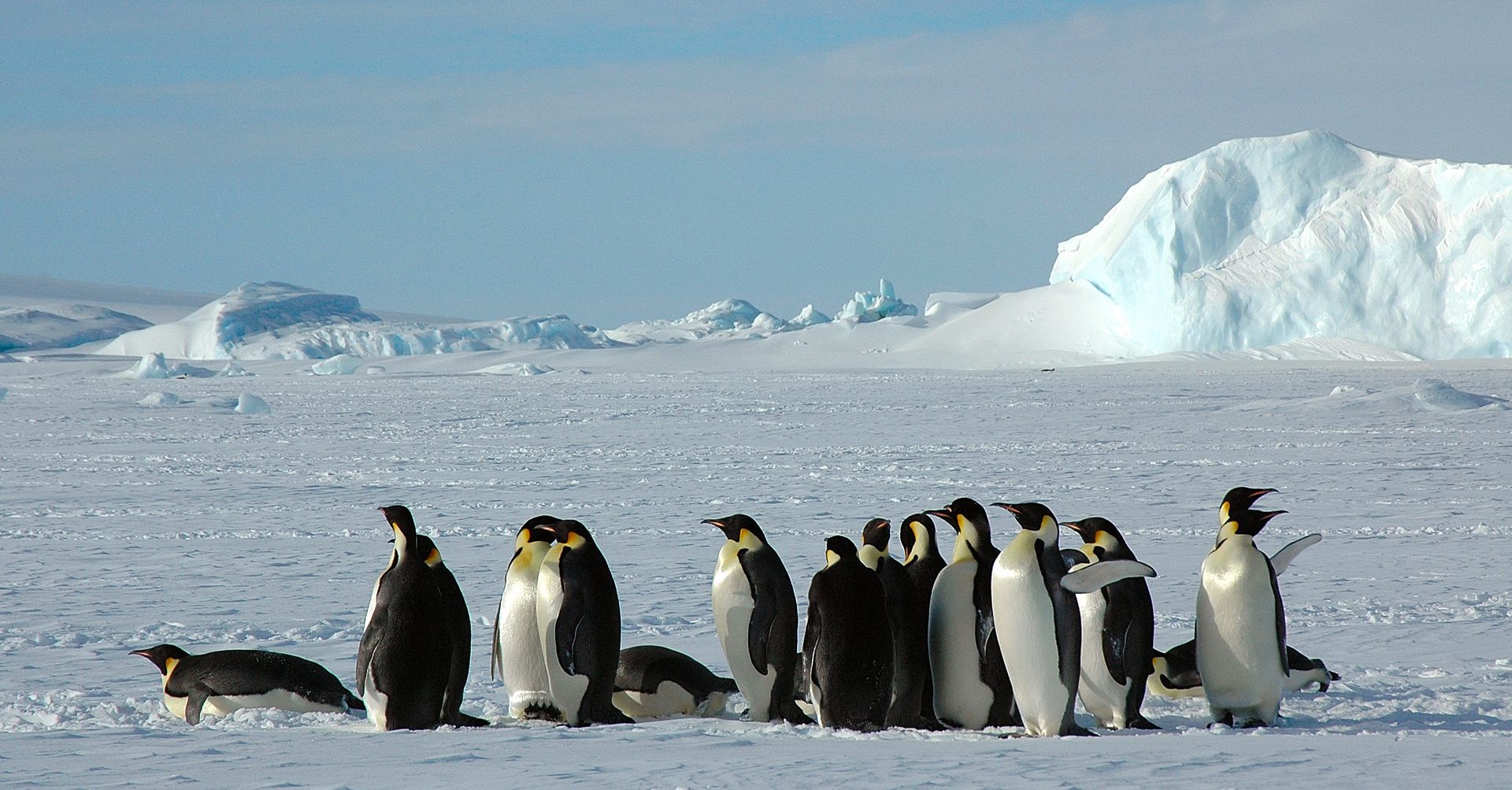
Emperor penguin
Where and how to see emperor penguins in the wild: why Antarctic Peninsula cruises miss them, which helicopter voyages and fly-in trips go to a colony and for how much, plus size, lifespan and conservation status.
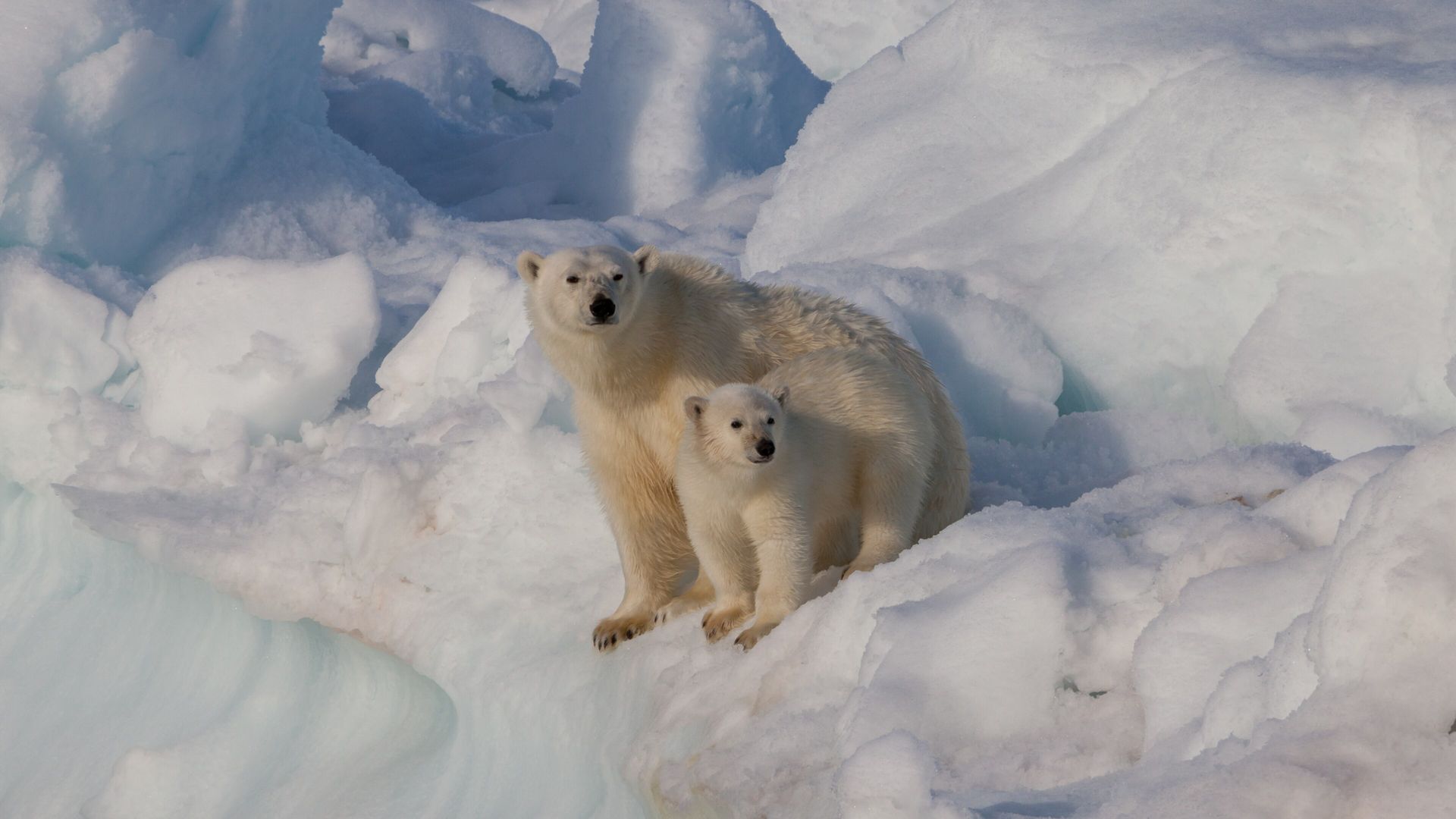
Polar bear
Where polar bears live and where to see them: Churchill in October and November, Svalbard by ship in summer, Kaktovik in Alaska, with odds, prices, the Svalbard distance and firearm rules, and why none live in Antarctica.
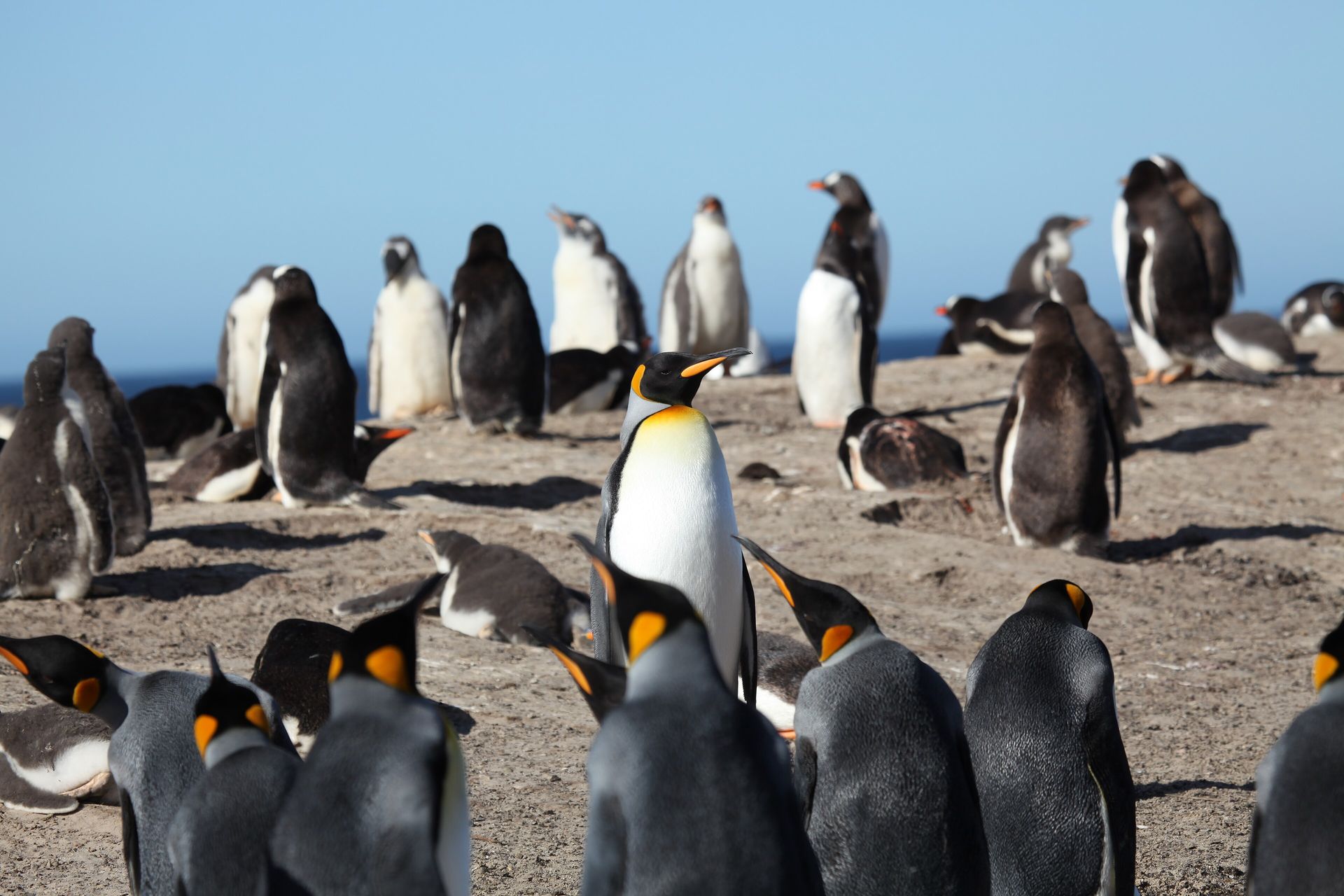
Penguin species
All 18 penguin species in one table, with scientific names, where each breeds, size and IUCN status, plus which ones you can see on an Antarctic, South Georgia, Falklands or Ross Sea trip.
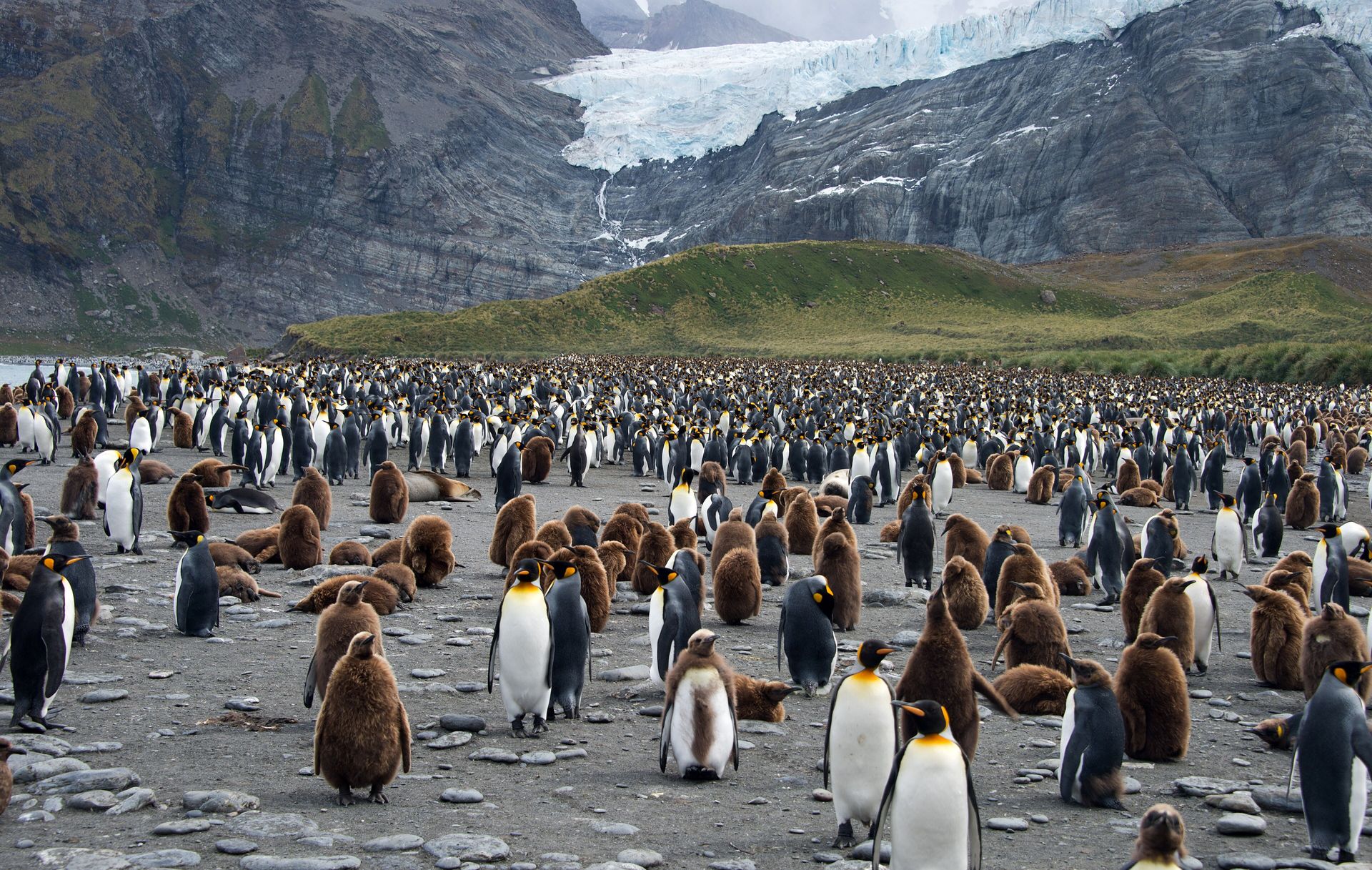
King penguin
King penguin facts for travelers: how many there are and where they breed, the South Georgia and Falklands landings that put you among them, the months for chicks, the voyages with the most time there, and the rules ashore.
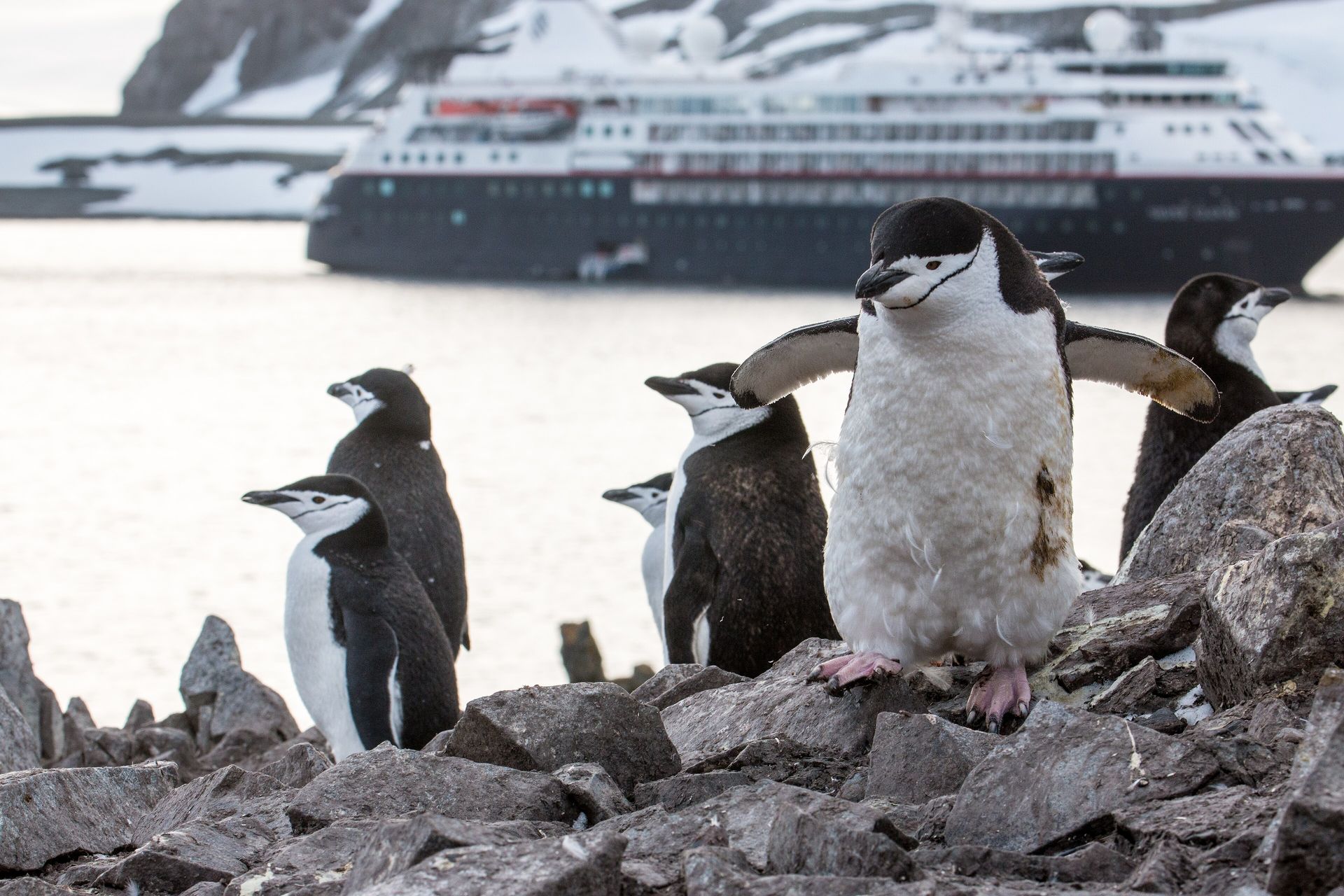
Chinstrap penguin
Chinstrap penguin facts for travelers: how many there are and where they breed, the South Shetland colonies ships land at and which ships may land, when the chicks hatch, the voyages that list them, and why numbers are falling.
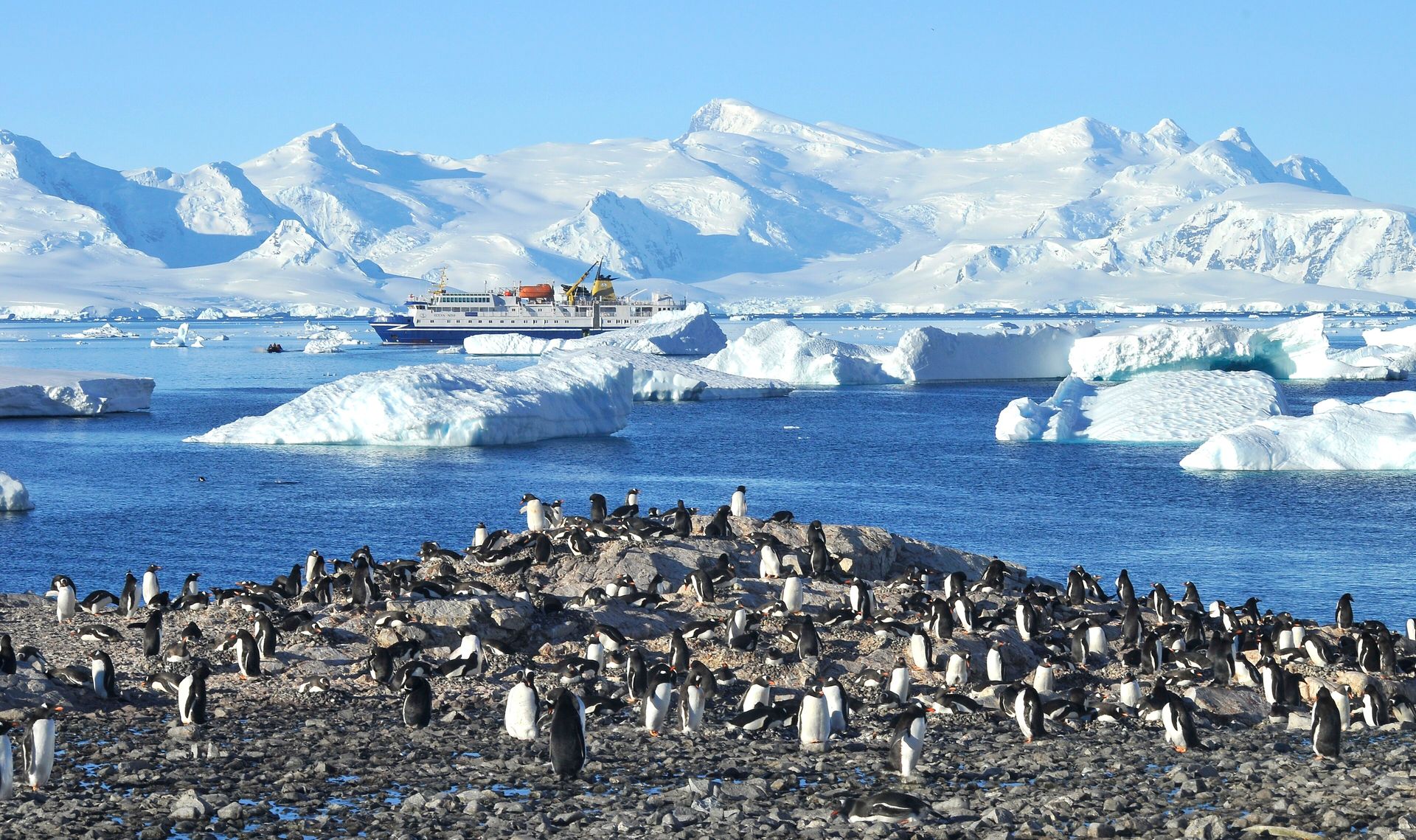
Gentoo penguin
Gentoo penguin facts for travelers: how many there are and where they breed, the Antarctic landings with the biggest colonies, when the chicks are out, the cheapest voyages that visit them, and why scientists now propose four species.
Sources
- 1.Antarctic wildlife, British Antarctic Survey. Accessed October 15, 2026.
- 2.Antarctic krill, Australian Antarctic Division (Australian Antarctic Program). Accessed October 15, 2026.
- 3.Antarctic Penguins (public information leaflet, 2017), British Antarctic Survey (NERC). Accessed October 14, 2026.
- 4.Crabeater seal, Australian Antarctic Division (Australian Antarctic Program). Accessed October 15, 2026.
- 5.Population (Abundance) Estimates, International Whaling Commission (IWC). Accessed October 15, 2026.
- 6.Flying birds, Australian Antarctic Division (Australian Antarctic Program). Accessed October 15, 2026.
- 7.Land invertebrates, Australian Antarctic Division (Australian Antarctic Program). Accessed October 15, 2026.
- 8.Dates & Rates: Antarctica & Arctic Cruises (m/v Ortelius and m/v Plancius tables, 2026-27 to 2027-28), Oceanwide Expeditions. Accessed October 15, 2026.
- 9.Measure 16 (2021): Management Plan for Antarctic Specially Protected Area No. 159, Cape Adare, Borchgrevink Coast, Secretariat of the Antarctic Treaty. Accessed October 15, 2026.
- 10.Penguins of the Far South: Falklands, South Georgia and Antarctica, Quark Expeditions. Accessed October 14, 2026.
- 11.South Georgia Terrestrial Protected Area: description of the protected features (October 2023), Government of South Georgia & the South Sandwich Islands. Accessed October 14, 2026.
- 12.Penguins, Falkland Islands Tourist Board. Accessed October 15, 2026.
- 13.Seals and sea lions, Australian Antarctic Division (Australian Antarctic Program). Accessed October 15, 2026.
- 14.Weddell seal, Australian Antarctic Division (Australian Antarctic Program). Accessed October 15, 2026.
- 15.Leopard seal, Australian Antarctic Division (Australian Antarctic Program). Accessed October 15, 2026.
- 16.Ross seal, Australian Antarctic Division (Australian Antarctic Program). Accessed October 15, 2026.
- 17.Fur seals, Australian Antarctic Division (Australian Antarctic Program). Accessed October 15, 2026.
- 18.Sea Lion Island, Falkland Islands Tourist Board. Accessed October 15, 2026.
- 19.Antarctic Marine Mammals: The World of Whales and Seals, Quark Expeditions. Accessed October 15, 2026.
- 20.IUCN Red List categories for Antarctic whales, seals, seabirds and krill (IUCN Red List dataset on GBIF), IUCN (International Union for Conservation of Nature), published through GBIF. Accessed October 15, 2026.
- 21.Emperor penguin and Antarctic fur seal now Endangered due to climate change: IUCN Red List (press release, 9 April 2026), IUCN (International Union for Conservation of Nature). Accessed October 14, 2026.
- 22.Antarctica - Whale watching | PLA32-27, Oceanwide Expeditions. Accessed October 14, 2026.
- 23.Antarctica's Whale Season (11 days), Polar Latitudes Expeditions. Accessed October 15, 2026.
- 24.Long-term dynamics of seabird species composition across the Drake Passage (Dykyy et al. 2023, Marine Ornithology 51: 243-252), Marine Ornithology. Accessed October 14, 2026.
- 25.Black-browed albatross, Falklands Conservation. Accessed October 15, 2026.
- 26.South polar skua, Australian Antarctic Division (Australian Antarctic Program). Accessed October 15, 2026.
- 27.IUCN Red List categories for Antarctic and sub-Antarctic penguins and other birds (IUCN Red List dataset on GBIF), IUCN (International Union for Conservation of Nature), published through GBIF. Accessed October 15, 2026.
- 28.Intra-season variations in distribution and abundance of humpback whales in the West Antarctic Peninsula using cruise vessels as opportunistic platforms (Johannessen et al., 2022), Ecology and Evolution (via PubMed Central). Accessed October 14, 2026.
- 29.Sample Itinerary: 8 Days, Falklands Discovery, Falkland Islands Holidays. Accessed October 15, 2026.
- 30.Return of large fin whale feeding aggregations to historical whaling grounds in the Southern Ocean (Herr et al., 2022), Scientific Reports (Nature Portfolio). Accessed October 15, 2026.
- 31.Killer Whale: Around the World - Antarctica, NOAA Southwest Fisheries Science Center (Robert L. Pitman, Whalewatcher 40(1), 2011). Accessed October 15, 2026.
- 32.Killer whale, Australian Antarctic Division (Australian Antarctic Program). Accessed October 15, 2026.
- 33.IAATO Marine Wildlife Watching Guidelines (Whales, Dolphins, Seals and Seabirds) for Vessel and Zodiac Operations (revised 2007), International Association of Antarctica Tour Operators (IAATO), attachment to ATCM XXX. Accessed October 15, 2026.
- 34.General Guidelines for Visitors to the Antarctic (ATCM), English poster, Antarctic Treaty Consultative Meeting (poster published by IAATO). Accessed October 14, 2026.
- 35.Polar Plunge, Quark Expeditions. Accessed October 15, 2026.
- 36.Polar plunge, Oceanwide Expeditions. Accessed October 15, 2026.
- 37.Blue whale, Australian Antarctic Division (Australian Antarctic Program). Accessed October 15, 2026.
- 38.Sei whale, Australian Antarctic Division (Australian Antarctic Program). Accessed October 15, 2026.
- 39.Wandering albatross, Australian Antarctic Division (Australian Antarctic Program). Accessed October 15, 2026.
- 40.Planned Red List Updates (IUCN Red List version schedule), IUCN Red List of Threatened Species. Accessed October 15, 2026.
- 41.Red List Status of Cetaceans (updated October 2025), IUCN SSC Cetacean Specialist Group. Accessed October 15, 2026.
- 42.Return of the whales to South Georgia (news story, 20 February 2020), British Antarctic Survey. Accessed October 15, 2026.
- 43.Frequently asked questions, Government of South Georgia & the South Sandwich Islands. Accessed October 14, 2026.
- 44.Assessing the recovery of an Antarctic predator from historical exploitation (Zerbini et al., 2019), Royal Society Open Science. Accessed October 15, 2026.
- 45.10 Surprising Facts About Polar Bears, Polar Bears International. Accessed October 14, 2026.
- 46.Weddell Sea: In search of the Emperor Penguin, incl. helicopters, m/v Ortelius, 15 to 25 November 2026 (OTL22-26), Oceanwide Expeditions. Accessed October 14, 2026.
- 47.Emperor Penguin Aptenodytes forsteri: species factsheet, BirdLife International (Data Zone). Accessed October 14, 2026.
- 48.South Georgia & Falklands Expedition Cruise (18 days, Santiago de Chile to Montevideo), HX Expeditions (Hurtigruten Expeditions). Accessed October 14, 2026.
- 49.HX Expeditions unveils new fleet enhancements for 2026 and beyond (press release, 1 September 2026), HX Expeditions (Mynewsdesk newsroom). Accessed October 14, 2026.
- 50.Ultimate Antarctica Adventure from Ushuaia to Dunedin, SH Minerva, Feb 3, 2027 (M0327020332), Swan Hellenic. Accessed October 15, 2026.
- 51.How can I help? (avian influenza rules for visitors), International Association of Antarctica Tour Operators (IAATO). Accessed October 14, 2026.