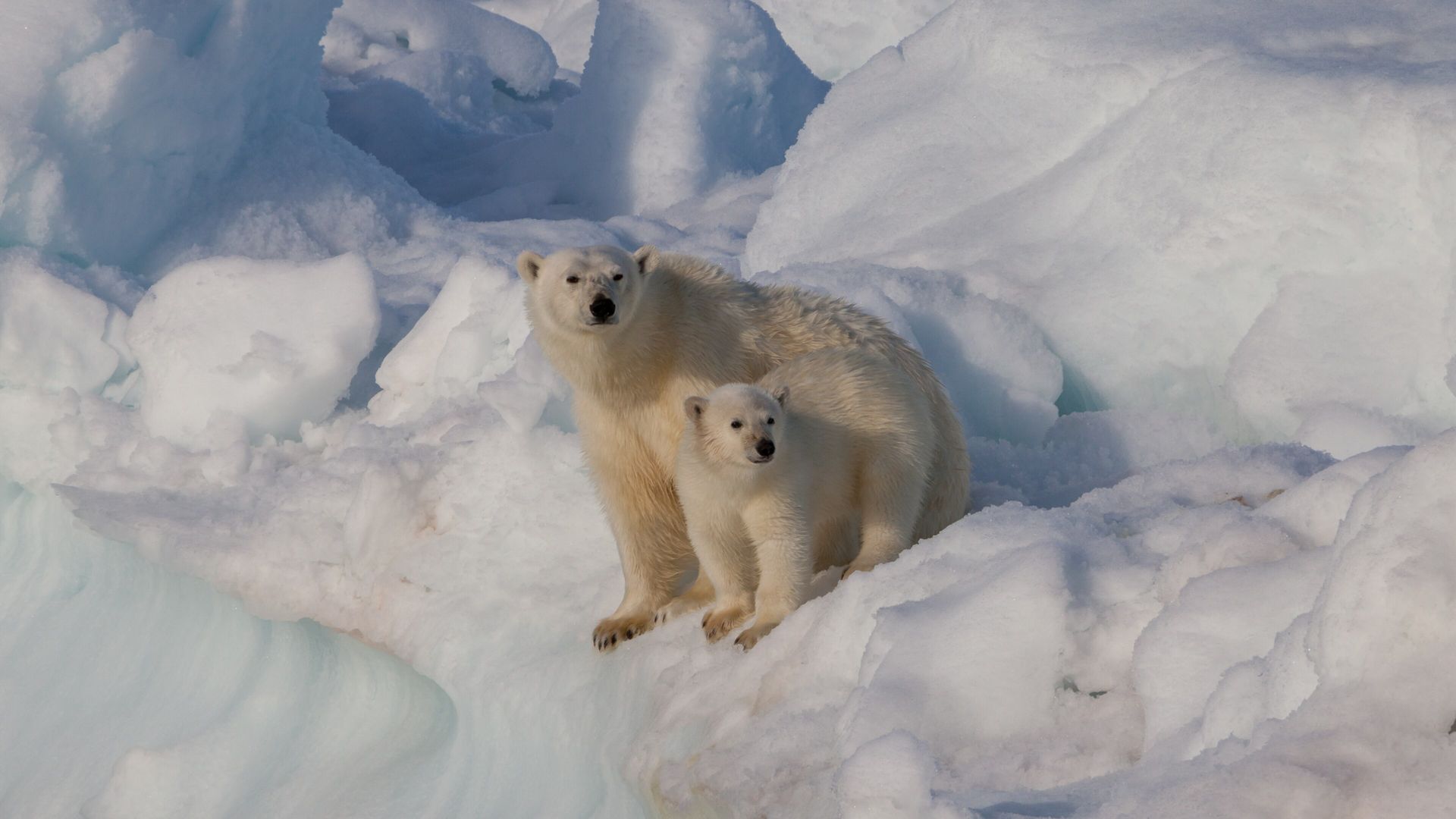
Polar bear
Where polar bears live and where to see them: Churchill in October and November, Svalbard by ship in summer, Kaktovik in Alaska, with odds, prices, the Svalbard distance and firearm rules, and why none live in Antarctica.
Where do polar bears live?
Only in the Arctic, never in Antarctica. About 26,000 polar bears live on the sea ice of Canada, the US (Alaska), Russia, Greenland and Norway (Svalbard), in 20 populations. To see one, go to Churchill, Canada, in October and November, when bears gather on the Hudson Bay coast, or take a summer expedition cruise around Svalbard, where no one can promise a sighting.
Facts checked October 15, 2026 against 24 sources.
Polar bear facts
- January: no trips
- February: no trips
- March: no trips
- April: no trips
- May: no trips
- June: best
- July: best
- August: best
- September: no trips
- October: best
- November: best
- December: no trips
Best Season
- Scientific name
- Ursus maritimus
- Where to see
- Only in the Arctic: Canada, Alaska, Russia, Greenland and Svalbard (Norway). Travelers see them from tundra vehicles at Churchill, Manitoba, in October and November, and from expedition ships around Svalbard in summer.
- Best months
- June to August, October to November
- Population
- About 26,000 worldwide in 20 subpopulations; the Barents Sea subpopulation around Svalbard was estimated at 2,644 in 2004
- Status
- Vulnerable (IUCN Red List, 2015 assessment, criterion A3c)
Polar bears live only in the Arctic, on the sea ice of Canada, the United States (Alaska), Russia, Greenland and Norway (Svalbard), and there are none in Antarctica.12 For a traveler, two places do most of the work. Churchill, on Canada's Hudson Bay, is the surer bet by our reading: bears gather on the coast every October and November to wait for the sea to freeze, and you watch them from tundra vehicles.1820 Svalbard is the classic ship trip, on summer voyages from June to early September, but nobody can promise you a bear there.157 In Alaska, the village of Kaktovik has had no bear-viewing boat tours since 2021.22
Where do polar bears live?
Polar bears live on the Arctic sea ice, which they use as a platform to hunt seals at open leads and breathing holes.3 Scientists divide them into 20 populations across five range states, some of them shared between countries, and Polar Bears International puts the world total at about 26,000.23 Canada has the most, about two-thirds of the total.1 Alaska shares the Southern Beaufort Sea population with Canada and the Chukchi Sea population with Russia, and Greenland's bears include a Southeast Greenland population that Greenland's government recognized only in 2023.5
They do not hold territories. They follow the ice as it grows in winter and shrinks in summer, and one satellite-tracked female walked 2,980 miles (4,796 km) from Alaska's Prudhoe Bay to Greenland, Canada's Ellesmere Island and back to Greenland.2
Are there polar bears in Antarctica?
No. Polar bears live only in the Arctic; as Polar Bears International puts it, polar bears don't live in Antarctica, penguins do.1 Their ranges do not overlap. Polar bears are tied to Arctic sea ice and the seals on it, and the British Antarctic Survey explains that the warm waters of the equator are a barrier to penguins, whose niche in the Arctic is taken by the puffin.36 If you want both animals, you need two trips, one north and one south; our penguin species and emperor penguin pages cover the southern half.
Where is the best place to see polar bears?
Churchill if a bear is the point of the trip, Svalbard if you want an Arctic expedition with bears as one of several animals, and not Kaktovik until tours restart. That ranking is ours, reasoned from the sources in the table: Churchill's bears gather in the same place every fall, while Svalbard's sightings cannot be predicted.187
| Place | How you see them | Best months | What the odds look like | From, per person |
|---|---|---|---|---|
| Churchill, Manitoba, Canada | Tundra vehicles20 | October and November; February and March for mothers and cubs in Wapusk National Park18 | Bears gather at Cape Churchill every fall to wait for the ice, but Natural Habitat Adventures still calls bear viewing "never predictable"1821 | $8,995 for 6 days in 2027, plus $1,689 for the charter flight from Winnipeg21 |
| Svalbard, Norway | Expedition ship and Zodiacs, at least 1,000 ft (300 m) away, and 1,640 ft (500 m) until June 3011 | June to August; July and August for a full circumnavigation16 | Sightings "cannot be predicted", says Visit Svalbard7 | $6,250 to $19,890, 10 to 15 days161517 |
| Kaktovik, Alaska, USA | Boat tours to barrier islands (halted since 2021) | Late summer, a six-week season | Bears gather to feed on whale carcasses left by hunters | No boat tours since 2021; a restart is possible as early as 202722 |
What are the chances of seeing a polar bear in Svalbard?
Real, but not predictable. Visit Svalbard says there are no organized polar bear safaris on the archipelago, that nobody can predict whether or when you will see one, and that a sighting is a rare and valuable bonus.7 It estimates that about 300 bears stay on Svalbard year-round, with a likely maximum of fewer than a thousand, out of about 3,000 in the wider Barents Sea region.7
Where you sail matters. In an August 2015 survey, Norwegian Polar Institute researchers estimated 264 bears on Svalbard itself and 709 in the pack ice to the north, and found that the pack-ice bears were largely a separate group with a low likelihood of visiting the islands.8 By our reading, that makes the ice edge worth the extra days, because a ship that reaches it can look for bears from both groups. HX Expeditions' 11-day circumnavigation attempts to cross 80°N to the edge of the pack ice, and calls reaching it "an attempt rather than a certainty"; on Oceanwide Expeditions' Around Spitsbergen, the ship may park for several hours among the pack ice at the Seven Islands, where polar bears live.1516
HX says bears raise their cubs on the islands from April to August, that it keeps its distance under the Norwegian rules, and that guests should pack binoculars to spot bears from the ship.14 Our pick is a circumnavigation of 11 days or more in July or August, the same advice as on our Svalbard page. That is our reading of the survey and the itineraries, not a published success rate.
What is the best month to see polar bears in Svalbard?
July or August, by our reading, though Visit Svalbard says the best time simply cannot be predicted.7 Late summer is when ships can usually get all the way around Spitsbergen: Oceanwide, going by its voyages from 1992 to 2019, puts the chance of a full circumnavigation at about 30% in the first half of July, 70% in the second half, 90% in the first half of August and 95% in the second half.16 By August the edge of the sea ice is mostly tens of miles north of the Seven Islands, Oceanwide says, which can give its ship a second day there.16
June has its own case. HX says there is a good chance of bears in Northwest Spitsbergen early in the season, and that the ice edge retreats toward the pole from May to August; Oceanwide says ice can force an alternate route along the west coast early in the season.1516 Go in June for more ice close to the islands, and in late July or August for the best chance of sailing all the way around.
What are the polar bear rules in Svalbard?
Svalbard's Environmental Protection Act, as amended from January 1, 2025, opens its polar bear section with: "It is prohibited to unnecessarily disturb, lure or pursue polar bears." No one may travel or stay within about 1,000 ft (300 m) of a polar bear, or 1,640 ft (500 m) from March 1 to June 30, and anyone who sees a bear closer than that "shall retreat, so as to maintain a lawful distance". The distance rule "does not apply in settlements, during stays at research stations, in cabins, in tents or similar facilities".1112 Breaking the act can bring a fine or up to a year in prison, and up to five years where there is substantial environmental damage or especially aggravating circumstances.11
- Ships and Zodiacs. AECO, the Arctic expedition cruise operators' association, says local law overrides its guidelines and tells members that Svalbard's 300 m and 500 m minimums must be kept. Its own guidelines add that no boat ever follows a swimming bear, and that boats retreat from one to at least 660 ft (200 m) or the legal minimum, whichever is greater.10 AECO also tells members not to lure, follow or seek out bears, and reads seeking out to include "deliberately heading to an area where one has knowledge that a bear or bears have been stably present or attracted".10
- On land. AECO's guidelines have the crew look out for bears before anyone lands, and say guides carrying firearms and other deterrents must lead the group.10 In most protected areas, tourist landings may use only mapped sites, with a guide who knows the natural and cultural environment.12 Camps need an awake, organized polar bear watch.712
- Firearms. Anyone traveling outside the settlements must carry suitable means of scaring off bears, and the Governor of Svalbard also recommends carrying a firearm; loaded firearms are banned in Longyearbyen's settlement area.13 The act exempts "persons who are taking part in tourist activities" from that duty, so cruise passengers rely on their guides.1110
Hunting has been banned in Svalbard since 1973.7
When is the best time to see polar bears in Churchill?
October and November. Parks Canada calls fall polar bear season in northern Manitoba: every autumn the bears gather at Cape Churchill on Hudson Bay to wait for the sea ice to form so they can hunt ringed seals.18 Natural Habitat Adventures says the highest concentration is in October and November, that many bears leave once the bay freezes, historically in early December, and that it can never guarantee a sighting; its trips run from late September to late November.21
A second season comes in February and March, when mothers and cubs leave their dens in Wapusk National Park, about 43 miles (70 km) inland, and head for the bay.18 The park, 4,430 sq mi (11,475 km²), protects one of the largest polar bear denning areas in the world, and every visit needs a licensed tour operator.19 Most of the bears in the Western Hudson Bay population are born there, Parks Canada says.18
The Town of Churchill recommends a knowledgeable guide or bear monitor for any outing and lists tundra vehicle operators including Frontiers North Adventures (Tundra Buggy), Great White Bear Tours and Lazy Bear Lodge and Expeditions.20 The Western Hudson Bay population was estimated at 618 in 2021, 26.7% lower than the 2016 estimate, partly because some bears moved for a time to the neighboring Southern Hudson Bay population; the Polar Bear Specialist Group judges it very likely to have decreased since 1995.5
How much does a polar bear tour cost?
From $6,250 to $19,890 per person on the trips we checked, for 6 to 15 days, as listed on October 14 and 15, 2026.161721
| Trip | Where | Days | From, per person | Includes |
|---|---|---|---|---|
| Natural Habitat Adventures, Classic Polar Bear Expedition | Churchill, tundra vehicles, October 1 to November 26, 2027 | 6 | $8,995 with two sharing, plus $1,689 for the charter flight between Winnipeg and Churchill, billed separately; 7 days for $9,995 | Starts and ends in Winnipeg; group of up to 16; nearly every 2026 departure is full21 |
| Oceanwide Expeditions, Around Spitsbergen, on Hondius | Svalbard, June 29, 2027 | 10 | $6,250, one berth in a shared four-berth cabin | Flights to Longyearbyen not included16 |
| HX Expeditions, Circumnavigating Spitsbergen | Svalbard, August 14 and September 4, 2027 | 11 | $9,306 with two sharing after HX's 130th Anniversary Offers (was $10,160); the extra 5% in that discount applies only to bookings made by November 9, 2026 | An Oslo airport hotel night and round-trip flights between Oslo and Longyearbyen1523 |
| Quark Expeditions, Spitsbergen Circumnavigation, on Ultramarine | Svalbard, June 30, 2027 | 15 | $19,890 brochure fare in a triple cabin, shown as "Please Call"; $23,190 for an Explorer Suite with two sharing | Helsinki airport hotel nights and charter flights to Longyearbyen17 |
Like for like, with two sharing and flights from a gateway city, Churchill costs more for fewer days: $10,684 for 6 days from Winnipeg, against $9,306 for 11 days from Oslo on HX.2115 The cheapest fare here is the shared berth on Hondius, though it leaves out flights to Longyearbyen.16 Choose Churchill if seeing a bear matters more than anything else and a short stay suits you. Choose a Svalbard circumnavigation if you want more days at sea and walruses, Arctic foxes and seabirds as well, and skip it if a bear seen through binoculars would feel like a failure.1514 That advice is ours, based on Parks Canada's description of the yearly gathering and Visit Svalbard's warning that sightings cannot be predicted.187
Can you still see polar bears in Kaktovik, Alaska?
Not on a tour, for now. Kaktovik, a village of about 250 people and the only settlement in the Arctic National Wildlife Refuge, once drew 1,000 or more visitors a year to watch bears feed on whale carcasses left by subsistence hunters during a six-week season in late summer.22 The pandemic paused visits, and in 2021 the federal government halted the boat tours, mostly over concerns about how tourists were affecting the bears' behavior and overrunning the village.22 As of April 2026, Alaska Native leaders were in talks with the US Fish and Wildlife Service to restart tourism, perhaps as early as 2027; among the changes Kaktovik's leaders want is a limit on how long a boat can sit near the bears.22
Alaska is the only US state with polar bears.22 Its bears belong to the Southern Beaufort Sea population, estimated at about 900 in 2010 and judged likely to have decreased, and the Chukchi Sea population, estimated at 2,937 in 2016 and judged likely stable.5
How big are polar bears, and how long do they live?
Polar bears are the largest of the eight bear species.1 Adult males usually weigh 772 to 1,300 lb (350 to 590 kg) and females 331 to 650 lb (150 to 295 kg); a big bear can stand 10 ft (3 m) tall.3 In the wild they live 15 to 18 years on average, although biologists have tagged a few bears in their early 30s.4
Females usually have a litter every three years from about age five, and newborn cubs weigh about 1 lb (0.5 kg).3 Families leave the den in March or April, and the cubs stay with their mother for two and a half to three years.4
What do polar bears eat?
Seals, almost entirely: ringed and bearded seals across their range, hunted from the sea ice.310 When hunting is good a bear may eat only the blubber and skin, and it can eat more than 100 lb (45 kg) of blubber at a sitting.3 In Svalbard, bears have also been seen hunting reindeer and eating eggs on bird cliffs, though Visit Svalbard says it is uncertain whether such food can make up for lost seal fat.7 A bear can go up to eight months without eating.10
What do polar bears need to survive?
Sea ice and seals. Polar Bears International says the bears use the ice as a platform to hunt seals, to breed, to roam and sometimes to den, and that they rely on seal blubber reached from the ice for most of their calories.1 It puts them at the top of the Arctic food chain, which starts with algae growing in the sea ice: 86% of the carbon in a polar bear's body comes from those algae.1 Their threats come from people. AECO notes that bears are still hunted in North America and Greenland, though not in the Russian and Norwegian Arctic, and the IUCN's polar bear specialists name the loss of sea ice to climate change as the most serious threat.1024
Are polar bears dangerous?
Yes. Visit Svalbard warns that polar bears move silently and can attack quickly and without warning, and that you must never go outside the settlements without the knowledge, deterrents and firearms to deal with one.7 In 2023 a woman and her 1-year-old son were killed in Wales, Alaska, in the state's first fatal polar bear attack in nearly 30 years.22 That is why, on a guided landing, AECO's guidelines put guides with firearms and other deterrents in charge of the group.10
Are polar bears endangered?
Not endangered, but threatened. The IUCN Red List rates the polar bear Vulnerable, the lowest of its three threatened categories, in a 2015 assessment by members of the IUCN Polar Bear Specialist Group, a rating it has held in most years since 1982.24 Norway's 2021 Red List also rates it Vulnerable, naming climate warming as the main threat.9 The United States listed polar bears as threatened in 2008.22 Polar Bears International cites a 2020 study finding that without action on climate change, all but a few populations would be lost by the end of the century.3
The picture varies by population. The Barents Sea bears around Svalbard were estimated at 2,644 in 2004; the Polar Bear Specialist Group judges them very likely to have increased from 1973 to 2015, after hunting ended in Russia in 1957 and in Norway in 1973, and likely stable from 2004 to 2015.5 The Norwegian Polar Institute warns that the Polar Basin could be ice-free in summer within a few years, and that few females den on the islands of Hopen and Kongsøya when the autumn ice comes late.9 The Western Hudson Bay population you see from Churchill is judged very likely to have decreased, and Alaska's Southern Beaufort Sea population likely to have decreased.518
Where to see polar bear
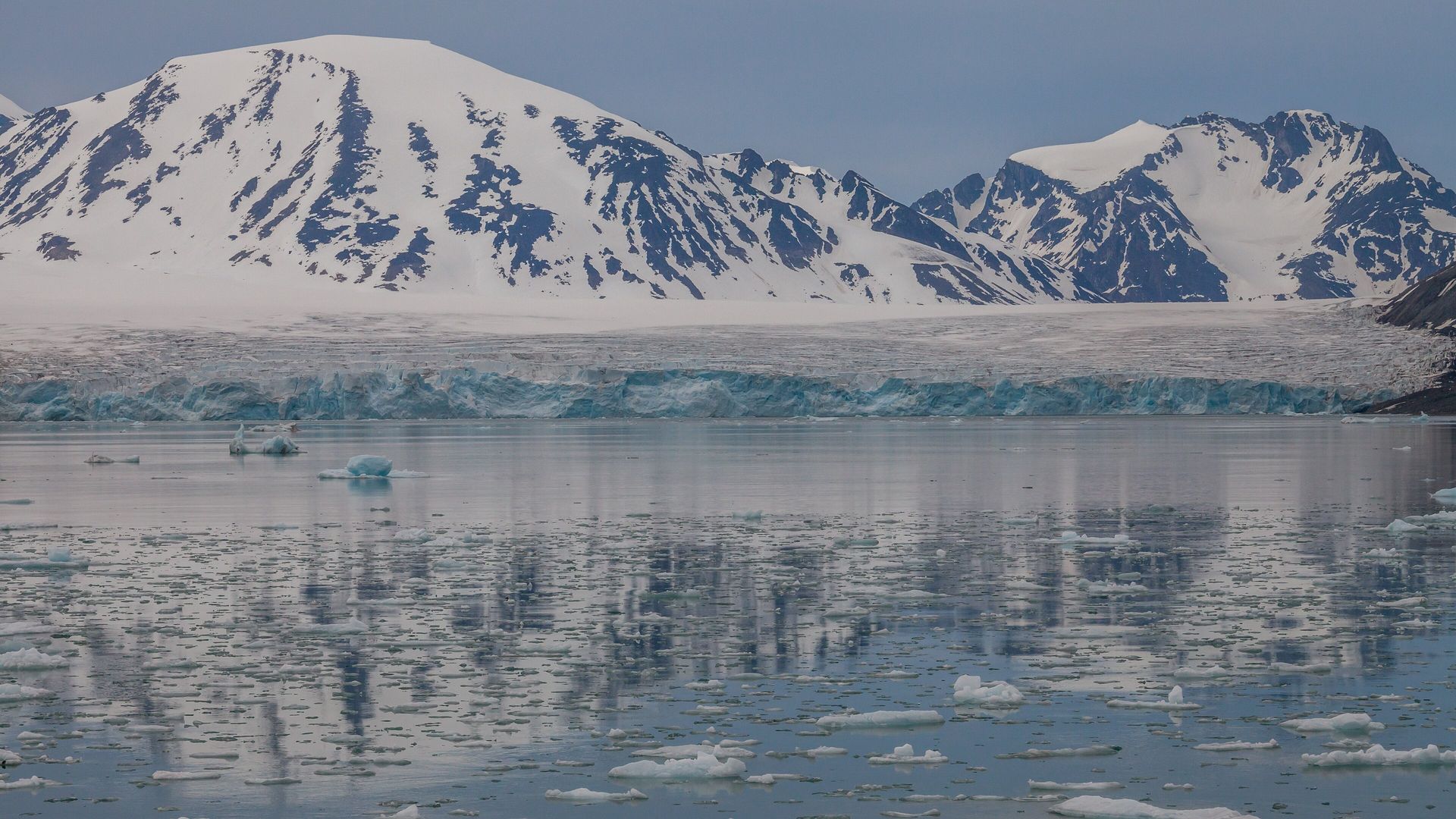
More polar wildlife
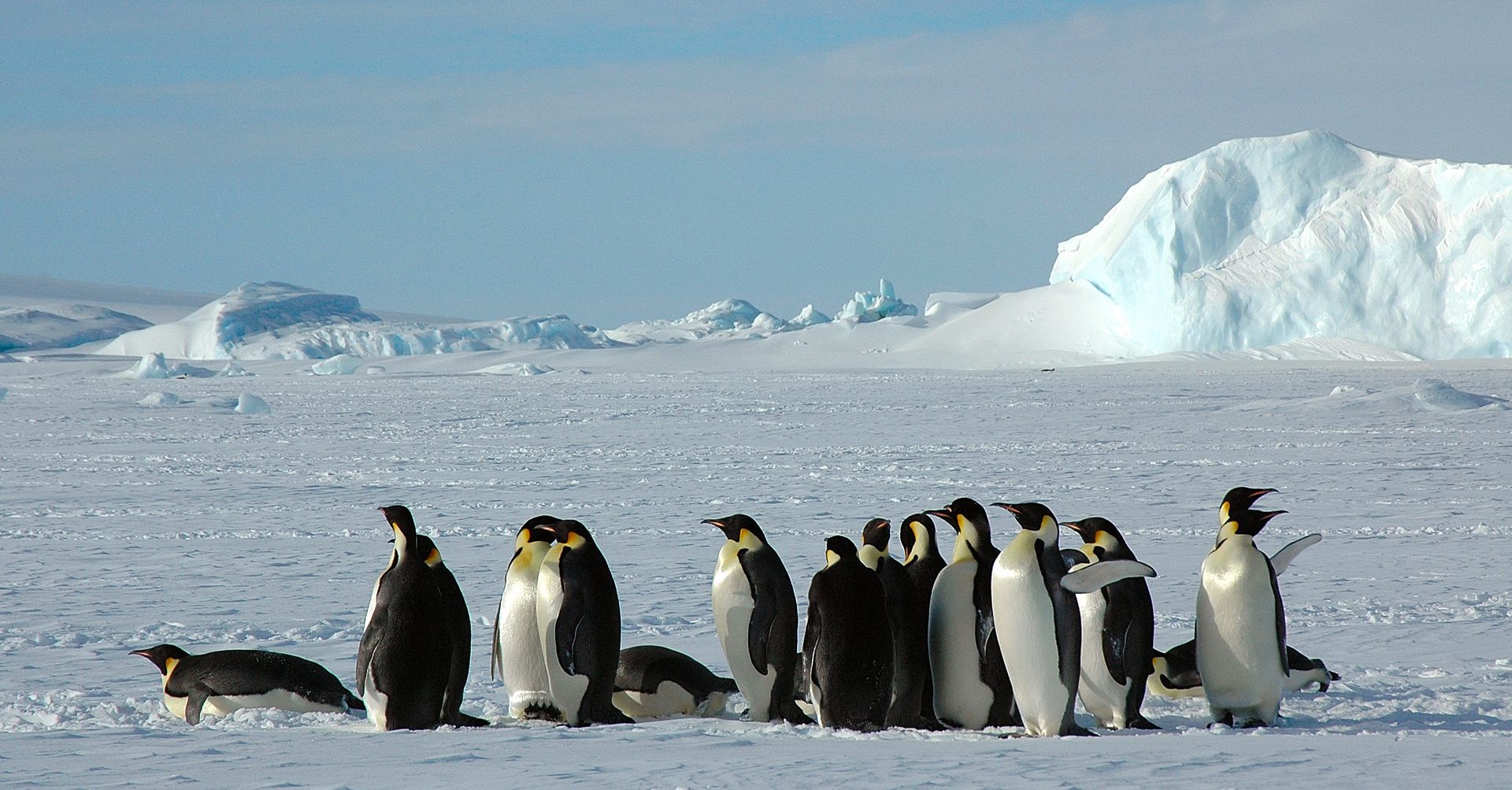
Emperor penguin
Where and how to see emperor penguins in the wild: why Antarctic Peninsula cruises miss them, which helicopter voyages and fly-in trips go to a colony and for how much, plus size, lifespan and conservation status.
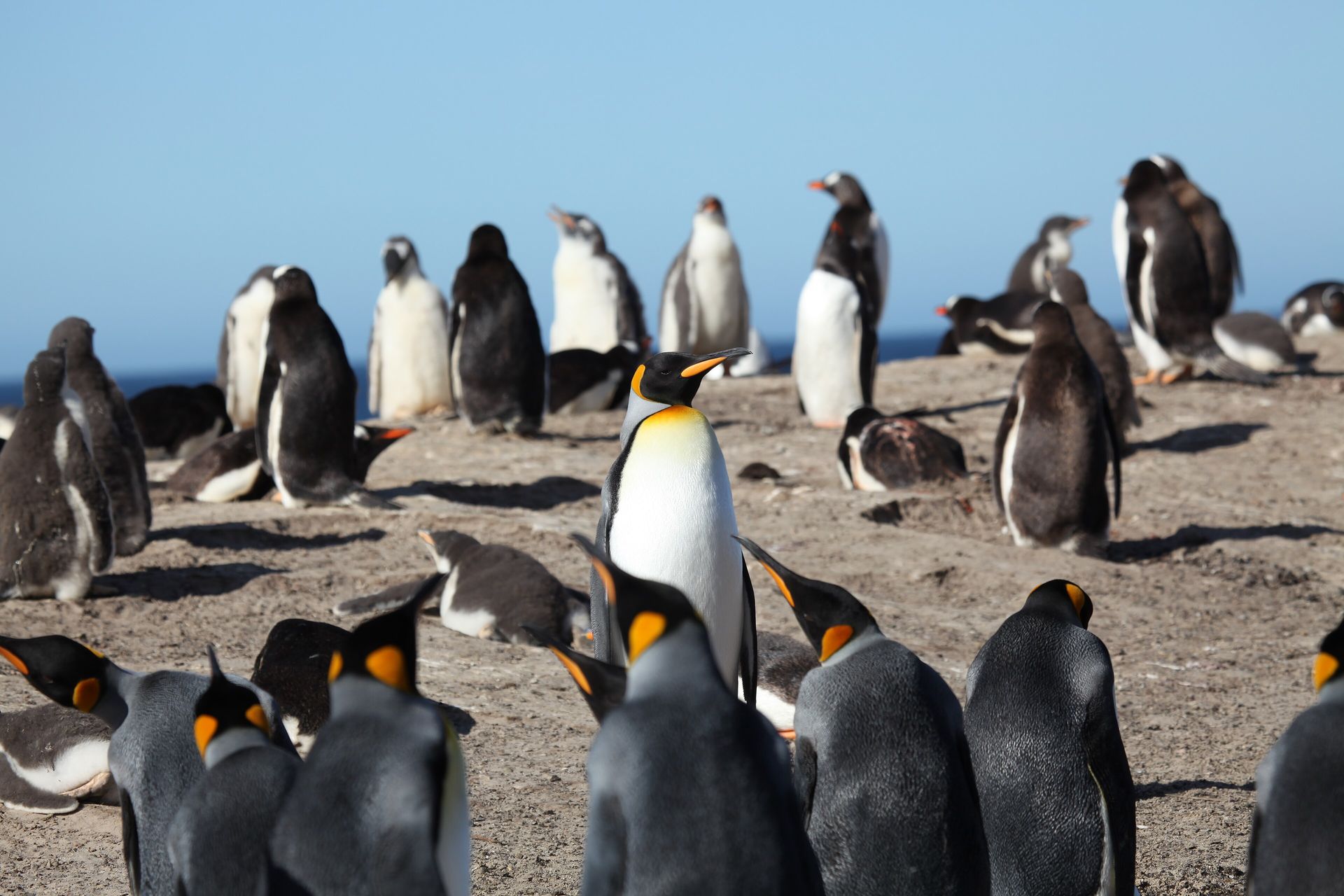
Penguin species
All 18 penguin species in one table, with scientific names, where each breeds, size and IUCN status, plus which ones you can see on an Antarctic, South Georgia, Falklands or Ross Sea trip.
Sources
- 1.10 Surprising Facts About Polar Bears, Polar Bears International. Accessed October 14, 2026.
- 2.Habitat (polar bear facts), Polar Bears International. Accessed October 14, 2026.
- 3.Polar Bear Facts, Polar Bears International. Accessed October 14, 2026.
- 4.Life Cycle (polar bear facts), Polar Bears International. Accessed October 14, 2026.
- 5.Population Status (status table of the 20 polar bear subpopulations, updated 2024), IUCN/SSC Polar Bear Specialist Group (PBSG). Accessed October 14, 2026.
- 6.Antarctic Penguins (public information leaflet, 2017), British Antarctic Survey (NERC). Accessed October 14, 2026.
- 7.Polar Bears in Svalbard, Visit Svalbard. Accessed October 14, 2026.
- 8.The number and distribution of polar bears in the western Barents Sea (Aars et al., Polar Research 36, 2017), Polar Research (Norwegian Polar Institute). Accessed October 14, 2026.
- 9.Polar bear, Norwegian Polar Institute, Environmental Monitoring of Svalbard and Jan Mayen (MOSJ). Accessed October 14, 2026.
- 10.Polar bear guidelines, Association of Arctic Expedition Cruise Operators (AECO). Accessed October 14, 2026.
- 11.Svalbard Environmental Protection Act (unofficial English translation), Sysselmesteren på Svalbard (Governor of Svalbard). Accessed October 14, 2026.
- 12.New environmental regulations enters into force on 1 January, Sysselmesteren på Svalbard (Governor of Svalbard). Accessed October 14, 2026.
- 13.Firearms, Governor of Svalbard (Sysselmesteren på Svalbard). Accessed October 14, 2026.
- 14.Svalbard cruises, HX (Hurtigruten Expeditions). Accessed October 14, 2026.
- 15.Circumnavigating Spitsbergen: In the Realm of the Polar Bear (11 days, with overnight stay in Oslo), HX Expeditions (Hurtigruten Expeditions). Accessed October 14, 2026.
- 16.Around Spitsbergen, in the Icy Realm of the Polar Bear, m/v Hondius, 29 June to 8 July 2027 (HDS07-27), Oceanwide Expeditions. Accessed October 14, 2026.
- 17.Dates and Rates, Quark Expeditions. Accessed October 14, 2026.
- 18.Polar bear webcam: Wapusk National Park, Parks Canada. Accessed October 14, 2026.
- 19.Wapusk National Park, Parks Canada. Accessed October 14, 2026.
- 20.Polar Bears and Guided Tours, Town of Churchill, Manitoba. Accessed October 14, 2026.
- 21.Classic Polar Bear Expedition (Churchill, Manitoba), Natural Habitat Adventures. Accessed October 15, 2026.
- 22.Kaktovik is trying to revive its polar bear tourism industry (Associated Press), Anchorage Daily News, 24 April 2026. Accessed October 14, 2026.
- 23.HX Expeditions unveils new fleet enhancements for 2026 and beyond (press release, 1 September 2026), HX Expeditions (Mynewsdesk newsroom). Accessed October 14, 2026.
- 24.IUCN Red List (polar bear assessment summary), IUCN/SSC Polar Bear Specialist Group (PBSG). Accessed October 15, 2026.