Chinstrap penguin
Chinstrap penguin facts for travelers: how many there are and where they breed, the South Shetland colonies ships land at and which ships may land, when the chicks hatch, the voyages that list them, and why numbers are falling.
Where can you see chinstrap penguins?
The chinstrap is a small penguin, about 28 inches (71 cm) tall, named for the thin black band under its chin. A 2020 global count found about 3.42 million pairs, most on the South Sandwich, South Orkney and South Shetland Islands. Travelers see them on South Shetland landings, above all Half Moon Island, from November to March, with chicks in January and February. It is Least Concern but declining.
Facts checked October 15, 2026 against 36 sources.
Chinstrap penguin facts
- July: no trips
- August: no trips
- September: no trips
- October: no trips
- November: no trips
- December: best
- January: best
- February: best
- March: no trips
- April: no trips
- May: no trips
- June: no trips
Best Season
- Scientific name
- Pygoscelis antarcticus
- Where to see
- The South Sandwich, South Orkney and South Shetland Islands and the northern Antarctic Peninsula, with a few on South Georgia. On a cruise: Half Moon Island, the Aitcho Islands, Penguin Island, Turret Point, Hannah Point, Baily Head on Deception Island and Point Wild on Elephant Island.
- Best months
- December to February
- Population
- About 3.42 million breeding pairs at 375 colonies (2020 global assessment); the IUCN Red List uses BirdLife's 1999 figure of about 4 million pairs, or 8 million mature birds
- Status
- Least Concern, decreasing (IUCN Red List, assessed 2020)
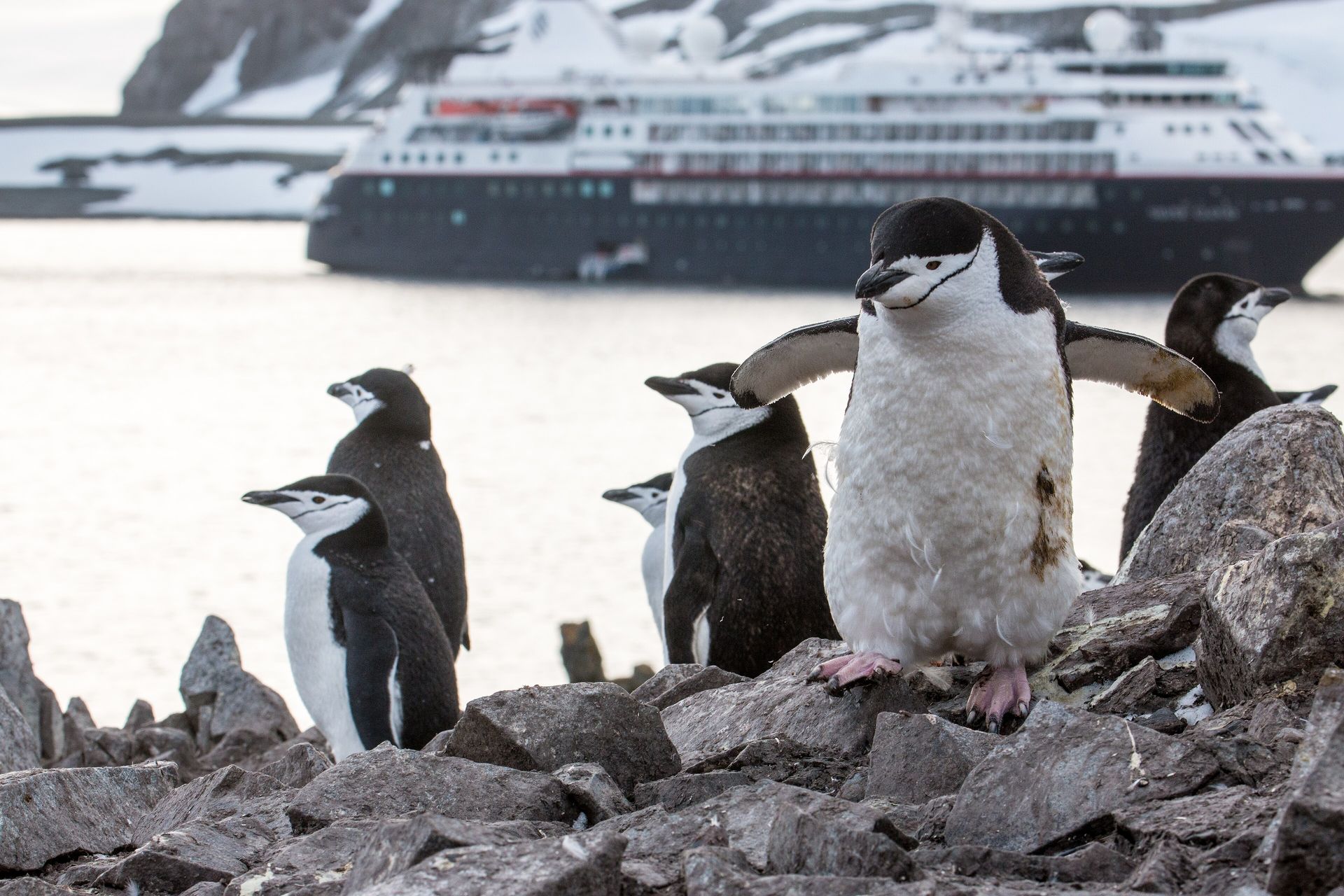
The chinstrap penguin (Pygoscelis antarcticus) is named for the narrow band of black feathers that runs from ear to ear just below its chin.1 It is a small penguin, about 28 in (71 cm) tall and 8 to 12 lb (3.5 to 5.5 kg), and the British Antarctic Survey calls it probably the most abundant penguin in the Antarctic region.21 For travelers it is the penguin of the South Shetland Islands, which hold three quarters of the chinstraps in the Antarctic Peninsula region.3 For the other species, see our penguin species guide and the gentoo and Adélie pages.
How many chinstrap penguins are there, and where do they live?
About 3.42 million breeding pairs (2.98 to 4.00 million) at 375 colonies, by the first comprehensive global assessment, built from satellite, drone and ground counts and published in 2020.3 The IUCN Red List, through BirdLife International, still uses an older figure of about 4 million pairs, or 8 million mature birds, from 1999.4 Almost all of them breed in the southwest Atlantic sector of the Southern Ocean, on rocky, ice-free coasts from the South Sandwich Islands to Marguerite Bay on the Antarctic Peninsula, at about 68°S.34
| Region | Share of breeding chinstraps, 2020 | Older regional count |
|---|---|---|
| South Sandwich Islands | 39.4% | About 1.5 million pairs (BirdLife, citing studies from 1999 and 2016); the islands are closed to visitors345 |
| Antarctic Peninsula region | 32.1%, of which 75% in the South Shetlands and 23% around Elephant Island | 987,000 pairs in the South Shetlands and 72,000 on the western Peninsula (2013)34 |
| South Orkney Islands | 28.1% | 927,000 pairs (BirdLife, citing studies from 1985 and 2017), probably too low34 |
| South Georgia | 0.4% | Only at Cooper Bay and Annenkov Island36 |
Small colonies also breed on Bouvet Island and in the Balleny Islands.3 The median colony has about 1,100 pairs, but one in eight has more than 10,000.3
The biggest of all is on Zavodovski, in the South Sandwich Islands, where the South Georgia government has put the colony on the slopes of Mount Asphyxia at more than a million birds.6 It was long called the largest penguin colony in the world, but a British Antarctic Survey study published in Current Biology in October 2026 found that occupied chinstrap nests there fell 63% from 2011 to 2025, a loss of more than half a million birds.3534 By 2025 that had passed the title to the Adélie colony at Cape Adare in the Ross Sea, which held 504,332 pairs in 2018.3436 The researchers blame less krill in warming water, not the island's 2016 eruption.34
Where can you see chinstrap penguins on a cruise?
Mostly in the South Shetlands, and above all at Half Moon Island, the sixth most landed site in the Peninsula region in 2025-26, with 147 landings by ships and yachts. No other chinstrap colony with Antarctic Treaty site guidelines had more than 37:7
| Site | Landings, 2025-26 | Chinstraps there | Ship limit |
|---|---|---|---|
| Half Moon Island, South Shetlands | 147 | 1,493 nests counted from the ground on November 16, 2025, against about 3,300 in 1996 and 1998; they nest on a small hill with a navigation tower, which is closed to visitors89 | 500 passengers on board9 |
| Barrientos Island, Aitcho Islands | 37 | Chinstraps and gentoos; the chinstrap monitoring sites are closed10 | 20010 |
| Penguin Island, off King George Island | 12 | Chinstrap colonies at the north end, reached under close supervision along the shore; Adélies too11 | 200, one ship at a time11 |
| Point Wild, Elephant Island | 11 | A colony on the spit where Shackleton's men camped, mostly a Zodiac-cruising site, with occasional landings at low tide for up to 30 visitors at a time12 | 50012 |
| Baily Head, Deception Island | 8 | The largest chinstrap colony on the Antarctic Peninsula, and declining13 | 20013 |
| Turret Point, King George Island | 8 | Chinstraps and Adélies14 | 200, one ship at a time14 |
| Hannah Point, Livingston Island | 2 | Chinstraps, gentoos and a few macaronis15 | 200, one ship at a time15 |
Your ship's size decides which of these you can land at. Every site in the table except Half Moon Island and Point Wild is closed to ships carrying more than 200 passengers.131015 Oceanwide's Ortelius and Plancius carry 108 passengers, so all seven are open to them; HX's Fridtjof Nansen and Silversea's Silver Wind are IAATO Category 2 ships, of 201 to 500 passengers, and Roald Amundsen carries 490, so on those Half Moon Island is the chinstrap colony you can expect.1617181920 On South Georgia, Oceanwide calls Cooper Bay, one of the island's two chinstrap sites, a fine place for a Zodiac cruise.21
When is the best time to see chinstrap penguins and their chicks?
From late December to February, when the colonies are full of chicks. Eggs are laid in late November and hatch in early January, and the chicks have usually fledged about two months later; unlike most penguins, which feed the stronger chick first, chinstrap parents usually raise both.21
| Months | In the colony |
|---|---|
| October and November | Adults return from wintering at sea north of the pack ice; at Half Moon Island, walks through the pass to the eastern tip are strongly discouraged from October until mid-January19 |
| Late November and December | Two eggs per nest, incubated for 33 to 36 days1 |
| January | Silver-gray chicks hatch and grow a second, darker down at two to three weeks21 |
| February | Big chicks; the Oceanites survey team counted 1,578 at Half Moon Island on February 1, 20268 |
| March to early May | Chicks fledge at 7 to 8 weeks, and the colonies empty as the birds head north1 |
Which voyages give the best odds of seeing chinstrap penguins?
Any voyage that spends a day in the South Shetlands, and above all one that names Half Moon Island; on a ship of 200 passengers or fewer, the other colonies open up too. These are the lowest 2026-27 fares we found for voyages that list a chinstrap colony:
| Voyage | Departure | Chinstrap sites | Lowest published fare, per person |
|---|---|---|---|
| HX Highlights of Antarctica, 12 days, Buenos Aires round trip | October 30, 2026 (Fridtjof Nansen) or January 9, 2027 (Roald Amundsen) | Half Moon Island, which HX says has a large chinstrap colony, on its list of possible landings22 | $8,830 (was $10,589) or $9,736 (was $11,773), two sharing; HX's extra anniversary discount needs a booking by November 9, 2026; flights between Buenos Aires and Ushuaia and a hotel night included; read October 14, 20262223 |
| Silversea Sail and Fly, Silver Wind, 9 days, Puerto Williams to King George Island | October 20, 2026 | The South Shetlands, where Silversea names chinstraps, gentoos and Adélies24 | $9,000, Oceanview suite, two sharing, on a Last-Minute fare paid in full and non-refundable; hotel and charter flights included; read October 15, 20262425 |
| Oceanwide Polar Circle, Ortelius, 13 days, Ushuaia round trip | March 6, 2027 | Hannah Point on Livingston Island26 | $11,000, the one men's berth left in a shared four-berth porthole cabin; no flights; read October 15, 202627 |
| Oceanwide Elephant Island, Weddell Sea and Polar Circle, Plancius, 15 days, Ushuaia round trip | March 12, 2027 | Point Wild on day 4, if conditions allow28 | $11,700, one berth in a shared four-berth porthole cabin, with one such cabin left; no flights; read October 15, 202627 |
For one good chinstrap landing with small chicks, take HX's January 9 departure: Half Moon Island is on its list, it sails as the chicks hatch, and its fare covers the flights to Ushuaia.222 For more than one colony, pick a small ship instead, because only ships of 200 passengers or fewer may land at Baily Head, the Aitcho Islands, Hannah Point, Penguin Island and Turret Point; the two Oceanwide voyages here qualify, but sail in March, as the chicks fledge.13111 Treat Point Wild as a bonus: IAATO recorded only 11 landings there in 2025-26.7 October voyages arrive before the eggs are laid.1 For South Shetlands trips that fly one way, see fly or sail the Drake Passage; for timing against weather, the best time to visit Antarctica.
How close can you get to chinstrap penguins?
At least 16 ft (5 m), from outside the colony, and farther if a bird changes its behavior; the Antarctic Treaty's visitor guidelines also warn that any wildlife, even penguins, can cause serious harm.29 While bird flu is a risk, visitors may not sit, kneel or lie down, or put bags on the ground.30 Chinstrap sites add limits of their own: at Half Moon Island, no more than 100 visitors ashore at once, a guide for every 20 and no landings from 10 p.m. to 4 a.m.; at Point Wild and Baily Head, guided groups of up to 15.91213 Our Antarctica visitor rules guide has the full code.
Do chinstrap penguins really take 10,000 naps a day?
Yes. A study published in Science in 2023 recorded the brain activity of wild chinstraps at sea and on their nests in Antarctica and found that they nodded off more than 10,000 times a day.31 Each microsleep lasted about 4 seconds on average, but together they added up to more than 11 hours of sleep for each half of the brain.31
Are chinstrap penguins aggressive?
Toward each other at the nest, yes: the sleep study names aggression from other penguins, along with an egg predator, as the constant pressure behind those seconds-long naps.31 The penguin the British Antarctic Survey singles out for attitude is a cousin, the Adélie, which will rush out of a colony to attack a visiting scientist with its flippers.2
Are chinstrap penguins endangered or declining?
Not endangered, but declining in most of the places travelers see them. The IUCN Red List rates the chinstrap Least Concern, most recently in 2020, with a decreasing trend, and BirdLife's 2020 assessment said it might warrant uplisting if the 2016 eruption on Zavodovski had killed many birds and the Peninsula declines continued.4 The 2026 Zavodovski study found a steep decline there with a different cause, falling krill, and says a move from Least Concern to Endangered now requires consideration.34 Of the colonies the 2020 global assessment could compare with counts from the 1980s, 45% have probably or certainly declined and 18% increased, and 23 colonies are gone. Weighted by numbers, that assessment found the picture milder, because more than a third of all chinstraps lived in a few big South Sandwich colonies that appeared stable; the Zavodovski counts show the biggest of them was not.334
- The Peninsula. BirdLife cites a decline of about 1.1% a year since 1980, except at the southern tip of the range, where the Palmer Archipelago grew from about 2,000 birds in 1974 to about 10,000 in 2016.4
- Elephant Island. The first complete census since 1970-71, made in January 2020, found fewer chinstraps, while gentoos had doubled.32
- The landing sites. Half Moon Island's nest count fell from about 3,300 in 1996 and 1998 to 1,493 in November 2025, and Baily Head's colony is declining.813
The likely cause is food. Chinstraps eat almost nothing but Antarctic krill, BirdLife links the declines to climate-driven changes in krill, and the krill fishery overlaps their foraging grounds.43 Visitors and scientists reach only a very small share of the population, and BirdLife knows of no effect on numbers.4
How long do chinstrap penguins live, and what eats them?
Sixteen to 20 years, according to the Australian Antarctic Division, and they first breed at three.1 Leopard seals are their main predator at sea; on land, sheathbills, skuas and southern giant petrels take eggs and chicks.1 They feed close to their colonies, mostly shallower than 150 ft (45 m), and after breeding they travel farther than the other two Pygoscelis penguins, up to 2,800 miles (4,500 km), to winter in the open ocean near 60°S.43
How do you tell chinstrap, gentoo and Adélie penguins apart?
Look at the face. All three are close relatives of about the same size, and several of the landings above have two of them side by side.12
Where to see chinstrap penguin
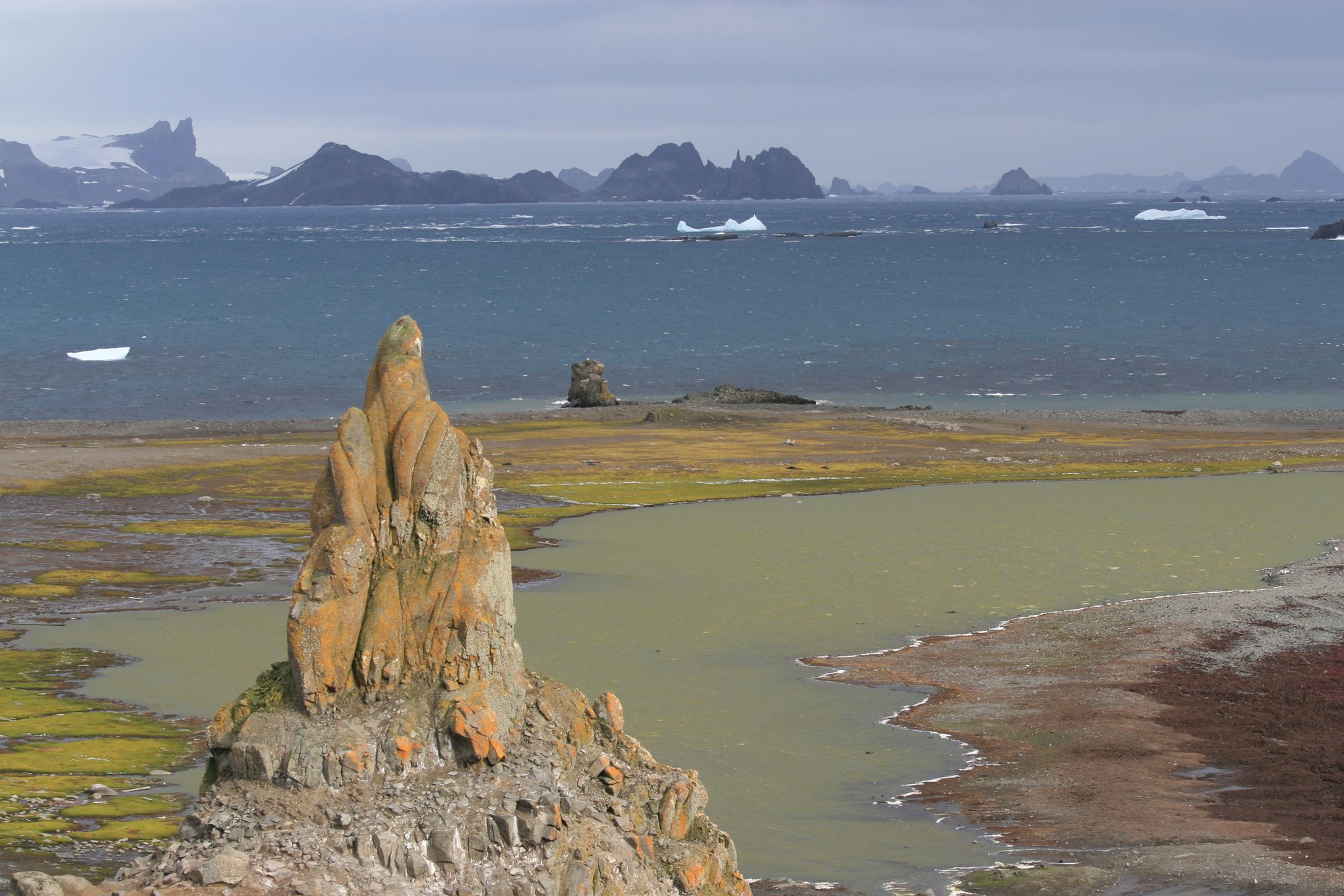
South Shetland Islands
The island chain most Antarctic cruises reach first: where it is, its dozen landing sites and how busy each is, the penguins and seals, the research stations and how to get there.
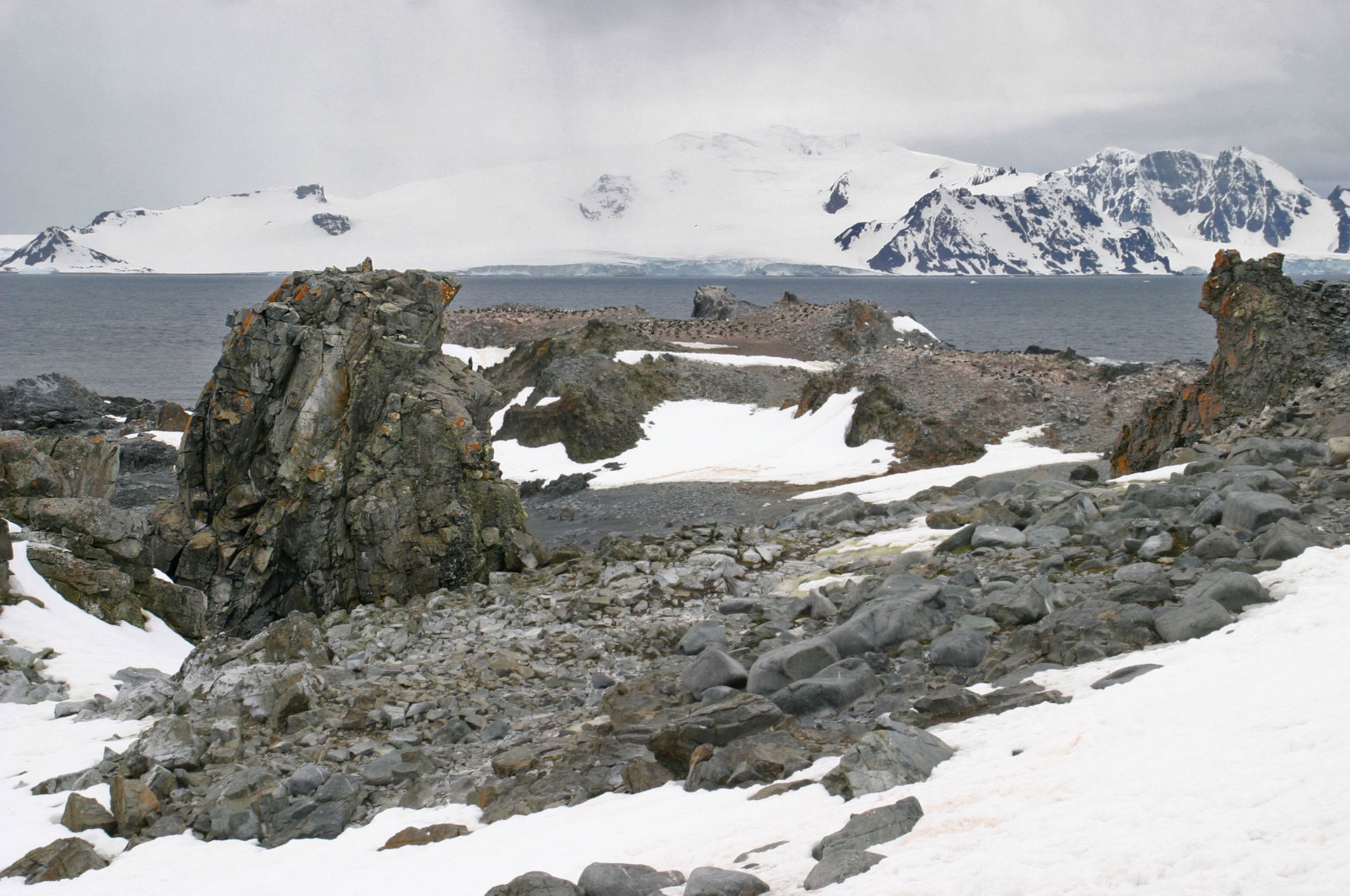
Half Moon Island
Visiting Half Moon Island in the South Shetlands: the chinstrap penguin colony, landing beach and closed areas, Argentina's Cámara station, the falling nest counts and which voyages stop.
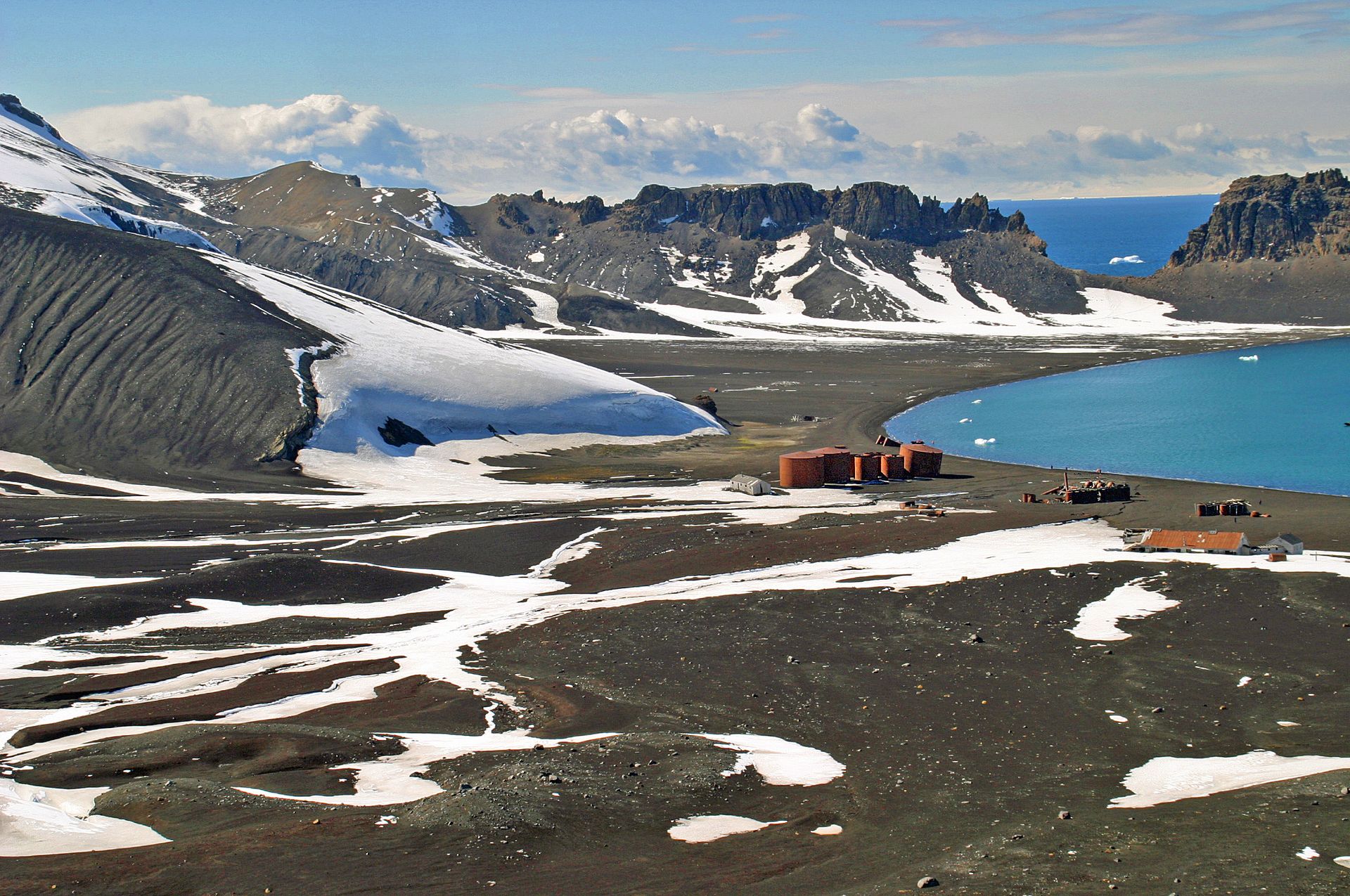
Deception Island
Visiting Deception Island: its four landing sites and their limits, the volcano's eruption risk, the whaling-era ruins, hot-water bathing rules and the Baily Head chinstrap colony.
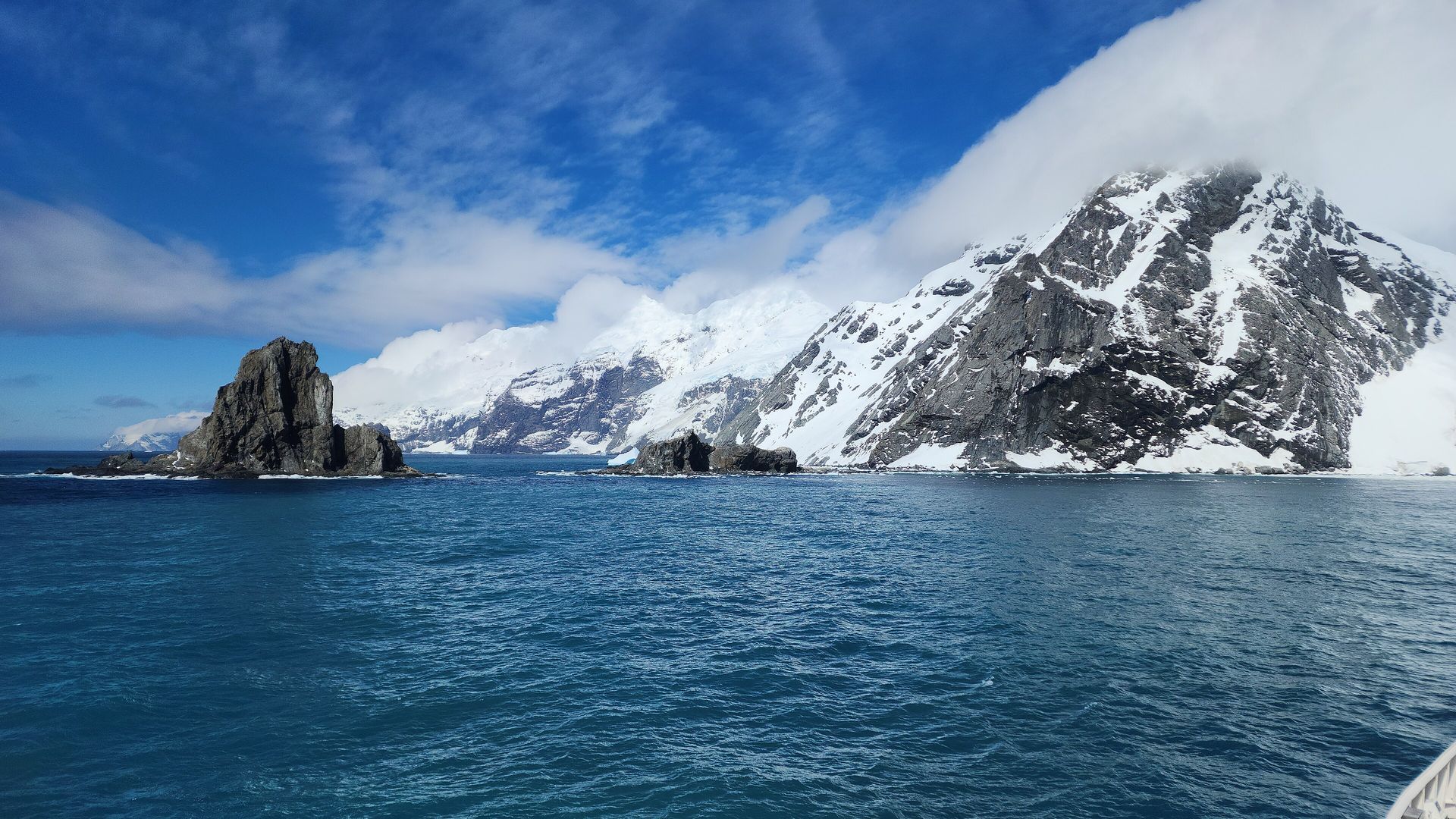
Elephant Island
Shackleton's refuge in the South Shetlands: what happened at Point Wild in 1916, what the 22 men ate, why most ships only cruise past, the landing odds and the cruises that go.
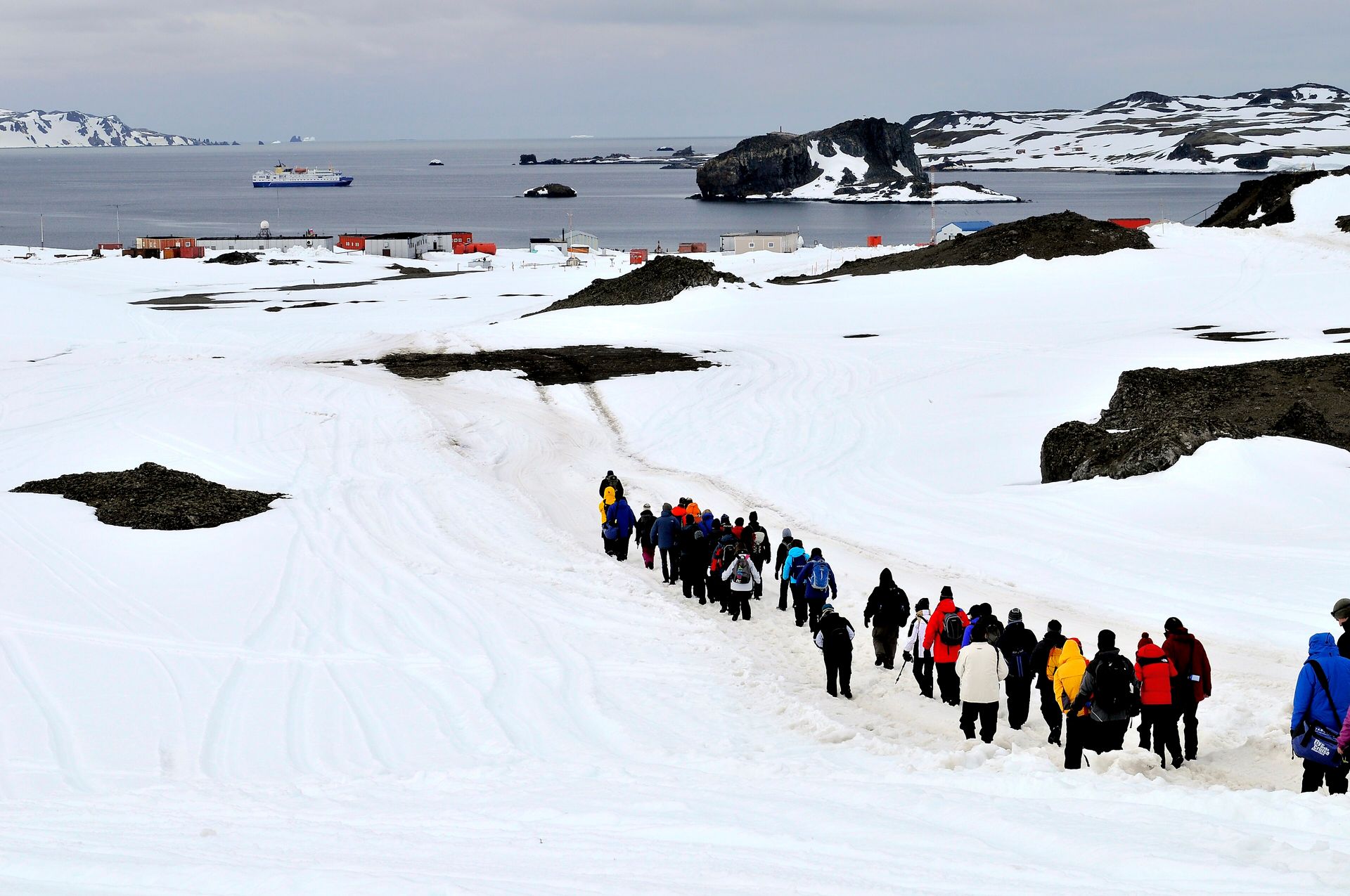
King George Island
Antarctica's fly-cruise gateway: how the gravel airstrip at Chile's Frei base works and how often flights slip, the fares, the research stations, what visitors see, the weather and the day trip.
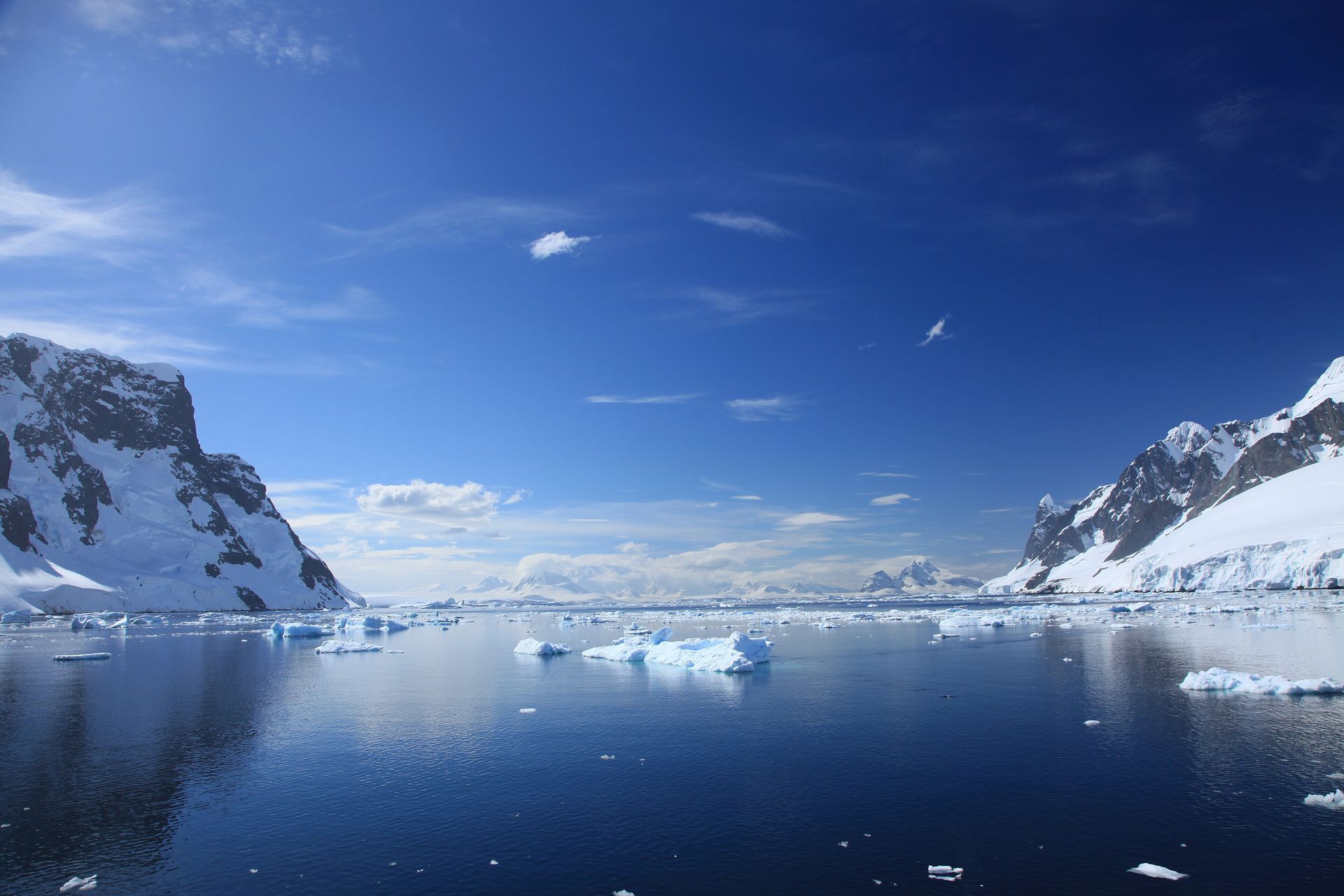
Antarctic Peninsula
Planning an Antarctic Peninsula cruise: how long trips last, where ships land, the best month by temperature and wildlife, landing rules, ship sizes and starting fares.
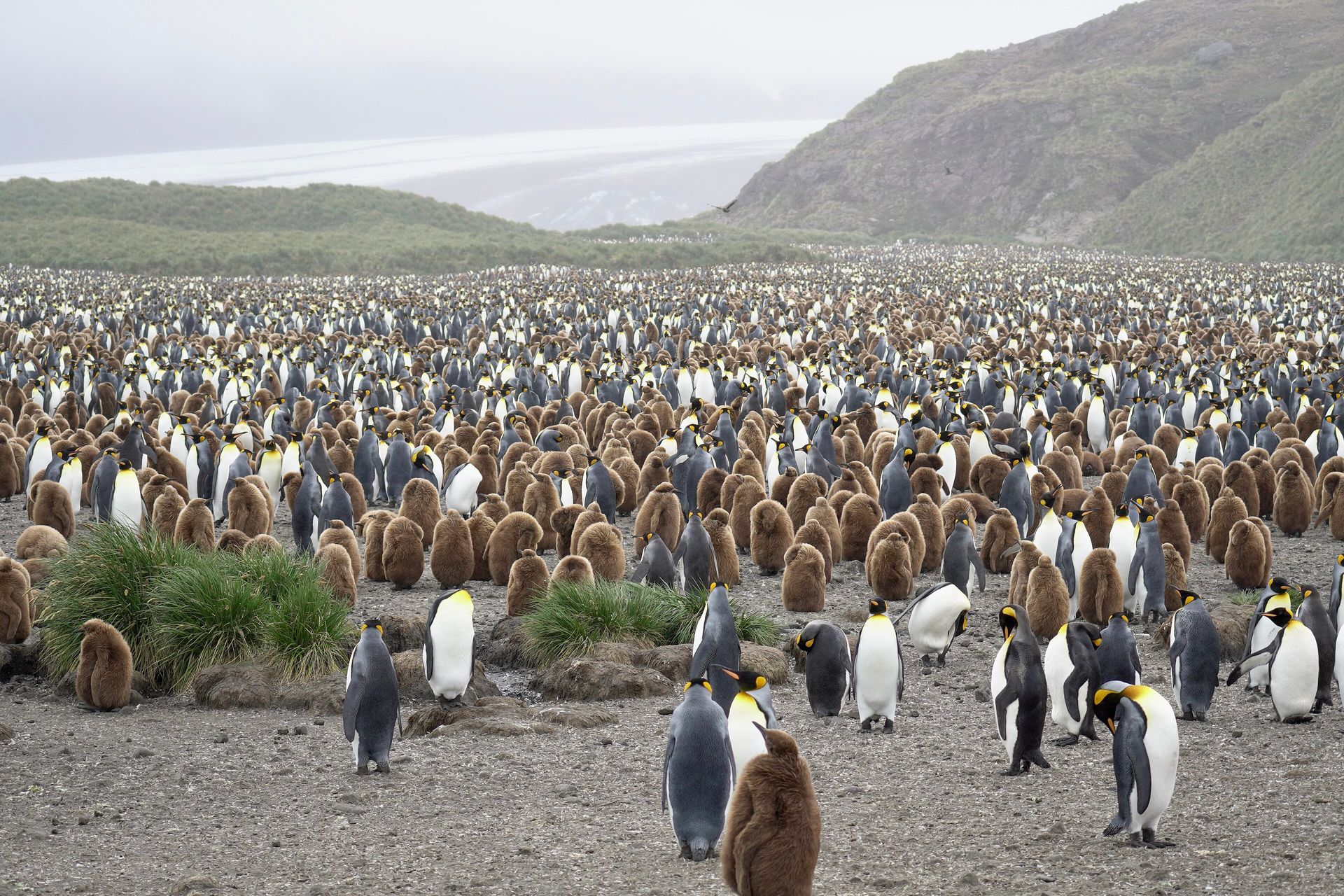
South Georgia
Where South Georgia is and how to visit it: which voyages go and what they cost, whether the extra week is worth it, the best months, the wildlife and the government's rules.
More polar wildlife
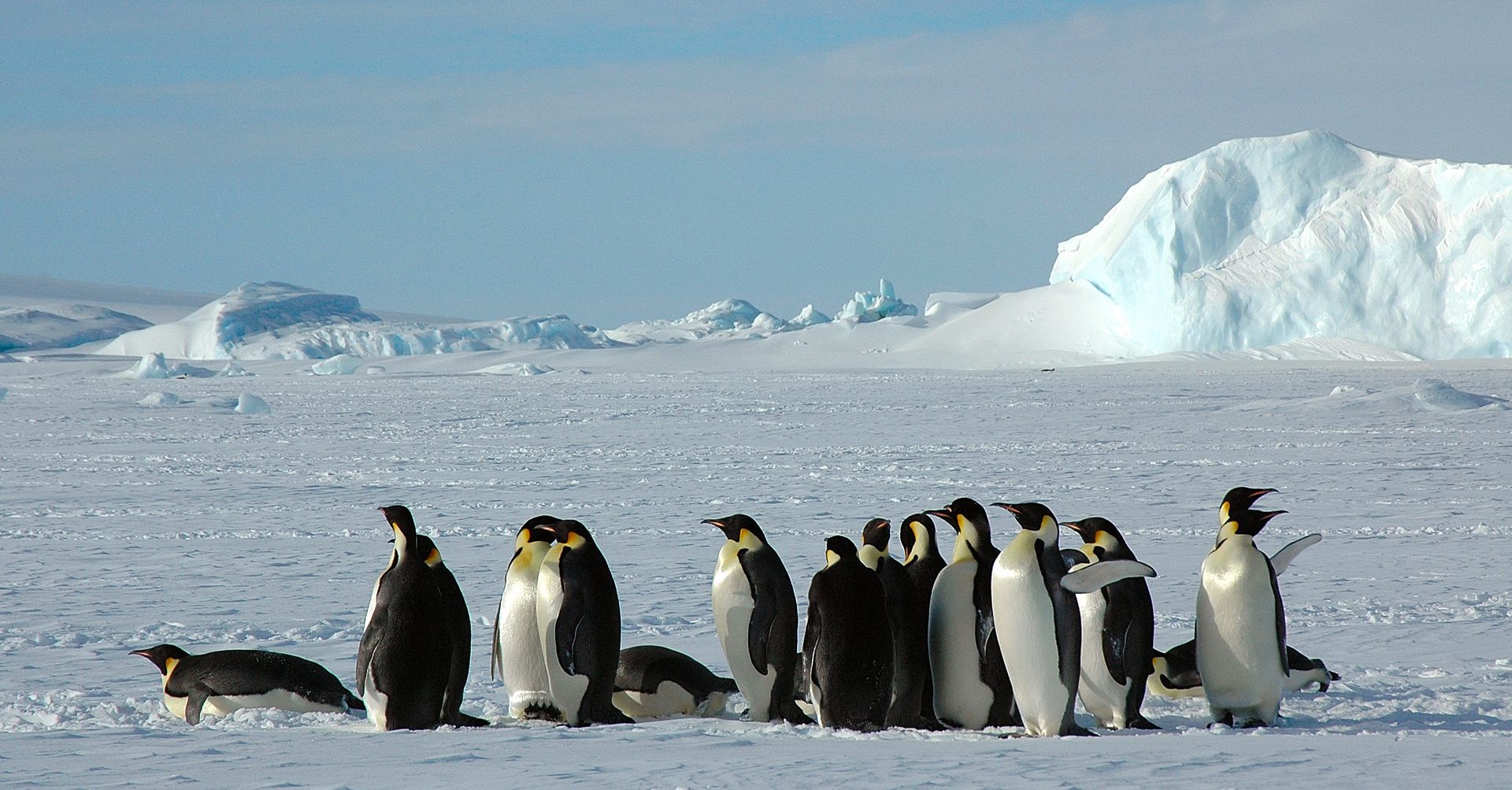
Emperor penguin
Where and how to see emperor penguins in the wild: why Antarctic Peninsula cruises miss them, which helicopter voyages and fly-in trips go to a colony and for how much, plus size, lifespan and conservation status.
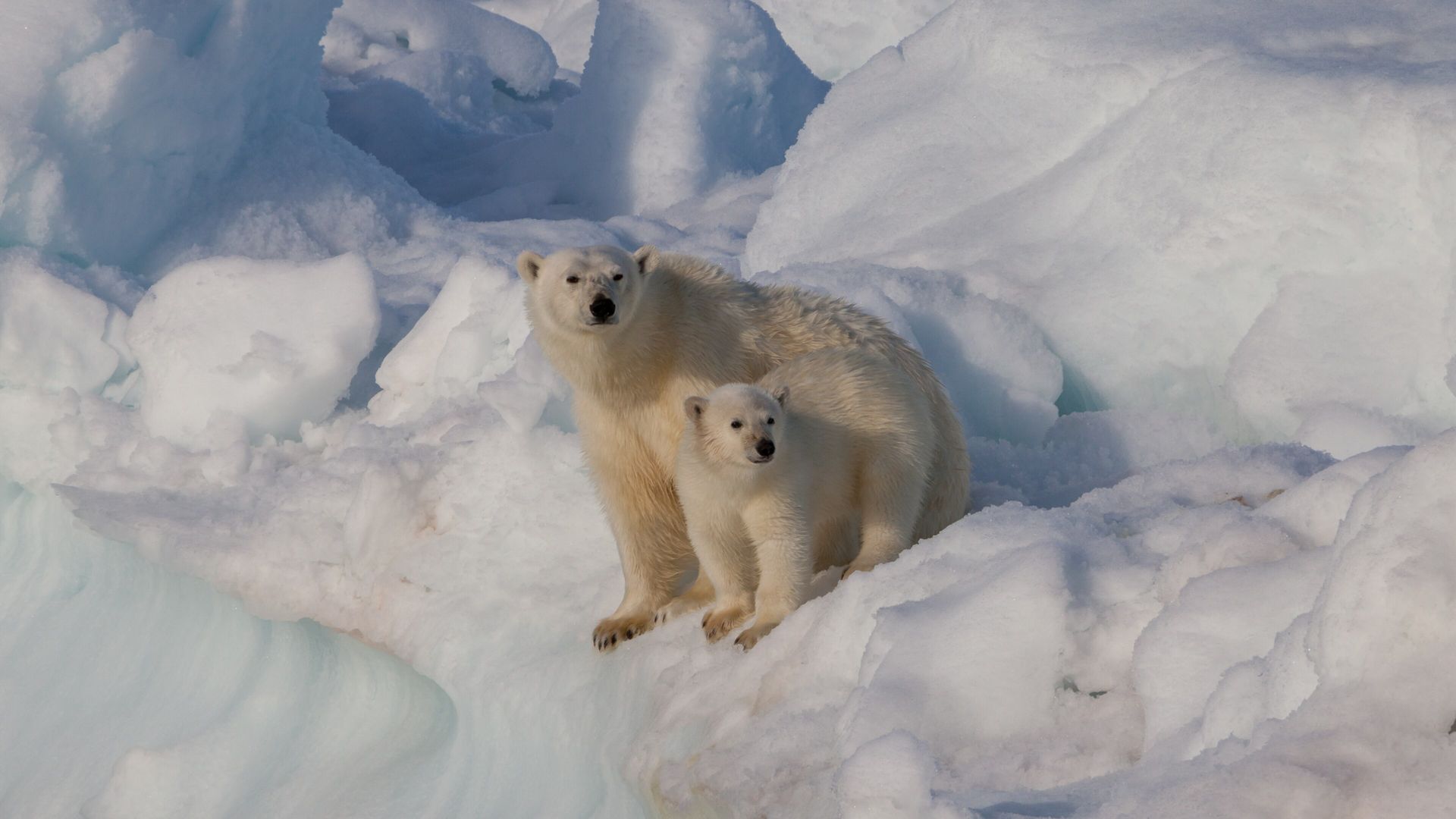
Polar bear
Where polar bears live and where to see them: Churchill in October and November, Svalbard by ship in summer, Kaktovik in Alaska, with odds, prices, the Svalbard distance and firearm rules, and why none live in Antarctica.
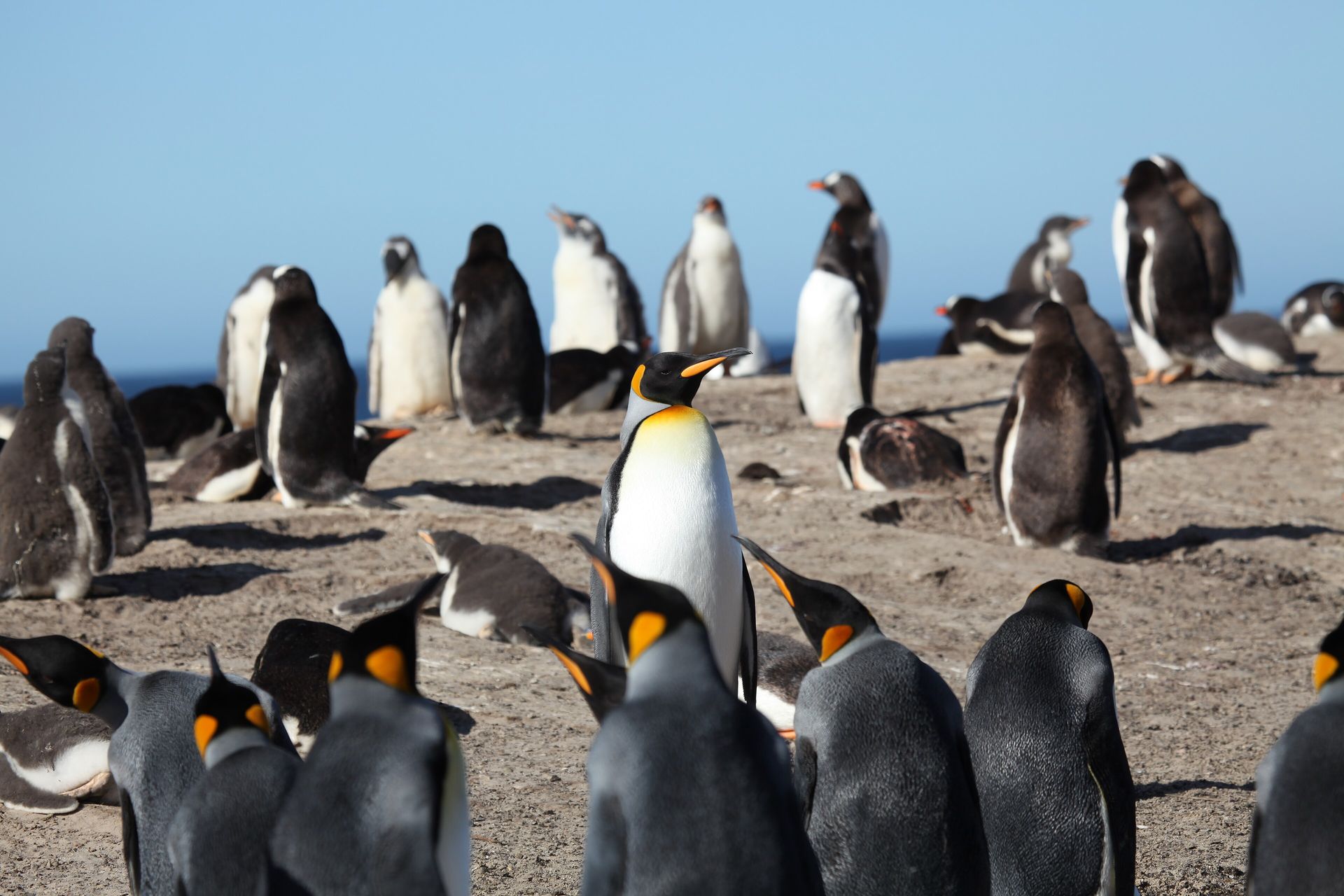
Penguin species
All 18 penguin species in one table, with scientific names, where each breeds, size and IUCN status, plus which ones you can see on an Antarctic, South Georgia, Falklands or Ross Sea trip.
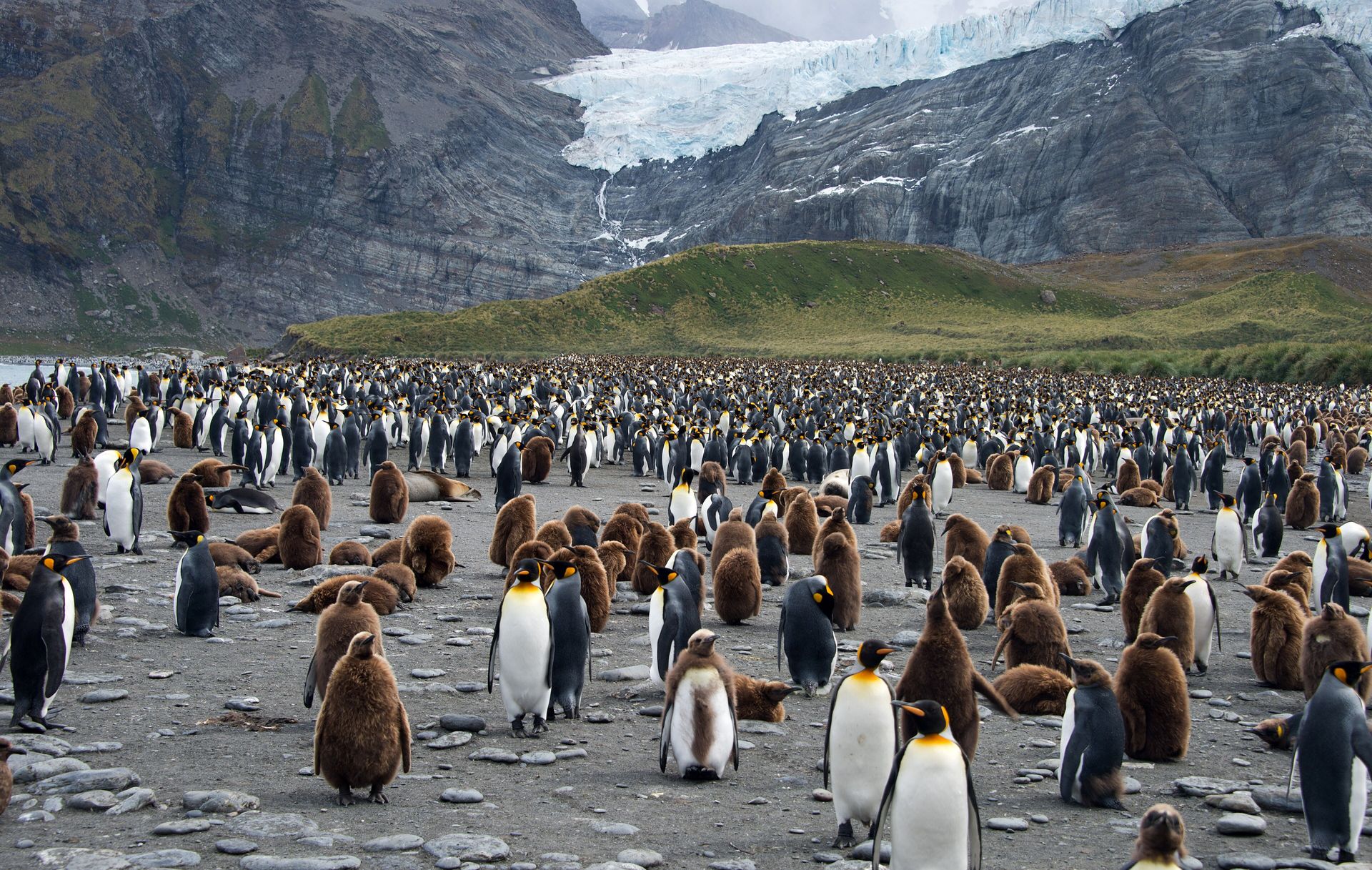
King penguin
King penguin facts for travelers: how many there are and where they breed, the South Georgia and Falklands landings that put you among them, the months for chicks, the voyages with the most time there, and the rules ashore.
Gentoo penguin
Gentoo penguin facts for travelers: how many there are and where they breed, the Antarctic landings with the biggest colonies, when the chicks are out, the cheapest voyages that visit them, and why scientists now propose four species.
Sources
- 1.Chinstrap penguin, Australian Antarctic Division (Australian Antarctic Program). Accessed October 14, 2026.
- 2.Antarctic Penguins (public information leaflet, 2017), British Antarctic Survey (NERC). Accessed October 14, 2026.
- 3.A global population assessment of the Chinstrap penguin (Pygoscelis antarctica) (Scientific Reports, 2020), Strycker et al., Scientific Reports (Nature Portfolio). Accessed October 15, 2026.
- 4.Chinstrap Penguin Pygoscelis antarcticus: species factsheet, BirdLife International (Data Zone). Accessed October 14, 2026.
- 5.Terrestrial Protected Area, Government of South Georgia & the South Sandwich Islands. Accessed October 14, 2026.
- 6.South Georgia Terrestrial Protected Area: description of the protected features (October 2023), Government of South Georgia & the South Sandwich Islands. Accessed October 14, 2026.
- 7.IAATO Operator Use of Antarctic Peninsula Landing Sites, 2025-26 Season Report and Five-Year Overview, with appendix tables (ATCM 48 IP 199), International Association of Antarctica Tour Operators (IAATO). Accessed October 15, 2026.
- 8.MAPPPD penguin census data for Cuverville Island, Half Moon Island, Jougla Point, Port Lockroy, Neko Harbor and Snow Hill Island (CSV export), Mapping Application for Penguin Populations and Projected Dynamics (MAPPPD), Lynch Lab, Stony Brook University and Oceanites. Accessed October 15, 2026.
- 9.Site Guidelines for Visitors: Half Moon Island, Secretariat of the Antarctic Treaty. Accessed October 14, 2026.
- 10.Site Guidelines for Visitors: Barrientos Island (Aitcho Islands), Secretariat of the Antarctic Treaty. Accessed October 15, 2026.
- 11.Site Guidelines for Visitors: Penguin Island, King George Island (ATCM, 2018), Secretariat of the Antarctic Treaty. Accessed October 15, 2026.
- 12.Site Guidelines for Visitors: Point Wild, Elephant Island (ATCM, 2018), Secretariat of the Antarctic Treaty. Accessed October 15, 2026.
- 13.Site Guidelines for Visitors: Baily Head, Deception Island, Secretariat of the Antarctic Treaty. Accessed October 14, 2026.
- 14.Site Guidelines for Visitors: Turret Point, King George Island (ATCM, 2018), Secretariat of the Antarctic Treaty. Accessed October 15, 2026.
- 15.Site Guidelines for Visitors: Hannah Point, Livingston Island (ATCM, 2018), Secretariat of the Antarctic Treaty. Accessed October 15, 2026.
- 16.m/v Ortelius ship details (PDF), Oceanwide Expeditions. Accessed October 15, 2026.
- 17.m/v Plancius ship details (PDF), Oceanwide Expeditions. Accessed October 15, 2026.
- 18.MS Fridtjof Nansen (IAATO vessel directory entry), International Association of Antarctica Tour Operators (IAATO). Accessed October 14, 2026.
- 19.Silver Wind (vessel directory entry), International Association of Antarctica Tour Operators (IAATO). Accessed October 15, 2026.
- 20.MS Roald Amundsen: ship features, cabins and specifications, HX Expeditions (Hurtigruten Expeditions). Accessed October 15, 2026.
- 21.Atlantic Odyssey, excl. Antarctic Peninsula, m/v Plancius, 4 to 27 April 2027 (PLA33-27), Oceanwide Expeditions. Accessed October 15, 2026.
- 22.Highlights of Antarctica Expedition Cruise (12 days, round-trip flights from Buenos Aires), HX Expeditions (Hurtigruten Expeditions). Accessed October 14, 2026.
- 23.HX Expeditions unveils new fleet enhancements for 2026 and beyond (press release, 1 September 2026), HX Expeditions (Mynewsdesk newsroom). Accessed October 14, 2026.
- 24.Antarctica: Sail & Fly the Drake Passage: Puerto Williams to King George Island, Silver Wind, Oct 20 to 29, 2026 (voyage WI261020009), Silversea Cruises. Accessed October 15, 2026.
- 25.Last-Minute fare, Silversea Cruises. Accessed October 15, 2026.
- 26.Antarctica: Polar Circle, Deep South Discovery voyage, m/v Ortelius, 6 to 18 March 2027 (OTL29-27), Oceanwide Expeditions. Accessed October 14, 2026.
- 27.Dates & Rates: Antarctica & Arctic Cruises (m/v Ortelius and m/v Plancius tables, 2026-27 to 2027-28), Oceanwide Expeditions. Accessed October 15, 2026.
- 28.Antarctica: Elephant Island, Weddell Sea, Polar Circle, m/v Plancius, 12 to 26 March 2027 (PLA31-27), Oceanwide Expeditions. Accessed October 15, 2026.
- 29.General Guidelines for Visitors to the Antarctic (ATCM), English poster, Antarctic Treaty Consultative Meeting (poster published by IAATO). Accessed October 14, 2026.
- 30.How can I help? (avian influenza rules for visitors), International Association of Antarctica Tour Operators (IAATO). Accessed October 14, 2026.
- 31.Nesting chinstrap penguins accrue large quantities of sleep through seconds-long microsleeps (Science, 2023), Libourel et al., Science (AAAS). Accessed October 15, 2026.
- 32.Fifty-year change in penguin abundance on Elephant Island, South Shetland Islands, Antarctica: results of the 2019-20 census (Polar Biology), Strycker et al., Polar Biology (Springer). Accessed October 15, 2026.
- 33.Adélie penguin, Australian Antarctic Division (Australian Antarctic Program). Accessed October 14, 2026.
- 34.Population declines and changes in community composition at the world’s largest penguin colony (Current Biology, 2026), Ratcliffe et al., Current Biology; abstract on the British Antarctic Survey publications page. Accessed October 15, 2026.
- 35.Penguin population collapse on volcanic island, British Antarctic Survey. Accessed October 15, 2026.
- 36.Measure 16 (2021): Management Plan for Antarctic Specially Protected Area No. 159, Cape Adare, Borchgrevink Coast, Secretariat of the Antarctic Treaty. Accessed October 15, 2026.