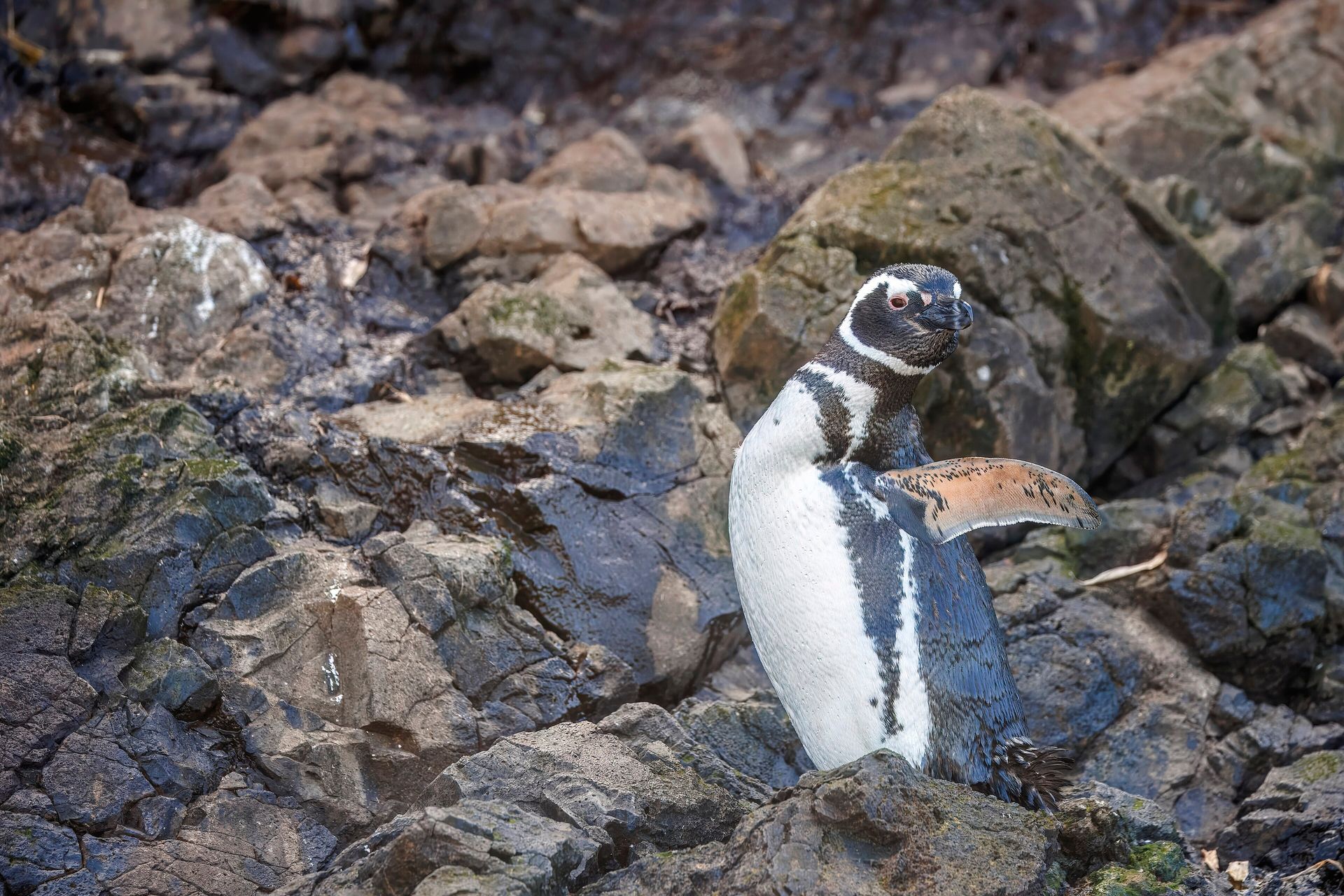
Magellanic penguin
Magellanic penguin facts for travelers: how many there are, the colonies you can walk through in Argentina, Chile and the Falklands, when chicks hatch, how close you may get, which cruises call nearby, and why some colonies are shrinking.
Where can you see Magellanic penguins?
The Magellanic penguin is a burrow-nesting penguin of Argentina, Chile and the Falklands, about 1.1 to 1.6 million pairs strong. To walk among them, go to Punta Tombo in Argentina's Chubut province, about 150,000 pairs in 2019, with tickets valid mid-September to March; cruise passengers can see them at Gypsy Cove near Stanley. Chicks hatch in November and grow through January. It is Least Concern.
Facts checked October 15, 2026 against 43 sources.
Magellanic penguin facts
- July: no trips
- August: no trips
- September: no trips
- October: no trips
- November: no trips
- December: best
- January: best
- February: no trips
- March: no trips
- April: no trips
- May: no trips
- June: no trips
Best Season
- Scientific name
- Spheniscus magellanicus
- Where to see
- Coasts and islands of Argentina, Chile and the Falklands, north to about 40°S; in winter the Atlantic birds migrate as far as Uruguay and southern Brazil. On a trip: Punta Tombo and Estancia San Lorenzo in Chubut, Isla Pingüino off Puerto Deseado, Isla Martillo near Ushuaia, Magdalena Island near Punta Arenas (Seno Otway is closed), and Gypsy Cove, Carcass and Saunders islands in the Falklands.
- Best months
- December to January
- Population
- About 1.1 to 1.6 million pairs, or 2.2 to 3.2 million mature birds (BirdLife, 2020); Argentina alone projected at about 1.28 million pairs in 2024 (Scientific Reports, 2026)
- Status
- Least Concern, decreasing (IUCN Red List, assessed 2020); Near Threatened from 2000 to 2018, the category Falklands Conservation still gives
The Magellanic penguin (Spheniscus magellanicus) is the banded penguin of southern South America: 24 to 26 in (61 to 66 cm) tall and 9 to 15 lb (4 to 7 kg), with black and white bands on its head, neck and breast and pink skin around the eye.1 It nests in burrows it digs or under bushes, and spends about half the year at sea.2 Falkland Islanders call it the jackass, for a loud, mournful call like a donkey's bray.1 Its Falklands neighbors are the gentoo, king and rockhopper, and our penguin species guide compares it with the rest.
Where does the Magellanic penguin live?
On the coasts and islands of Argentina, Chile and the Falkland Islands: BirdLife International counts 67 breeding sites in Argentina, at least 31 in Chile and at least 100 in the Falklands.3 Nesting habitat runs from scrub and grassland in Argentina to tussock grass in the Falklands and temperate forest in Chile.3
From April to August the Atlantic birds migrate north, following the Argentine anchovy, to northern Argentina, Uruguay and southern Brazil.43 One bird from the Falklands covered 1,653 miles (2,661 km) in 75 days.1
How many Magellanic penguins are there?
About 1.1 to 1.6 million breeding pairs, or 2.2 to 3.2 million mature birds, in BirdLife's 2020 estimate for the IUCN Red List: about 900,000 pairs in Argentina, at least 100,000 in the Falklands, and 144,000 to perhaps 500,000 in Chile.3 A 2026 study of 65 colonies, from Río Negro to Tierra del Fuego and the Falklands, projects about 1.28 million pairs in Argentina in 2024 (48% more than in 1996), though its average rise of about 2% a year is not statistically significant.5 The birds are shifting north, so visitable colonies differ sharply:
| Colony | Breeding pairs | Trend |
|---|---|---|
| Estancia San Lorenzo, Península Valdés | About 200,000 | Up from a few pairs in the early 1970s, and still growing35 |
| Punta Tombo, Chubut | About 150,000 (2019) | Down from a peak of about 400,000 in the 1960s to 1980s4 |
| Isla Martillo, Beagle Channel | More than 10,000 birds, by the island's owner, Estancia Harberton | Up 15% over 20 years373 |
| Magdalena Island, Strait of Magellan | About 7,000, by the park service CONAF; the ferry company TABSA still says 69,000 | Down 85.4% over 15 years6413 |
| Gypsy Cove, Falklands | Monitored by burrow, not by count | 42.5% of burrows occupied in 2024-25, the most since 20167 |
Punta Tombo's ticket site still advertises more than 400,000 pairs, the old peak rather than today's count.84 Young birds from Punta Tombo help San Lorenzo grow, researchers say.9
Where is the best place to see Magellanic penguins?
Punta Tombo, in Argentina's Chubut province, to walk among them; Gypsy Cove, outside Stanley, if you arrive in the Falklands by ship. Colonies open to visitors:
| Site | Getting there | Season | Cost and access |
|---|---|---|---|
| Punta Tombo, Argentina | 68 miles (110 km) from Trelew, 112 miles (180 km) from Puerto Madryn; no fuel on the way10 | Tickets valid September 14 to March 30; last entry 6 p.m.11 | 2026-27 tickets: foreign adults ARS 35,000, children 6 to 11 ARS 20,000; no cash; read October 15, 20261112 |
| Estancia San Lorenzo, Península Valdés | From Puerto Madryn13 | Opened September 8 in 202614 | HX lists a San Lorenzo and Valdés Peninsula shore excursion at $223 on its March 2027 voyage, as read October 14, 202613 |
| Gypsy Cove, Falklands | 4 miles (6.5 km) from Stanley15 | Early September to mid-April1 | Open at all times15 |
| Isla Martillo, Beagle Channel | About 56 miles (90 km) from Ushuaia16 | October to March17 | 5-hour catamaran trip, viewing from the water, or a trip with a one-hour walk ashore, 7 hours by Piratour's page and 8 by the tourism office's, plus Estancia Harberton's entry fee171816 |
| Magdalena Island, Chile | 22 miles (35 km) from Punta Arenas6 | October to mid-April in the park; Comapa sails October to March619 | Comapa catamaran from USD 130, park entry included, as listed October 15, 202619 |
| Isla Pingüino, Argentina | About 12 miles (20 km) by boat from Puerto Deseado20 | September to April21 | Free park entry; boat excursion21 |
Our pick is Punta Tombo in December or January. Its self-guided trail runs about 2.2 miles (3,500 m) on boardwalk and marked path, and penguins cross it freely; plan 2 to 4 hours there and 6 to 8 hours for the day from Trelew or Puerto Madryn, arriving by 8 to 11 a.m., when birds are most active.10 It is not for travelers without a car or a tour, the only ways in.10 In 2025 the province enlarged the reserve to 3,786 acres (1,532 ha).22
On Isla Martillo, which Ushuaia's tourism office calls Tierra del Fuego's only penguin colony, about 100 gentoos nest among the Magellanics; BirdLife's assessment also lists colonies on Staten Island and Observatorio Island.16373 Estancia Harberton, which owns the island, says the walking tour is a Piratour concession. Piratour's landing uses stairs and a gangway, unsuitable for limited mobility; it publishes no prices, and the estancia's entry fee is paid on top.372318 For Magdalena's ferries, see our Punta Arenas page. Do not plan on Seno Otway, the colony about 37 miles (60 km) from Punta Arenas that older guides still list: the local paper reported in 2018 that the penguins had abandoned it and it had been closed for three seasons, and a Punta Arenas penguin reserve's guide, updated in December 2025, says it is still closed.4039
When is the best time to see Magellanic penguins?
December and January, when chicks are growing and colonies are busiest.10 At Punta Tombo:
| Month | In the colony |
|---|---|
| September | Males arrive first, often to last year's nest; females follow days later210 |
| October | Two eggs, about goose-egg size, incubated by both parents in turns210 |
| November | Chicks hatch after 39 to 42 days210 |
| December and January | Chicks grow fast and start to leave the nest10 |
| February | Juveniles moult and get ready for their first migration10 |
| March and April | Adults moult, then leave; the colony empties10 |
In the Falklands, eggs come from mid-October to mid-November, chicks fledge in February, and colonies are deserted by late April.1 Piratour warns that Martillo trips may see fewer penguins early and late in the season.17
Which cruises give the best odds of seeing Magellanic penguins?
Ones that call at Stanley, land on the outer Falklands islands, or stop at Puerto Madryn; the species does not breed in Antarctica or on South Georgia.3 Lowest 2026-27 fares we found:
| Voyage | Departure | Magellanic stops | Lowest published fare, per person |
|---|---|---|---|
| Holland America South America and Antarctica, Oosterdam, 22 days, Buenos Aires to San Antonio (Santiago) | February 1, 2027 | Puerto Madryn, Stanley, Ushuaia and Punta Arenas24 | $5,569, Inside, double occupancy, cruise only, taxes and fees included; read October 14, 202624 |
| HX Antarctica and Falklands, Fridtjof Nansen, 19 days, Buenos Aires to Montevideo | March 19, 2027 | Three Falklands days; Puerto Madryn, with San Lorenzo optional13 | $10,485, two sharing (was $14,398), after 130th anniversary discounts, the extra one, per HX's press release, for bookings by November 9, 2026; Buenos Aires hotel, flight to Ushuaia, drinks and tips included; read October 14, 20261325 |
| Oceanwide Expeditions Falklands, South Georgia and Antarctic Peninsula, Plancius, 19 days, Ushuaia round trip | November 23, 2026 | Carcass and Saunders islands26 | $12,575, the one men's berth left in a shared triple; no flights; read October 15, 202627 |
| Swan Hellenic In Shackleton's Footsteps, SH Minerva, 19 days, Ushuaia round trip | November 20, 2026 | Included guided Gypsy Cove walk; West Point and Saunders islands28 | $18,675 per person, Oceanview; Buenos Aires hotel night, charter flights, drinks and tips included; read October 15, 202628 |
Our pick for Magellanics is the Holland America sailing: the lowest fare here, as the chicks fledge, with calls at the gateways to Punta Tombo, Gypsy Cove, Isla Martillo and Magdalena Island.244 We saw no excursion list, and an organized Punta Tombo trip from Puerto Madryn takes 5 to 6 hours there and back, so check the port hours.10 Skip it if you want to stand in Antarctica: IAATO classes ships of more than 500 passengers as cruise-only, with no landings, and lists Oosterdam at 2,388; an Antarctic Treaty measure adopted in 2009 to the same effect is not yet in force.3029 See our big-ship Antarctica cruises guide. The HX voyage reaches Puerto Madryn on April 3, after Punta Tombo's tickets stop on March 30 and as the colonies empty, so San Lorenzo is its penguin outing.131110
How close can you get to Magellanic penguins?
It depends on the country. The Falklands' Countryside Code sets 20 ft (6 m), and asks you to stay on the outside of colonies, give animals right of way, and never feed or touch them.31 Watch your feet too: burrows run up to 6 ft (2 m) into the peat, and Falklands Conservation warns against treading through a burrow roof, listing collapse from footfall as a threat.17 The birds are shyer than other Falklands penguins and dive into a burrow or the sea when disturbed.1
Punta Tombo asks you to keep 6.5 ft (2 m) away, stay on marked trails and give penguins right of way; drones, pets and food for the birds are banned.810 Magdalena Island uses the same 6.5 ft (2 m) rule, with no more than an hour ashore, guides certified by CONAF, and no drones.6
Why are Magellanic penguins called Magellanic?
For Ferdinand Magellan. Britannica says the species is named for him, while Antonio Pigafetta, who sailed with him in 1520, is credited with first sighting it.38 Coasting south, Pigafetta wrote, the fleet found two islands full of black "geese" that did not fly, lived on fish and were "so fat that it was necessary to skin them rather than to pluck them"; Spain's national natural history museum files that passage under the Magellanic penguin.32
What is special about Magellanic penguins?
They live underground and come back to the same partner. Magellanics nest in burrows they dig or under bushes, and unlike most penguins, most of their chicks never gather in crèches.238 At Punta Tombo, 83% of females and 86% of males keep the same mate from one year to the next, and 70% of males return to the same nest.42
Are Magellanic penguins the same as African penguins?
No. Both belong to the genus Spheniscus, but the African penguin (Spheniscus demersus) breeds only in South Africa and Namibia and has one broad black breast band.33 It is also far rarer: BirdLife counted about 19,800 mature African penguins in 2023 and listed it as Critically Endangered in 2024, against 2.2 to 3.2 million mature Magellanics.333
What is the lifespan of a Magellanic penguin?
Ten to 15 years in the wild, says Falklands Conservation, with first breeding at 3 to 5.1 Some live far longer: University of Washington researchers say adults can live more than 30 years, and a male banded as a chick at Punta Tombo in 1985 was breeding at San Lorenzo in 2017, aged 32.439 They eat mainly small fish and squid, and dive up to almost 330 ft (100 m), though usually a few dozen meters.13 Sea lions are the main predator at sea, and in the Falklands striated caracaras may take small chicks from burrows.1
Are Magellanic penguins endangered?
No. The IUCN Red List has rated the species Least Concern since its 2020 assessment, made by BirdLife International, after Near Threatened from 2000 to 2018; the trend is still listed as decreasing.363 Falklands Conservation's species page still calls it Near Threatened, the older category.1 The pressures are real:
- Rain and heat. At Punta Tombo, rainstorms killed 50% and 43% of chicks in two seasons, and storms have grown more frequent over 30 years.34353 On January 19, 2019, the shade temperature there reached 111°F (44°C) and killed at least 354 penguins, 264 of them adults.43
- Oil. Pollution killed more than 20,000 adults and 22,000 juveniles a year on the Argentine coast in the 1980s and early 1990s; in Chubut that is now fewer than 100 birds a year.3
- Fishing and food. Birds die as bycatch in gillnets, trawls and purse-seines, and fisheries may cut their food, such as anchovy and juvenile hake; at Punta Tombo, starvation is the leading cause of chick deaths.342
- Shrinking colonies. Magdalena fell 85.4% in 15 years and Seno Otway 89% in 11; Falklands burrows are threatened by drying peat and flooding.37
Research at Punta Tombo began in 1982 because a company planned to turn its penguins into golf gloves, meat and oil.35 At the Falklands' monitored colony, Gypsy Cove, the long-term trend is fluctuating-stable, with a decline over the last 10 years, and no bird flu was found in Magellanics in 2024-25.7
Where to see magellanic penguin
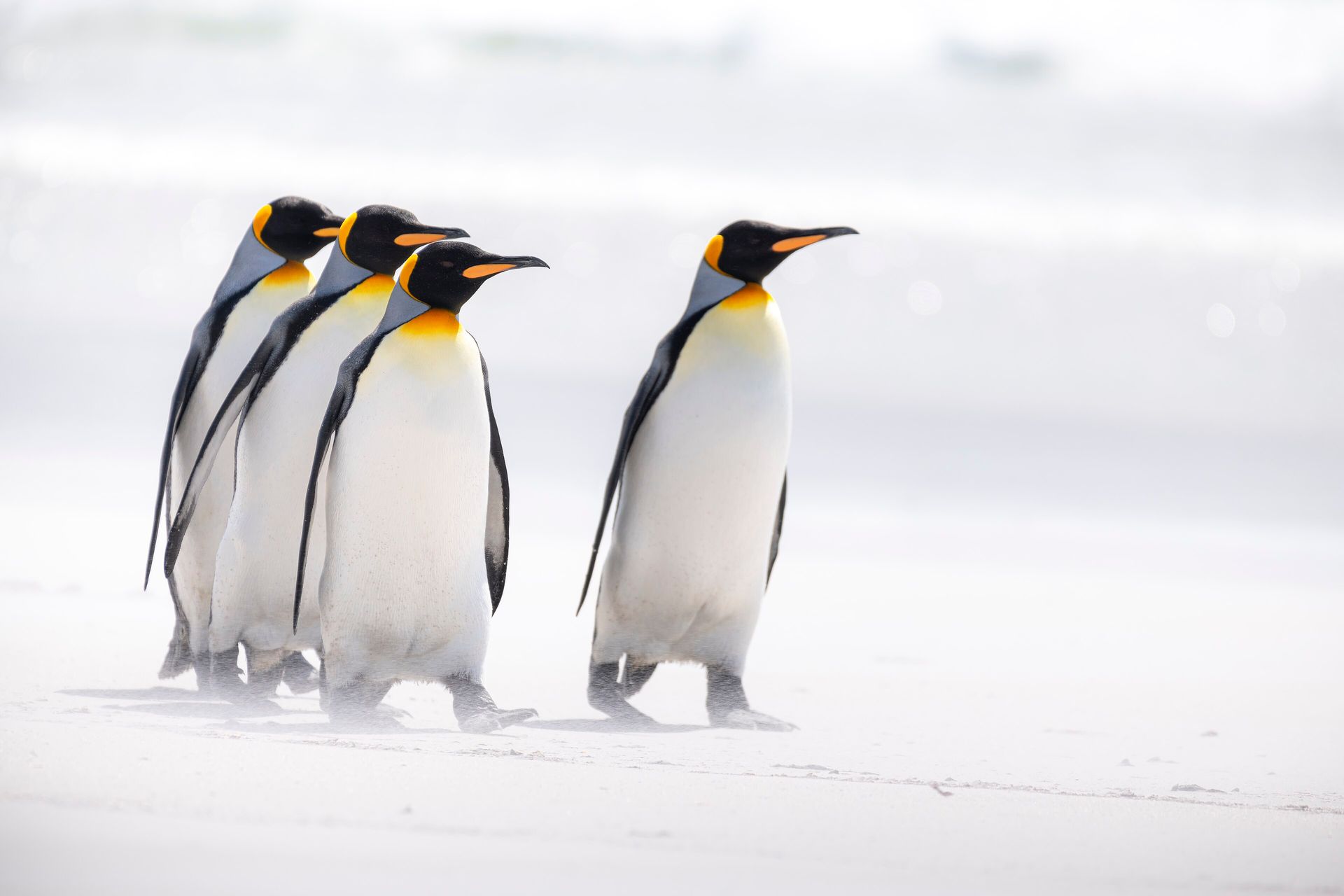
Falkland Islands
How to visit the Falkland Islands and what it costs: the weekly flight from Chile, the UK airbridge, the cruises that stop and their fares, the best penguin sites and months, and the rules.
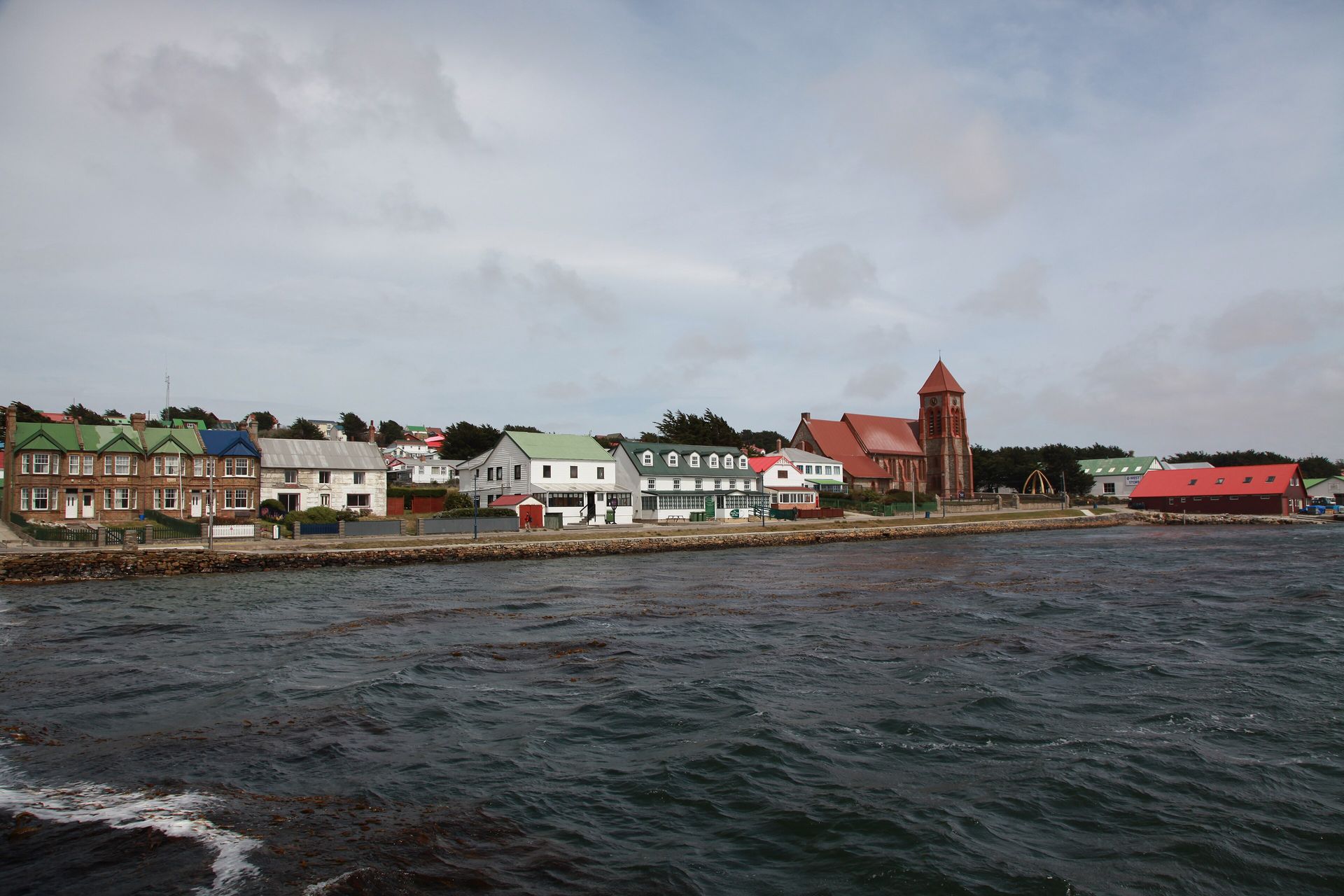
Stanley
Stanley, capital of the Falkland Islands, on a cruise day: getting ashore, what to see on foot, penguins nearby, shore excursions and prices, and the weather month by month.
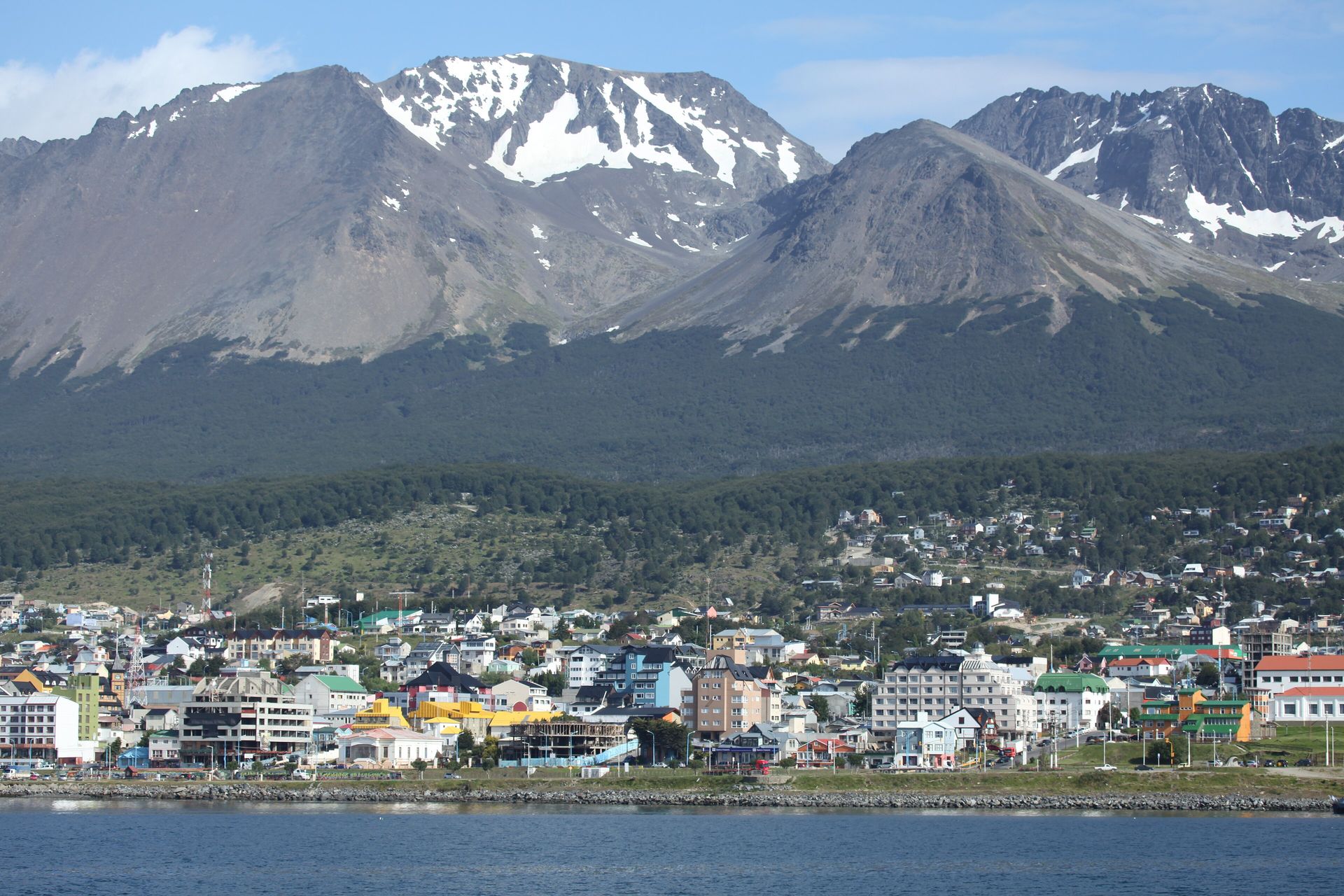
Ushuaia
Ushuaia, Argentina, the port where most Antarctic cruises start: flights in, how many days to arrive early, what to do before and after, the port and last-minute deals.
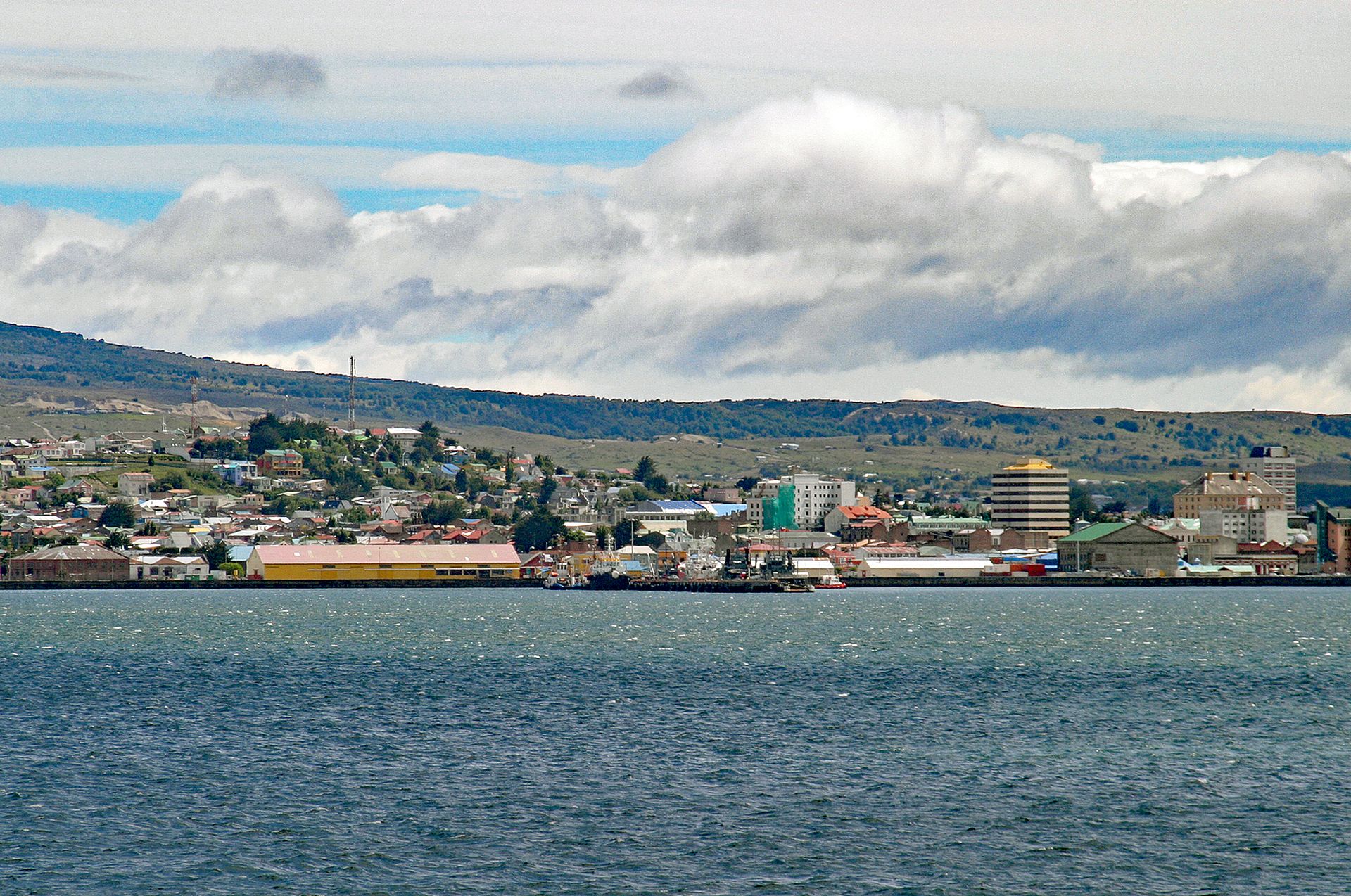
Punta Arenas
Punta Arenas, Chile, the gateway for Antarctic air-cruises: flights in, the two-hour hop to King George Island and what it costs, Magdalena Island's penguins, things to do and the weather.
More polar wildlife
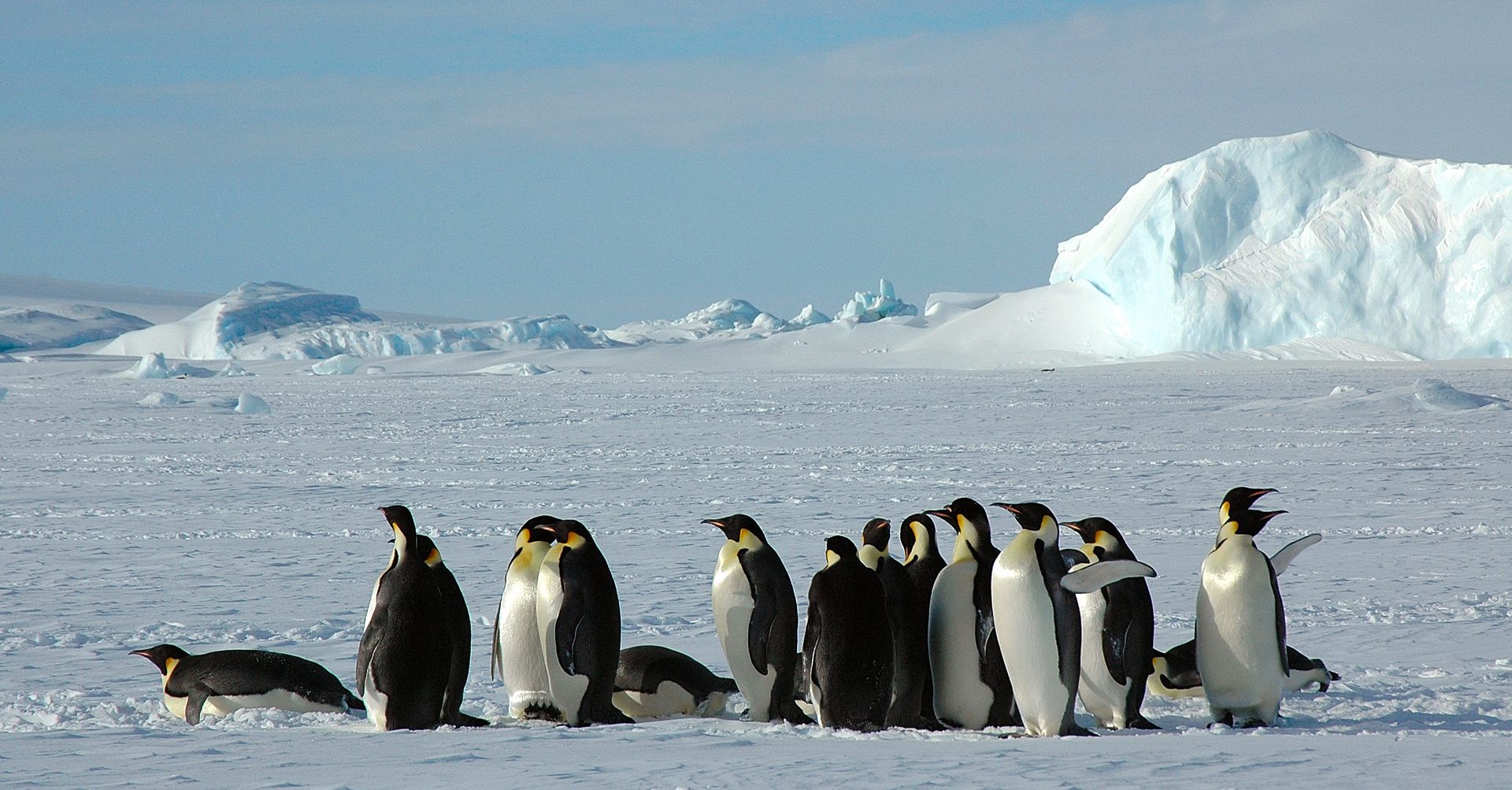
Emperor penguin
Where and how to see emperor penguins in the wild: why Antarctic Peninsula cruises miss them, which helicopter voyages and fly-in trips go to a colony and for how much, plus size, lifespan and conservation status.
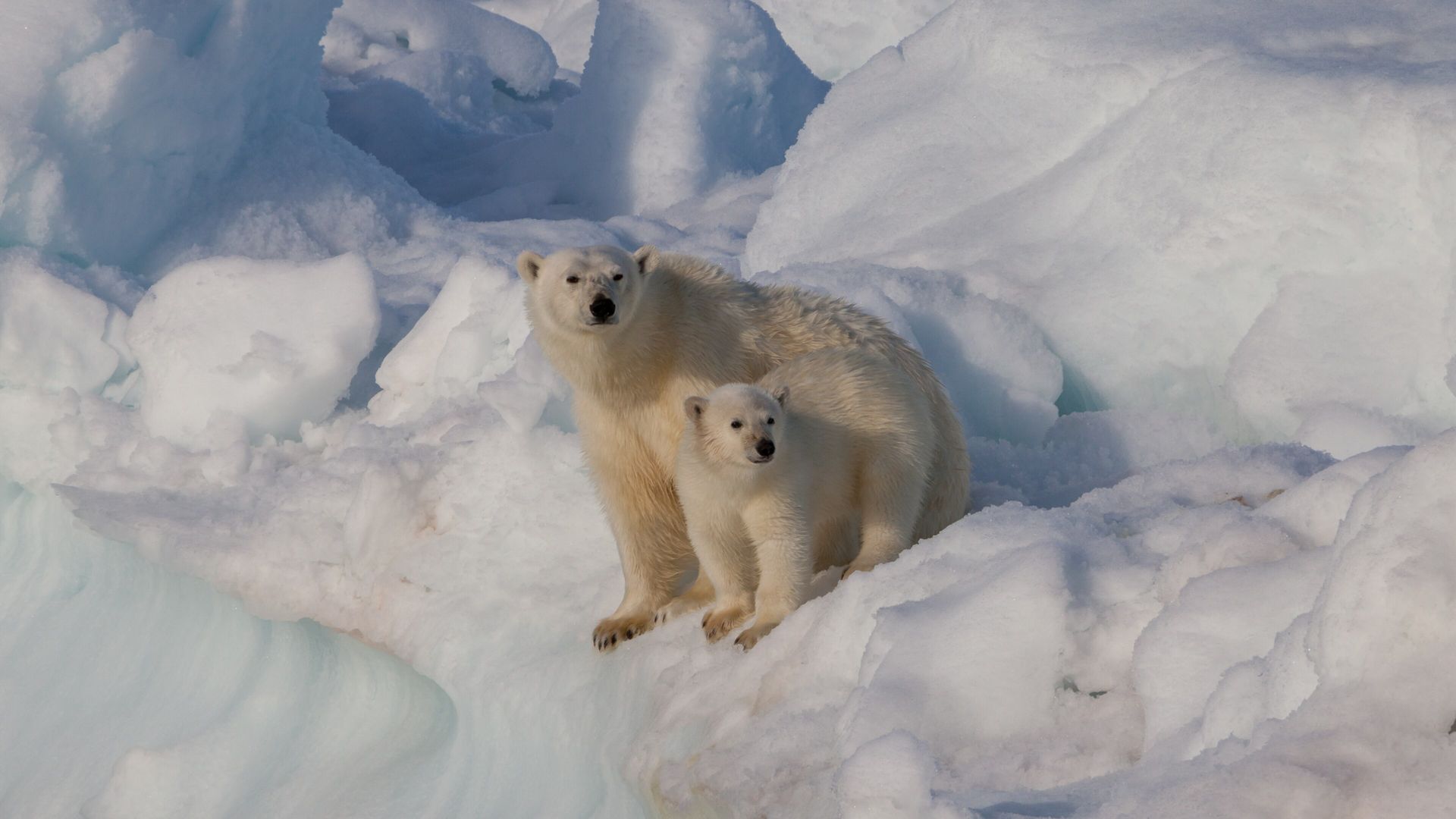
Polar bear
Where polar bears live and where to see them: Churchill in October and November, Svalbard by ship in summer, Kaktovik in Alaska, with odds, prices, the Svalbard distance and firearm rules, and why none live in Antarctica.
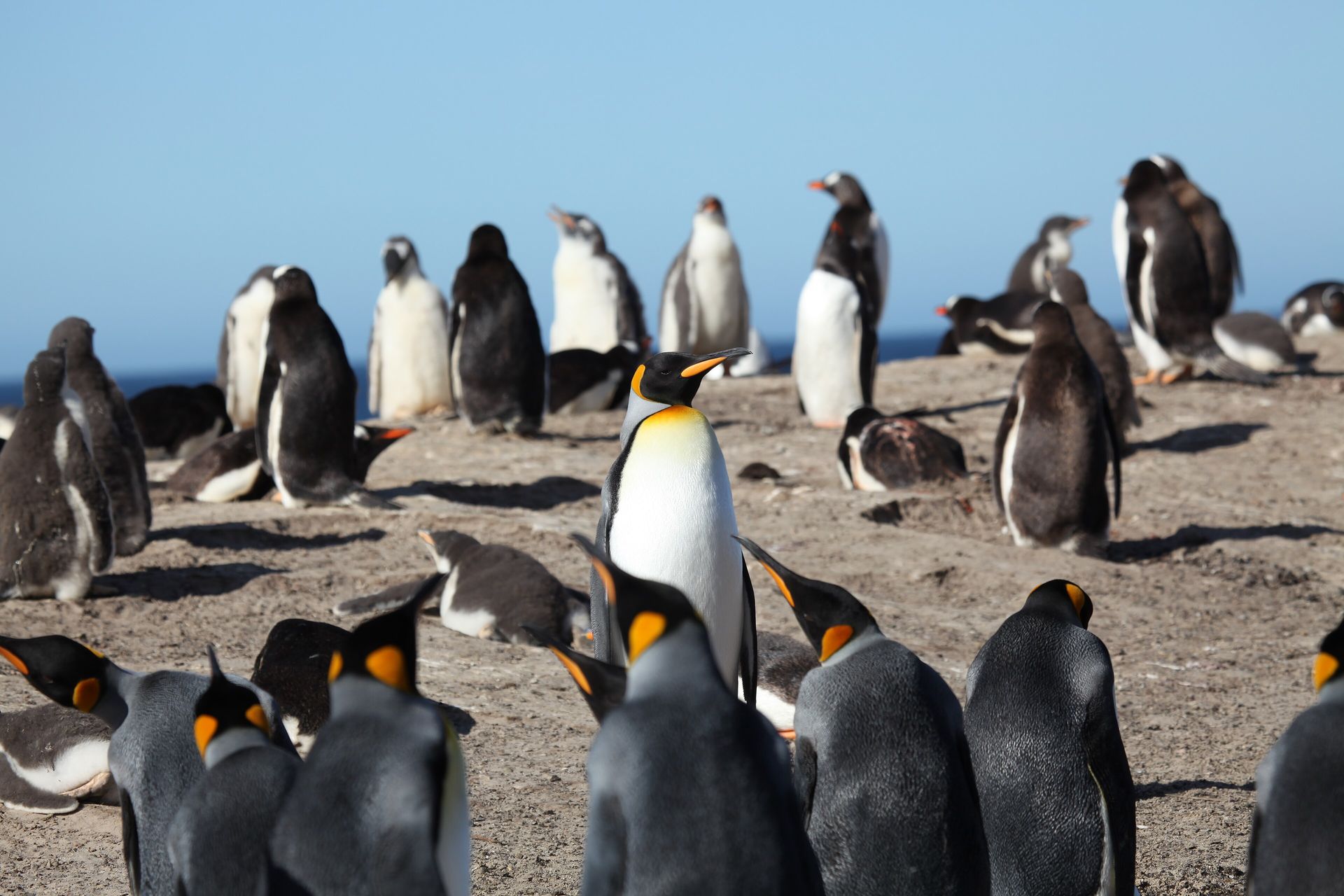
Penguin species
All 18 penguin species in one table, with scientific names, where each breeds, size and IUCN status, plus which ones you can see on an Antarctic, South Georgia, Falklands or Ross Sea trip.
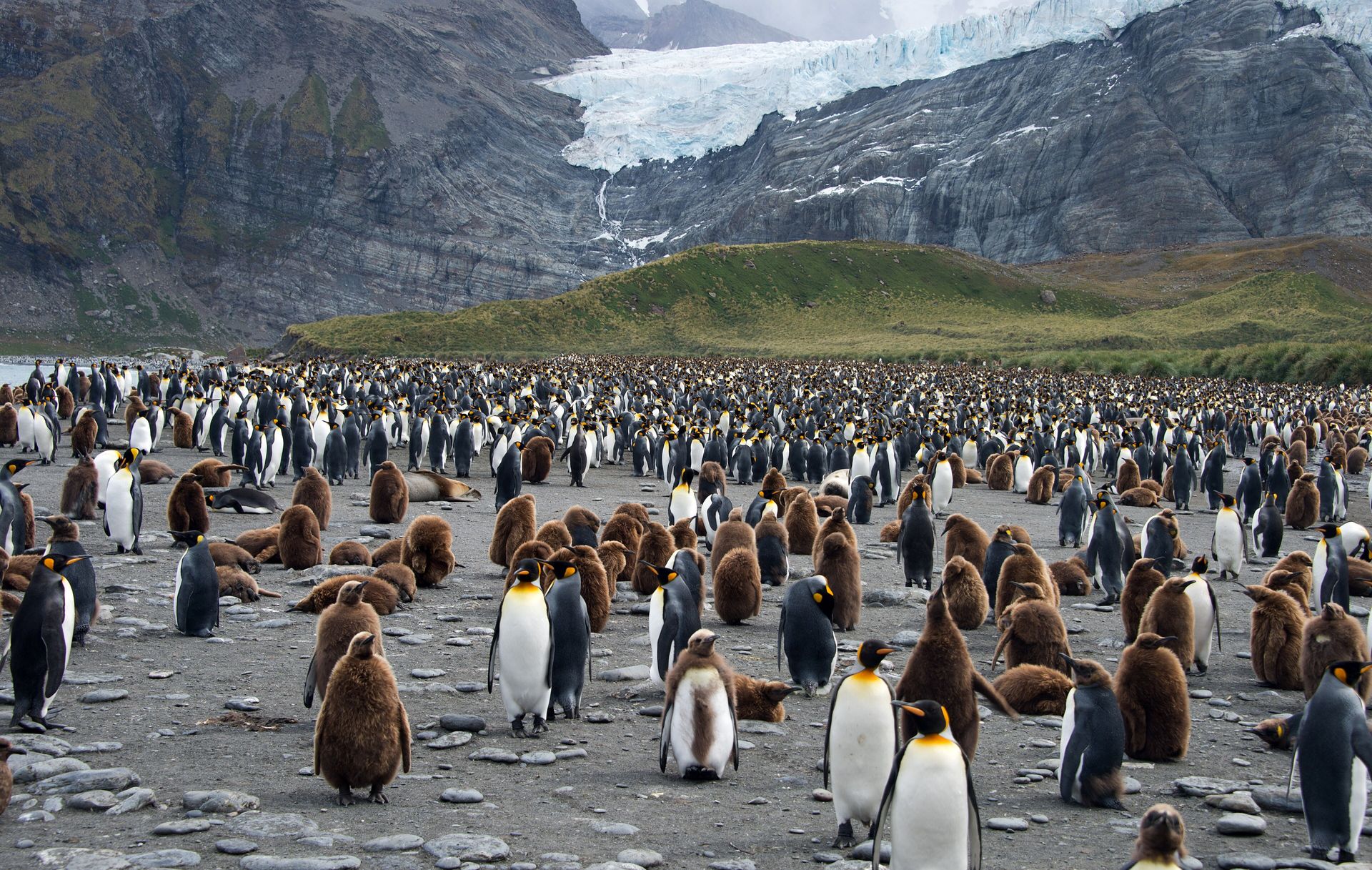
King penguin
King penguin facts for travelers: how many there are and where they breed, the South Georgia and Falklands landings that put you among them, the months for chicks, the voyages with the most time there, and the rules ashore.
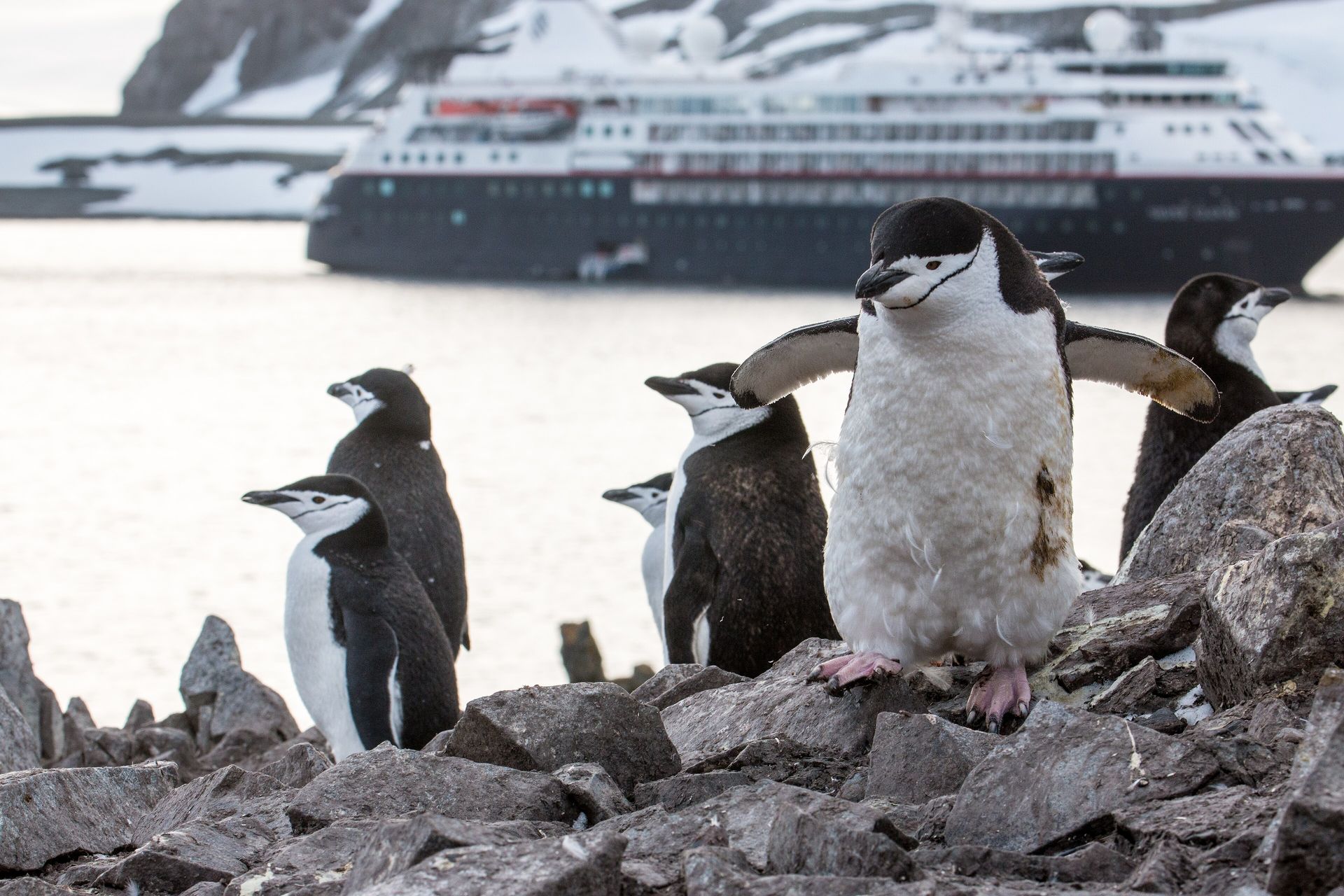
Chinstrap penguin
Chinstrap penguin facts for travelers: how many there are and where they breed, the South Shetland colonies ships land at and which ships may land, when the chicks hatch, the voyages that list them, and why numbers are falling.
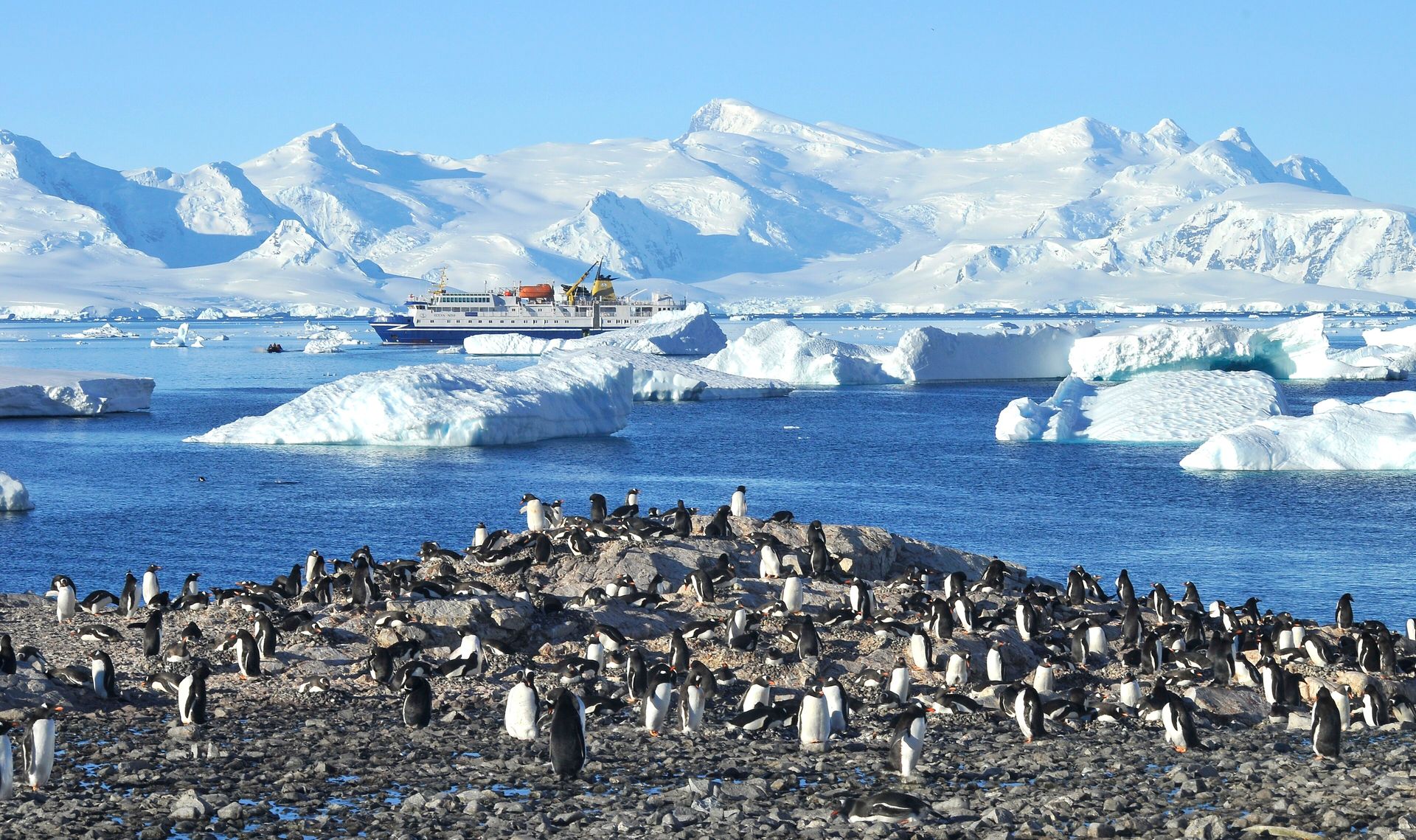
Gentoo penguin
Gentoo penguin facts for travelers: how many there are and where they breed, the Antarctic landings with the biggest colonies, when the chicks are out, the cheapest voyages that visit them, and why scientists now propose four species.
Sources
- 1.Magellanic penguin, Falklands Conservation. Accessed October 14, 2026.
- 2.Magellanic Penguin Biology, Center for Ecosystem Sentinels, Department of Biology, University of Washington (Boersma lab). Accessed October 15, 2026.
- 3.Magellanic Penguin Spheniscus magellanicus: species factsheet, BirdLife International (Data Zone). Accessed October 14, 2026.
- 4.Climate presses and pulses mediate the decline of a migratory predator (PNAS, 2023), Clark-Wolf T. J., Boersma P. D., Rebstock G. A., Abrahms B. (Center for Ecosystem Sentinels, University of Washington), Proceedings of the National Academy of Sciences 120(3): e2209821120, doi 10.1073/pnas.2209821120, open access full text on PubMed Central. Accessed October 15, 2026.
- 5.Status and global population trend of the Magellanic penguin Spheniscus magellanicus along the Argentine coast (Scientific Reports, 2026), Hombre J. D. and co-authors, Scientific Reports 16: 3743 (published 10 January 2026), doi 10.1038/s41598-025-33756-3, open access full text on PubMed Central. Accessed October 15, 2026.
- 6.Monumento Natural Los Pingüinos, Corporación Nacional Forestal (CONAF), Government of Chile. Accessed October 15, 2026.
- 7.Falkland Islands Seabird Monitoring Programme: Annual Report 2024/2025, Falklands Conservation. Accessed October 15, 2026.
- 8.Punta Tombo: la pingüinera más importante del mundo (sitio oficial de la reserva), Reserva Natural Punta Tombo, Área Natural Protegida, Gobierno de la Provincia del Chubut (puntatombo.org, the reserve's ticketing site). Accessed October 15, 2026.
- 9.Center for Ecosystem Sentinels Fall 2017 Update (newsletter), Center for Ecosystem Sentinels, University of Washington (Boersma lab). Accessed October 15, 2026.
- 10.Planificá tu visita a Punta Tombo (guía oficial 2026/2027), Reserva Natural Punta Tombo, Área Natural Protegida, Gobierno de la Provincia del Chubut (puntatombo.org, the reserve's ticketing site). Accessed October 15, 2026.
- 11.Entradas a Punta Tombo: tarifas 2026/2027, Reserva Natural Punta Tombo, Área Natural Protegida, Gobierno de la Provincia del Chubut (puntatombo.org, the reserve's ticketing site). Accessed October 15, 2026.
- 12.Punta Tombo recibe a cientos de visitantes durante la temporada, Metadata (Chubut news site). Accessed October 15, 2026.
- 13.Antarctica & Falklands Expedition Cruise (19 days, Buenos Aires to Montevideo), HX Expeditions (Hurtigruten Expeditions). Accessed October 14, 2026.
- 14.Los pingüinos de Magallanes llegan a Chubut para brindar uno de los grandes espectáculos de la fauna patagónica, Ministerio de Turismo y Áreas Protegidas, Gobierno del Chubut (Chubut Patagonia Argentina). Accessed October 15, 2026.
- 15.Gypsy Cove, Falkland Islands Tourist Board. Accessed October 15, 2026.
- 16.Piratour (Isla Martillo penguin colony walk and Beagle Channel trips), Secretaría de Turismo de Ushuaia. Accessed October 15, 2026.
- 17.Navegación Pingüinera (Beagle Channel catamaran to Isla Martillo, viewing from the boat), Piratour Travel, Ushuaia. Accessed October 15, 2026.
- 18.Penguin Colony Trek (walk on Isla Martillo), Piratour Travel, Ushuaia. Accessed October 15, 2026.
- 19.Navigation to Magdalena Island [Catamaran Option], Comapa (Turismo Comapa). Accessed October 15, 2026.
- 20.Avistar pingüinos penacho amarillo y toninas overas, Government of Argentina, Viajá por Argentina. Accessed October 15, 2026.
- 21.Parque Interjurisdiccional Marino Isla Pingüino, Administración de Parques Nacionales (Argentina). Accessed October 15, 2026.
- 22.Chubut inauguró la temporada de Pingüinos en Punta Tombo con más servicios, conservación y tecnología, Ministerio de Turismo y Áreas Protegidas, Gobierno del Chubut (Chubut Patagonia Argentina). Accessed October 15, 2026.
- 23.Quiénes somos: PiraTour Travel, Piratour Travel, Ushuaia. Accessed October 15, 2026.
- 24.22-Day South America & Antarctica (Oosterdam), fares, Holland America Line. Accessed October 14, 2026.
- 25.HX Expeditions unveils new fleet enhancements for 2026 and beyond (press release, 1 September 2026), HX Expeditions (Mynewsdesk newsroom). Accessed October 14, 2026.
- 26.Falkland Islands, South Georgia, Antarctic Peninsula, m/v Plancius, 23 November to 11 December 2026 (PLA23-26), Oceanwide Expeditions. Accessed October 14, 2026.
- 27.Dates & Rates: Antarctica & Arctic Cruises (m/v Ortelius and m/v Plancius tables, 2026-27 to 2027-28), Oceanwide Expeditions. Accessed October 15, 2026.
- 28.In Shackleton's Footsteps: Falklands, South Georgia and the Antarctic Peninsula, SH Minerva, Nov 20, 2026 (M3126112018), Swan Hellenic. Accessed October 15, 2026.
- 29.Measure 15 (2009): Landing of Persons from Passenger Vessels in the Antarctic Treaty Area, Secretariat of the Antarctic Treaty. Accessed October 14, 2026.
- 30.Vessel Directory, International Association of Antarctica Tour Operators (IAATO). Accessed October 14, 2026.
- 31.Countryside Code, Falkland Islands Government Environment Unit (published by the Falkland Islands Tourist Board). Accessed October 15, 2026.
- 32.The Fauna Observed While Sailing to Patagonia (Museo Nacional de Ciencias Naturales, CSIC), Museo Nacional de Ciencias Naturales (MNCN), Consejo Superior de Investigaciones Científicas (CSIC), Spain, via Google Arts and Culture. Accessed October 15, 2026.
- 33.African Penguin Spheniscus demersus: species factsheet, BirdLife International (Data Zone). Accessed October 14, 2026.
- 34.Climate Change Increases Reproductive Failure in Magellanic Penguins (PLOS ONE, 2014), Boersma P. D., Rebstock G. A., PLOS ONE 9(1): e85602, doi 10.1371/journal.pone.0085602, open access. Accessed October 15, 2026.
- 35.Magellanic Penguin Project, Center for Ecosystem Sentinels, Department of Biology, University of Washington (Boersma lab). Accessed October 15, 2026.
- 36.Spheniscus magellanicus (Magellanic Penguin), The IUCN Red List of Threatened Species 2020: e.T22697822A157428850 (record in the IUCN Red List dataset on GBIF), IUCN (assessment by BirdLife International), published through GBIF. Accessed October 15, 2026.
- 37.¿Qué puedo hacer en Harberton? (Estancia Harberton activities), Estancia Harberton. Accessed October 15, 2026.
- 38.Magellanic penguin (Encyclopaedia Britannica, archived February 13, 2026), Encyclopaedia Britannica (article by John P. Rafferty). Accessed October 15, 2026.
- 39.¿Dónde ver pingüinos en Punta Arenas? (Reserva Natural Pingüino Rey), Reserva Natural Pingüino Rey (Bahía Inútil, Tierra del Fuego). Accessed October 15, 2026.
- 40.¿Qué pasó con los pingüinos de seno Otway? (archived), La Prensa Austral (Punta Arenas). Accessed October 15, 2026.
- 41.Punta Arenas - Isla Magdalena (Ferry Yaghan) route page, Transbordadora Austral Broom (TABSA). Accessed October 15, 2026.
- 42.Sex-biased survival contributes to population decline in a long-lived seabird, the Magellanic Penguin (Ecological Applications, 2019), Gownaris N. J., Boersma P. D. (University of Washington), Ecological Applications 29(1): e01826, doi 10.1002/eap.1826, open access full text on PubMed Central. Accessed October 15, 2026.
- 43.Mass die-off of Magellanic penguins seen during 2019 heat wave (UW News, January 4, 2022), University of Washington News (James Urton), on Holt K. A. and Boersma P. D. 2022, Unprecedented heat mortality of Magellanic Penguins, Ornithological Applications 124(1): duab052, doi 10.1093/ornithapp/duab052. Accessed October 15, 2026.