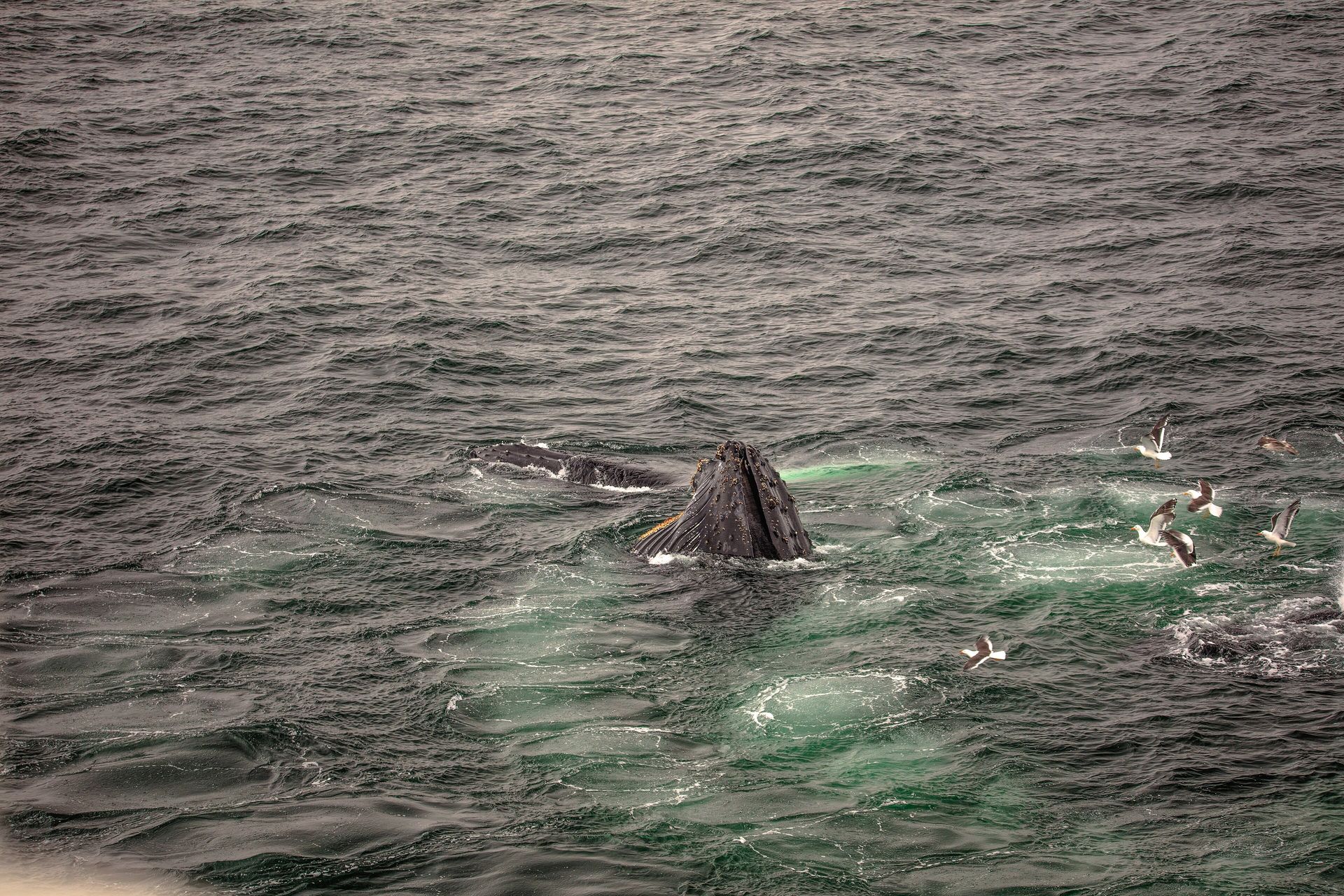
Whales of Antarctica
Which whales live in Antarctic waters and when and where travelers see them, from Gerlache Strait humpbacks to Elephant Island fin whales, with numbers, recovery from whaling and the cheapest whale-watching voyages.
What whales live in Antarctica, and when can you see them?
Eight large whales feed in Antarctic waters: humpback, Antarctic minke, killer whale (orca), fin, blue, sei, southern right and sperm. Humpbacks are the surest sighting; a 2019/20 survey estimated about 19,000 in the Gerlache and Bransfield straits by late December. Go between January and March, once numbers have built up. Dedicated March whale voyages start at $7,050 per person for a shared-cabin berth.
Facts checked October 15, 2026 against 39 sources.
Whales of Antarctica facts
- July: no trips
- August: no trips
- September: no trips
- October: no trips
- November: no trips
- December: no trips
- January: best
- February: best
- March: best
- April: no trips
- May: no trips
- June: no trips
Best Season
- Scientific name
- Cetacea
- Where to see
- Feeding grounds around the Antarctic Peninsula (the Gerlache and Bransfield straits, Wilhelmina and Andvord bays), off Elephant Island and the South Shetlands, around South Georgia and in the Ross Sea; also on the Drake Passage crossing.
- Best months
- January to March
- Population
- Southern Hemisphere estimates (IWC, 1991/92 to 2003/04): about 515,000 Antarctic minke whales, 42,000 humpbacks on partly surveyed Antarctic feeding grounds and 2,300 blue whales; 25,000 to 27,000 killer whales in summer (2001 estimate)
- Status
- Varies by species (IUCN): blue and sei whales Endangered, with the Antarctic blue whale subspecies listed separately as Critically Endangered; fin and sperm whales Vulnerable; Antarctic minke Near Threatened; humpback and southern right Least Concern; killer whale Data Deficient
Eight large whales feed in Antarctic waters, and a cruise to the Antarctic Peninsula is most likely to show you two of them: the humpback and the Antarctic minke, both named as likely sightings in Peninsula bays by the operators that run whale voyages.12 Killer whales are common, fin whales are back in big feeding groups off Elephant Island, and blue, sei, southern right and sperm whales are the rare finds, seen more often around South Georgia than on the Peninsula.34 Many of the baleen whales migrate to tropical waters to breed in winter.5
What types of whales live in Antarctica?
Six baleen whales (humpback, Antarctic minke, fin, blue, sei and southern right) and two large toothed whales (the killer whale and the sperm whale) are the ones a traveler can hope to see. Baleen whales strain krill through plates of baleen; toothed whales have true teeth and catch single prey.67 Rarely seen beaked whales live here too: a 2001 estimate ranks the southern bottlenose whale second in number only to the Antarctic minke, and Quark lists Arnoux's beaked whale among past sightings.89
| Whale | Size | Where and when travelers see it | IUCN status |
|---|---|---|---|
| Humpback | Up to about 60 ft (18 m) and 40 tons10 | Peninsula straits and bays from December to March; about 20,000 feed around South Georgia1124 | Least Concern |
| Antarctic minke | Nearly 30 ft (9 m) and about 11 tons (10 tonnes)5 | Open pack ice and Peninsula bays; known for circling small boats5 | Near Threatened |
| Killer whale (orca) | Males up to 32 ft (9.75 m)127 | Gerlache Strait, the pack ice and the Ross Sea, each with its own type8 | Data Deficient |
| Fin | 75 to 85 ft (23 to 26 m)13 | Feeding groups off Elephant Island late in the season3 | Vulnerable |
| Blue | Up to about 110 ft (34 m) and more than 330,000 lb in the Antarctic14 | Rare; returning to South Georgia since 2018, and seen as far south as 78°S in the Ross Sea1516 | Endangered; Antarctic subspecies Critically Endangered |
| Sei | 40 to 60 ft (12 to 18 m)17 | Mostly north of the Polar Front; occasionally feeding in the far south18 | Endangered |
| Southern right | 43 to 56 ft (13 to 17 m)19 | South Georgia and the Falklands2021 | Least Concern |
| Sperm | Males up to 52 ft (16 m) and 45 tons22 | Deep water as far as the edge of the pack ice; only big males travel this far toward the poles22 | Vulnerable |
Categories are from the IUCN Red List dataset on GBIF, read October 15, 2026, and, for the Antarctic blue whale, the IUCN Cetacean Specialist Group.2324
When is the best time to see whales in Antarctica?
January to March. Humpback numbers along the Peninsula climb through December and level off at a high by mid-January, and every dedicated whale voyage we found for 2026-27 sails in March.11252627
| Month | What the surveys and operators report |
|---|---|
| November | About 4,100 humpbacks estimated in the Bransfield and Gerlache straits between November 25 and December 12, 201911; in the Falklands, killer whales wait in the shallows of Sea Lion Island for weaned pups from mid-November to late December28 |
| December | About 19,100 humpbacks in the same straits between December 16 and 27, 201911 |
| January | About 18,700 between January 12 and 18, 2020: numbers had stopped rising11 |
| February | After feeding since the ice receded in October and November, whales are relaxed and easier to spot, by Quark's account9 |
| March | The month of the dedicated whale voyages252627; on a March to May 2018 expedition, scientists met fin whale groups of about 50 and 70 animals off Elephant Island, one of them feeding3 |
| April and May | Humpbacks still feeding in Peninsula bays: in May 2009, 306 were counted in and around Wilhelmina Bay29 |
If you want penguin chicks too, go from late December to mid-January, when Adélie and chinstrap chicks hatch and humpbacks are near their peak.3011 Our Antarctic wildlife calendar adds penguins, seals and seabirds month by month, and our best time to visit Antarctica guide adds weather and fares.
Where are the best places to see whales in Antarctica?
On a standard Peninsula cruise, the Gerlache Strait and the glacier bays off it; for fin whales, Elephant Island; for the widest mix, including blue and right whales, South Georgia.
| Area | Whales | Why it stands out |
|---|---|---|
| Gerlache and Bransfield straits | Humpback, minke, killer whale | Humpbacks concentrated in the central Gerlache and southern Bransfield in 2019/20; hundreds of Gerlache killer whales identified118 |
| Wilhelmina Bay and Andvord Bay | Humpback | About 13 whales per square mile (5.1 per km²) in Wilhelmina Bay in May 2009, which the researchers call the highest humpback density ever documented, feeding on about 2 million tons of krill; a tenth of that in Andvord Bay29 |
| Charlotte Bay, Errera Channel, Cuverville Island, Paradise Bay, the Lemaire Channel | Minke, humpback, fin, orca, Arnoux's beaked whale | Hotspots on Quark's marine mammal voyage; Oceanwide gives a good chance of humpbacks and minkes in Paradise Bay91 |
| Elephant Island and the South Shetland Islands | Fin | Feeding aggregations along Elephant Island's north coast, the largest two of about 150 animals3 |
| South Georgia | Humpback, blue, southern right, fin, sei, sperm | The South Georgia government names all six4 |
| Falkland Islands | Sei, minke, southern right, killer whale | HX's late-season voyage names sei, minke and right whales here; killer whales hunt off Sea Lion Island2128 |
| Ross Sea | Killer whale (Ross Sea type), blue, minke | Blue and minke whales venture farther into the sea ice than other rorquals168 |
| Drake Passage | Fin and others | A chance of a fin whale on the crossing, says Oceanwide; more whales as ships near the Peninsula, says Quark19 |
How many humpback whales are in Antarctica?
Tens of thousands, and rising, though no one has counted them all. The International Whaling Commission's estimate for the partly surveyed Antarctic feeding grounds rose from 10,230 for 1985/86 to 1990/91 to 42,000 for 1991/92 to 2003/04.31 In the Bransfield and Gerlache straits alone, the 2019/20 survey put the peak at 19,107, against about 7,000 in 2000.11 Around South Georgia, British Antarctic Survey expeditions sighted 790 humpbacks in 23 survey days, and preliminary estimates suggest more than 20,000 now feed there each summer.32
Those South Georgia humpbacks show how far the recovery from whaling has come. They were the first major target of Antarctic whaling, with nearly 25,000 caught around the island between 1904 and 1916, and their western South Atlantic population fell from nearly 27,000 in 1830 to about 450 in the mid-1950s. By 2019 it was back to an estimated 24,900, about 93% of its size before whaling.33 In all, Southern Hemisphere whaling killed more than 1.8 million whales of 10 species before the moratorium.33 Blue and fin whales, below, are much further from their old numbers.
Do killer whales live in Antarctica?
Yes, and the Southern Ocean holds what the whale biologist Robert Pitman calls the largest concentration of killer whales anywhere on earth. IWC survey data put the summer population at 25,000 to 27,000 in 2001, likely a minimum, he notes, because many stay inside the pack ice where survey ships did not go.8 The Australian Antarctic Division puts the population at about 70,000, and because small calves have been seen in midwinter, it calls orcas the only whale known to breed in Antarctic waters.7
Antarctic killer whales come in distinct types that look, hunt and live differently:8
| Type | Where | What it eats |
|---|---|---|
| Type A | Open water around the continent, seaward of the pack ice | Antarctic minke whales, so far as observed |
| Pack ice killer whale (type B, large) | Among the pack ice | Seals, preferring Weddell seals, which groups wash off ice floes with waves they make |
| Gerlache killer whale (type B, small) | The straits of the western Peninsula, in more open water | Gentoo and chinstrap penguins, eating only the breast muscles; probably mainly fish |
| Ross Sea killer whale (type C) | Deep in the pack ice and fast-ice leads of East Antarctica | Antarctic toothfish; males reach only 20 ft (6 m), the smallest known killer whale |
| Subantarctic killer whale (type D) | Subantarctic waters at the northern edge of the Southern Ocean | Unknown; seen at toothfish longliners near the Crozet Islands |
On a Peninsula cruise you are most likely to meet the Gerlache type; the Ross Sea type needs a Ross Sea voyage.
Are there blue whales in Antarctica?
Yes, but they are still rare. Whaling cut Antarctic blue whales from about 225,000 to probably fewer than 2,000, with 30,000 killed at South Georgia in the 1930/31 season alone.16 The IWC's estimate rose from 450 for 1978/79 to 1983/84 to 2,300 for 1991/92 to 2003/04, growing at about 8.2% a year.31
They are starting to come back to their old feeding grounds. More than 21,000 miles (34,000 km) of systematic surveys around South Georgia between 1998 and 2018 produced a single blue whale sighting; a 2020 survey produced 58 sightings in about 1,500 miles (2,430 km) and photo-identified 23 individuals.15 None of the 41 blue whales photographed at South Georgia between 2011 and 2020 matched any of the 517 whales in the Antarctic photo catalog.15
Their conservation status depends on which listing you read. The IUCN Red List rates the blue whale as a species Endangered, and lists the Antarctic subspecies (Balaenoptera musculus intermedia) separately as Critically Endangered, according to the IUCN's own Cetacean Specialist Group.2324 The British Antarctic Survey and the South Georgia government both call the Antarctic blue whale critically endangered, in line with the subspecies listing, while the Australian Antarctic Division's blue whale page gives its status as endangered.32416
Where do minke whales live in Antarctica?
In and around the sea ice. The Antarctic minke is the most ice-adapted of the baleen whales: it has been seen hundreds of kilometers (well over 100 miles) into heavy pack ice in midwinter, breathes through narrow cracks in heavy ice, and in summer favors open pack with water between the floes.5 It is also the most numerous whale in Antarctic waters; the IWC's latest Southern Hemisphere estimate is 515,000 for 1991/92 to 2003/04.831
For travelers, minkes are the curious ones: they often swim repeatedly around small vessels, and go out of their way to approach a moving ship before veering off at speed.5
Where can you see fin whales in Antarctica?
Off Elephant Island and the northern tip of the Peninsula, late in the season. Scientists published the first documentation of large fin whale feeding aggregations there from expeditions in 2018 and 2019, all along Elephant Island's north coast.3 On an aerial survey between March 23 and April 24, 2018, they estimated 7,909 fin whales in the survey area, with a hotspot of about 3,600 around Elephant Island.3 That is a return from near extinction: more than 700,000 fin whales were killed in the Southern Ocean between 1904 and 1976, leaving 1 to 2% of a population of about 325,000, and the IUCN moved the species from Endangered to Vulnerable only in 2018.3 Quark's March marine mammal voyage looks for fin whales in the South Shetlands.9
Are there sperm, sei and southern right whales in Antarctica?
Yes, but they are the least likely of the eight on a Peninsula cruise.
- Sperm whales live in deep water from the equator to the edge of the Antarctic pack ice, but only males travel that far: as they grow older and larger they migrate toward the poles, while females stay in tropical waters.22
- Sei whales are the most northerly of the Antarctic baleen whales, often north of the Polar Front in summer, though some feed in the southernmost navigable waters. Unlike the other rorquals they eat tiny copepods, skimming them with mouths open; whalers turned to them after blue and fin whales were decimated, and they were not protected until 1978.18
- Southern right whales range from about 20°S to 65°S and feed at high latitudes in summer.19 At South Georgia they were the most commonly reported whale until 2011, before rising humpback numbers overtook them.20 The Southwest Atlantic population was estimated at 4,600 in 2019, growing about 7% a year.31
Which cruises are best for whale watching in Antarctica?
A March voyage that spends its days in the Gerlache Strait and the bays around it. Four operators run dedicated whale voyages there in March 2027, on seven ships, from $7,050 per person for a shared-cabin berth.27
| Voyage and ship | Departure and length | Lowest fare we found | What sets it apart |
|---|---|---|---|
| Oceanwide Whale Watching, Plancius | March 26, 2027, 10 days from Ushuaia | $7,050 for one berth in a shared four-berth porthole cabin (two women's berths left); a berth in a shared twin porthole is $8,700 (one men's berth left); flights not included; read Oct 15, 2026271 | Lowest price; Wilhelmina Bay among possible stops1 |
| Oceanwide Whale Watching Discovery and Learning, Hondius or Ortelius | March 17 (Hondius) or 18 (Ortelius), 2027, 11 days from Ushuaia | $7,800 for one berth in a shared four-berth porthole cabin (one women's berth left on Ortelius); flights not included; read Oct 14 and 15, 20263427 | Wilhelmina Bay; optional diving on Hondius for divers with 30 or more dry-suit dives34 |
| Polar Latitudes Whale Season, Discoverer or Ocean Albatros | March 4, 2027 (12 days, Discoverer) or March 18 (11 days, Ocean Albatros), from Ushuaia | $8,997 sharing a two-bed Ocean Stateroom on Discoverer, on a sale (regular $14,995, no end date shown); $9,895 with three sharing a Triple Stateroom on Ocean Albatros; one Ushuaia hotel night, no flights; read Oct 15, 20263526 | Three Peninsula days on the 12-day trip, one more than on the 11-day; kayaking from $350; citizen science362 |
| Quark, Antarctic Marine Mammals, World Voyager | March 5, 2027, 11 days from Buenos Aires | $16,890 brochure fare for an Infinity Suite (sold by phone; Quark also showed a 15% promo code), including Quark's $1,295 hotel and charter flight package; read Oct 14, 202625 | Friedlaender Lab whale scientists aboard; Quark's only itinerary with hydrophones9 |
| Aurora, Spirit of Antarctica: Whale Migration, Sylvia Earle | March 13, 2027, 12 days from Ushuaia | $17,846 in a Category A balcony stateroom, twin share (was $20,995, discount for bookings made and deposited by December 22, 2026), the cheaper categories sold out; one Ushuaia hotel night, no flights; read Oct 14, 20263739 | The season's only departure37 |
Our pick: Plancius if price decides it and you can share a cabin with strangers; the Quark trip if you want the voyage with whale scientists. Skip a March whale trip if penguin chicks are the main goal, since Adélie chicks are at sea by mid-February.30 Any Peninsula cruise from late December on sails near the humpback peak; our cheapest way to Antarctica guide finds the lowest fares.11
How close can you get to whales in Antarctica?
No closer than 100 feet (30 m) in a Zodiac or kayak, and 300 feet (100 m) in the ship, under IAATO's guidelines; anything closer happens only when a whale chooses to approach.38
| Vessel | Minimum distance |
|---|---|
| Zodiac, kayak or other small boat | 100 ft (30 m); about 330 ft (100 m) if whales are feeding together |
| Ship | 300 ft (100 m); 500 ft (150 m) for ships over 20,000 tons; 600 ft (200 m) if two ships are present |
| Helicopter or other aircraft | 1,000 ft (300 m) vertical distance |
Boats never approach head-on, stay about an hour at most, and avoid the light green bubble patches feeding humpbacks make before surfacing; if a whale comes within 100 feet (30 m) on its own, the driver puts the engine in neutral until it is clear.38 Our guide to Antarctica's visitor rules covers the rules ashore.
Where to see whales of antarctica
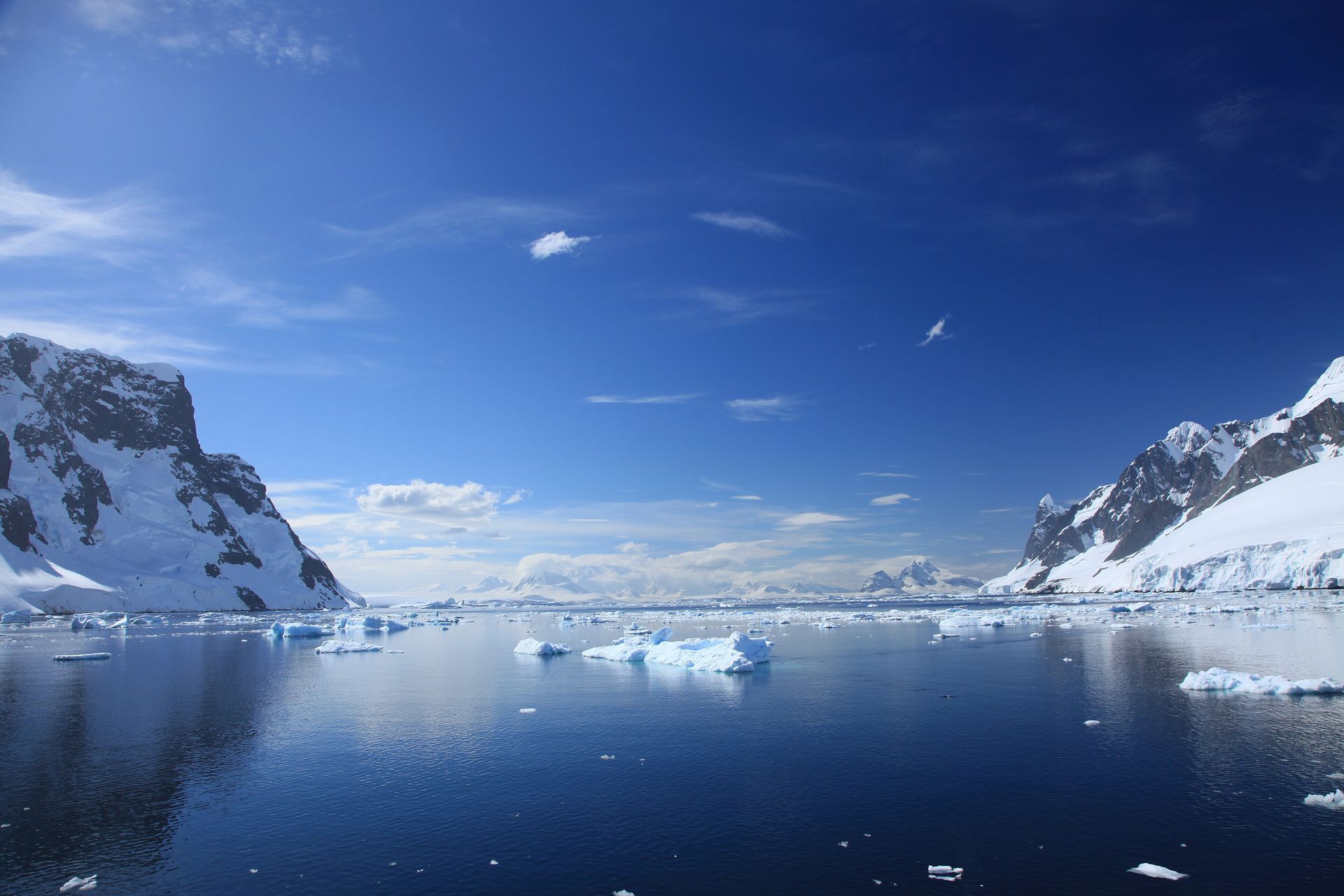
Antarctic Peninsula
Planning an Antarctic Peninsula cruise: how long trips last, where ships land, the best month by temperature and wildlife, landing rules, ship sizes and starting fares.
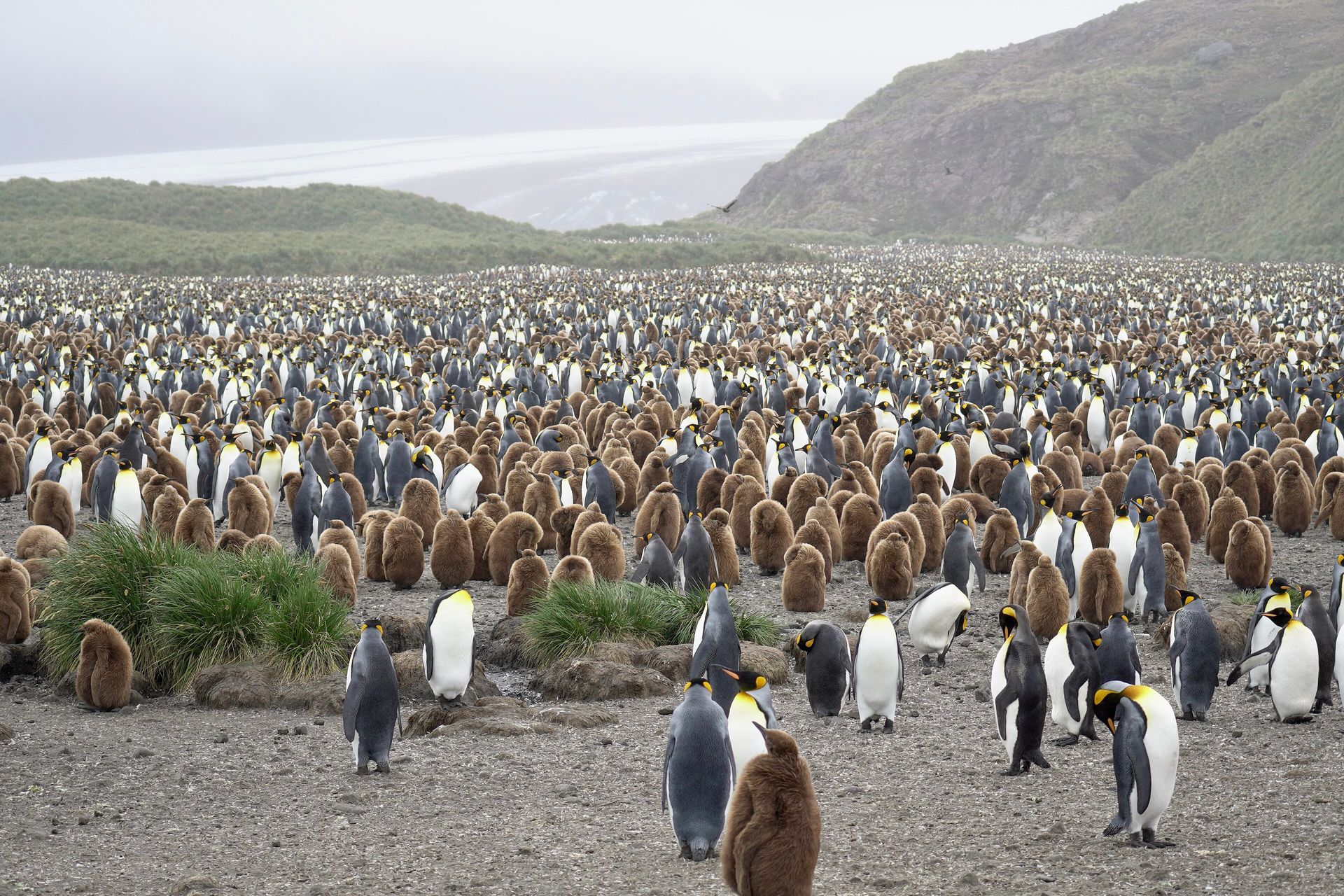
South Georgia
Where South Georgia is and how to visit it: which voyages go and what they cost, whether the extra week is worth it, the best months, the wildlife and the government's rules.
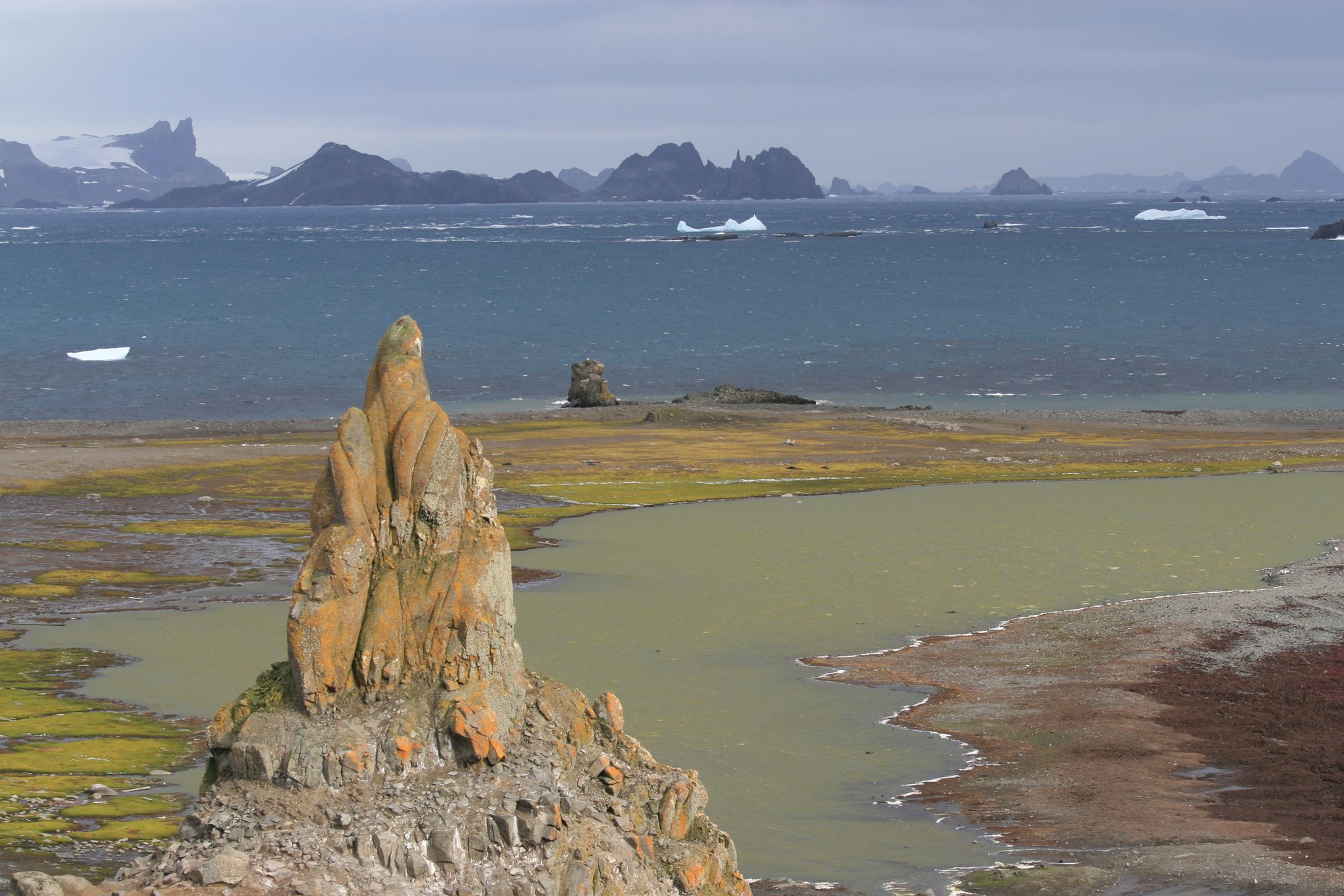
South Shetland Islands
The island chain most Antarctic cruises reach first: where it is, its dozen landing sites and how busy each is, the penguins and seals, the research stations and how to get there.
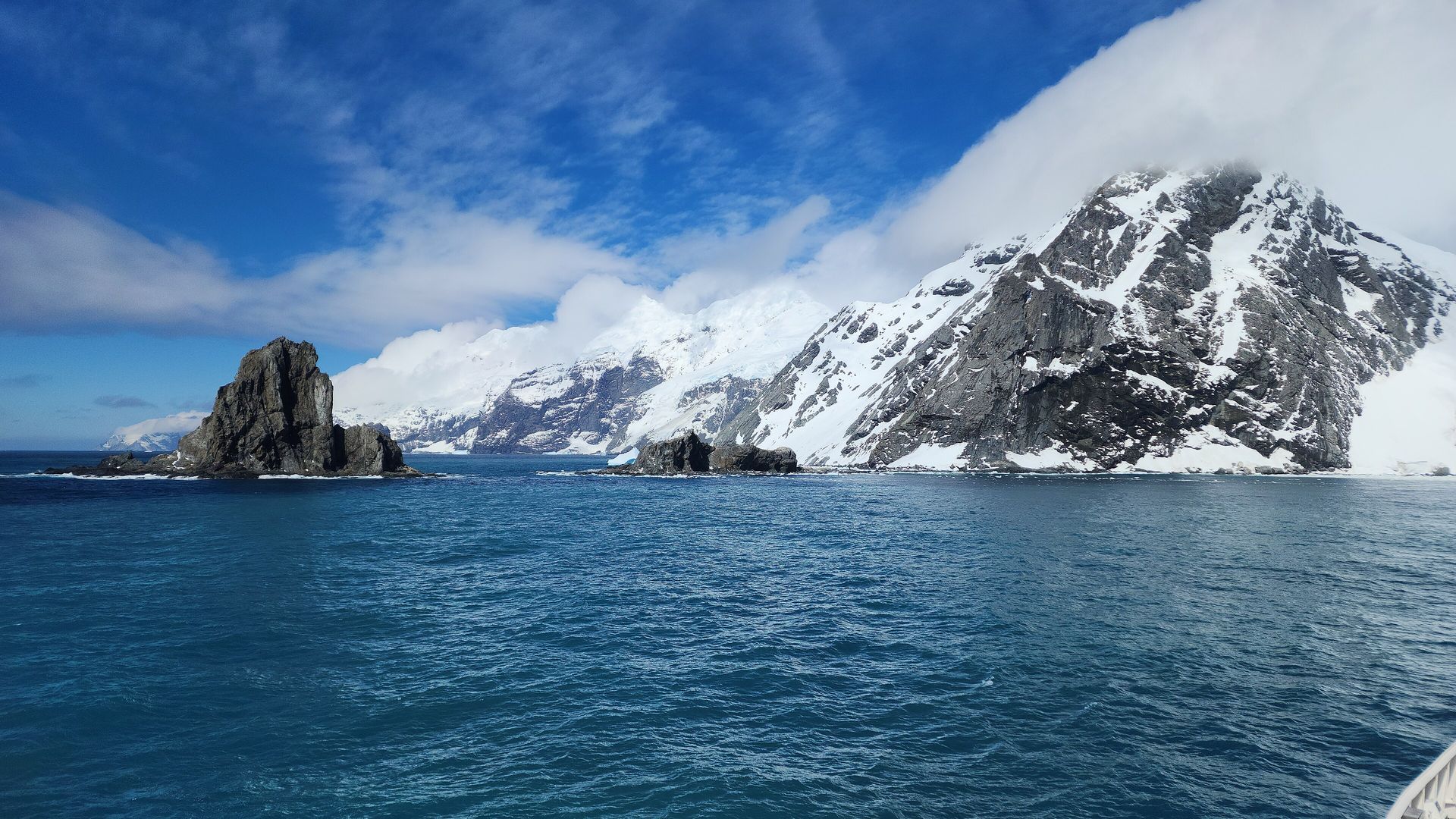
Elephant Island
Shackleton's refuge in the South Shetlands: what happened at Point Wild in 1916, what the 22 men ate, why most ships only cruise past, the landing odds and the cruises that go.
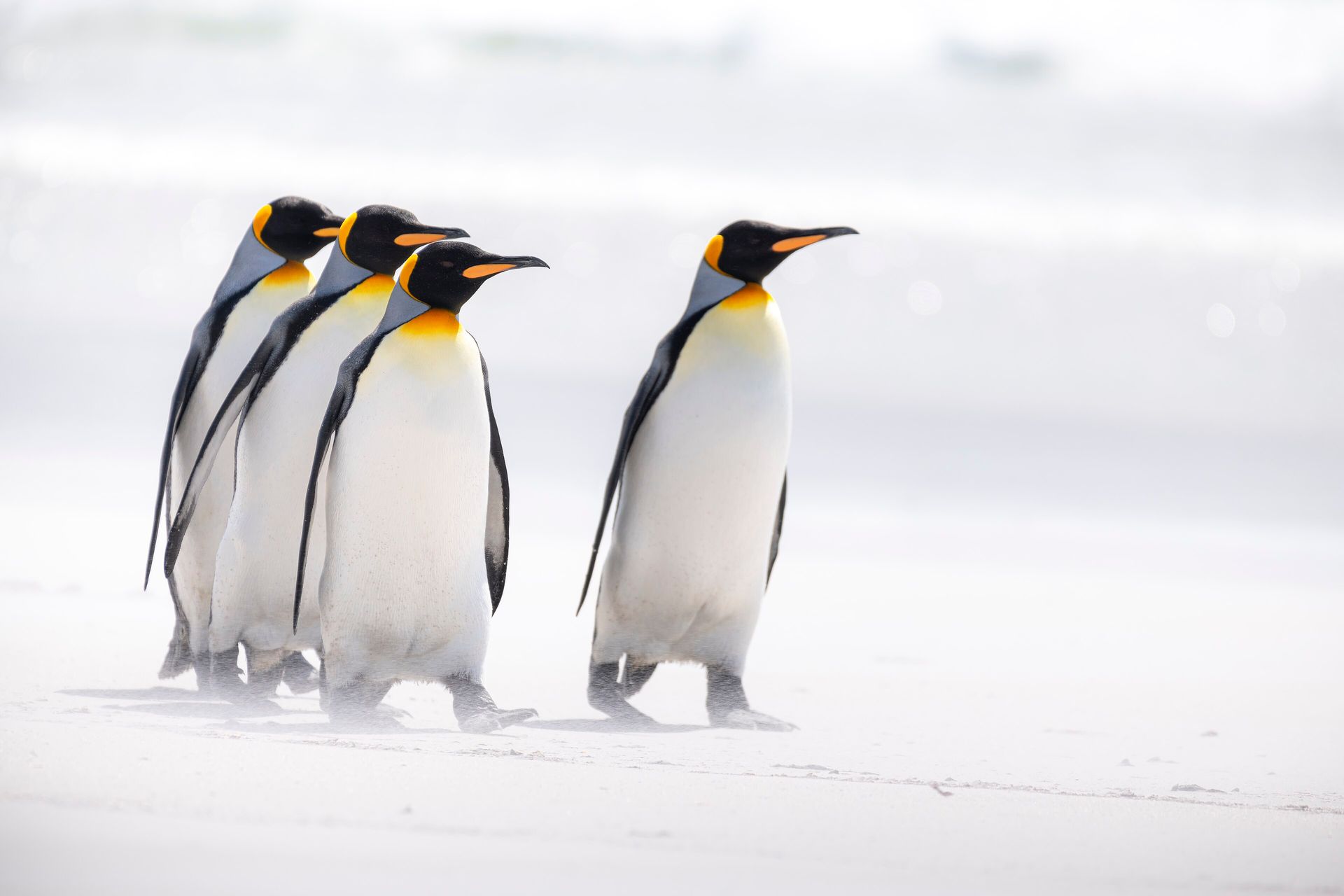
Falkland Islands
How to visit the Falkland Islands and what it costs: the weekly flight from Chile, the UK airbridge, the cruises that stop and their fares, the best penguin sites and months, and the rules.
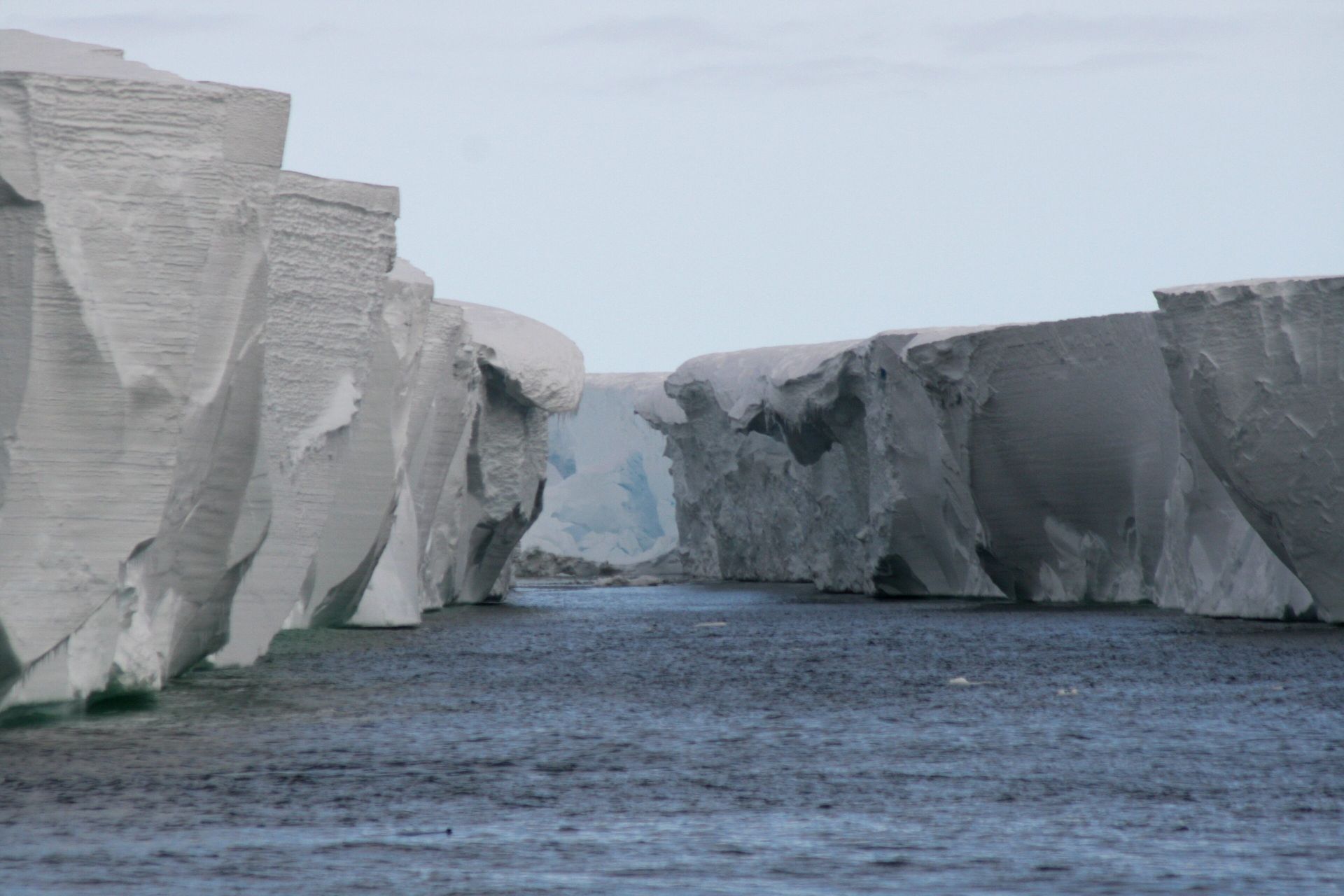
Ross Sea
The far side of Antarctica, south of New Zealand: the few ships that go and what they cost, Scott's and Shackleton's huts, McMurdo, Mount Erebus and the Ross Sea's wildlife.
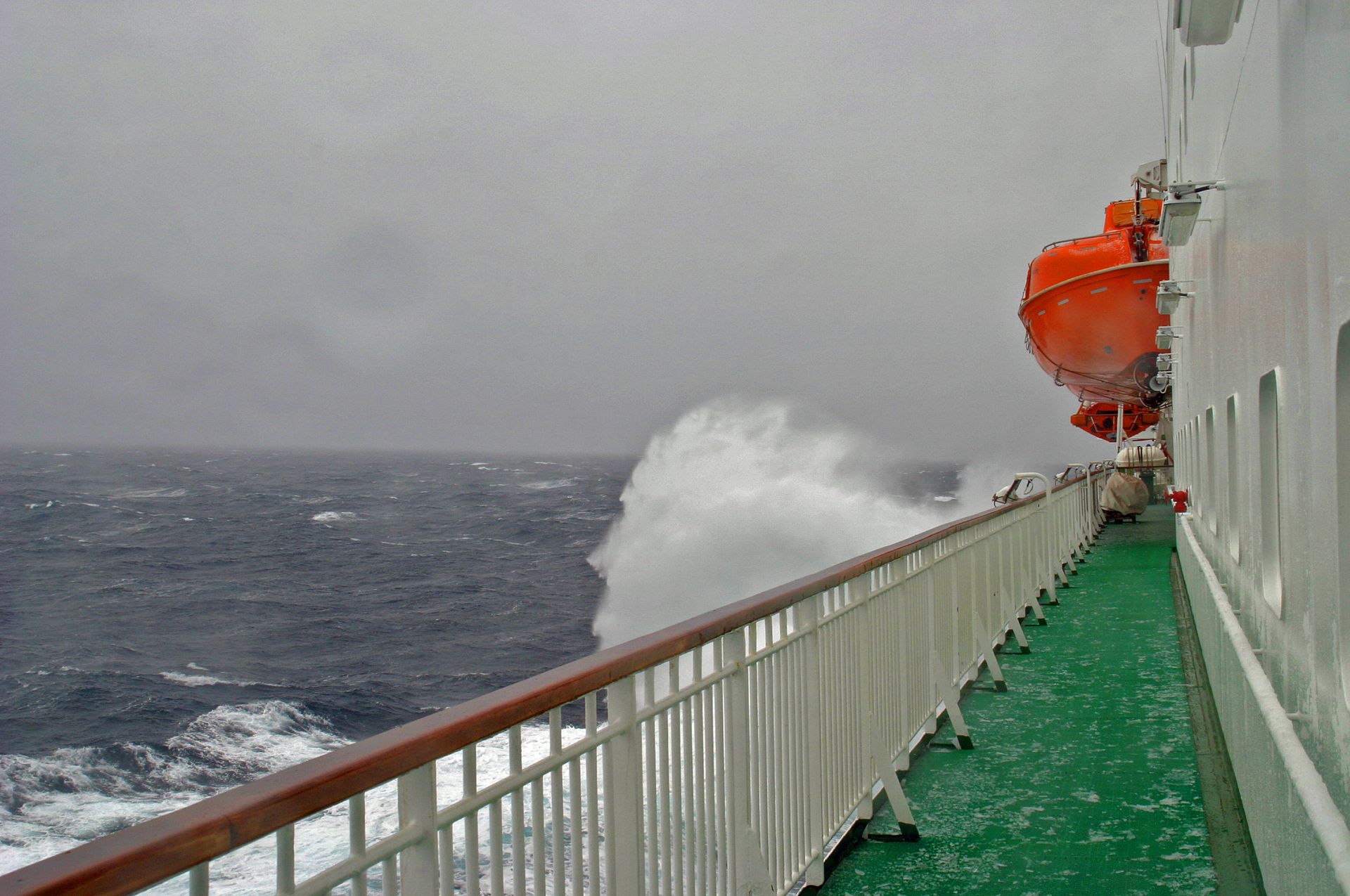
Drake Passage
How rough the Drake Passage really is, month by month, from 16 years of wave data, plus its weather, crossing times, seasickness remedies, flying over it and whether ships sink.
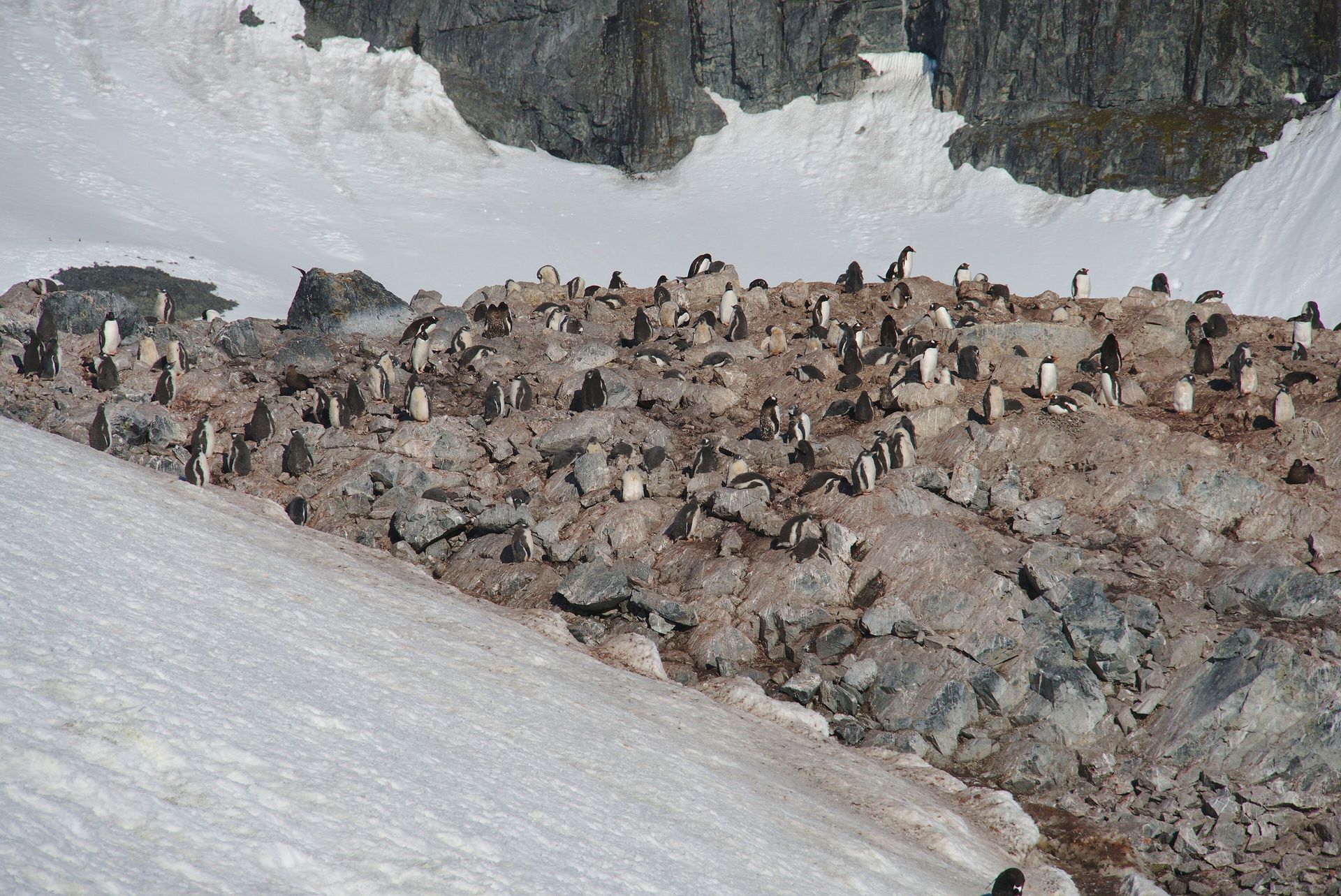
Cuverville Island
Visiting Cuverville Island in the Errera Channel: its large gentoo penguin colony, the landing beach and closed areas, whaling relics, bird flu closures and which ships stop.
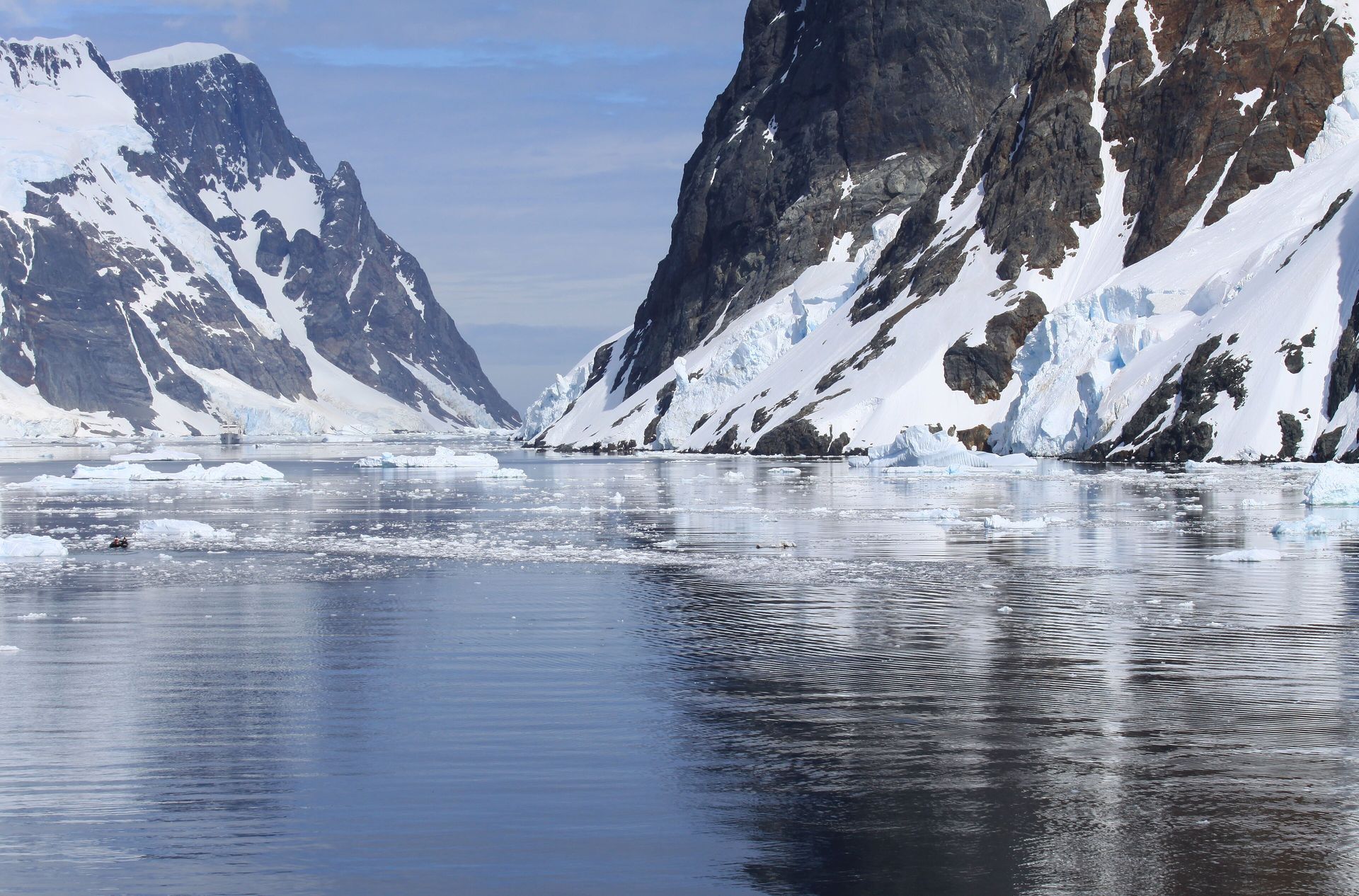
Lemaire Channel
Sailing the Lemaire Channel: its size, how ice can close it, what you see from deck, the landing sites at its southern end and which cruises plan to go through.
More polar wildlife
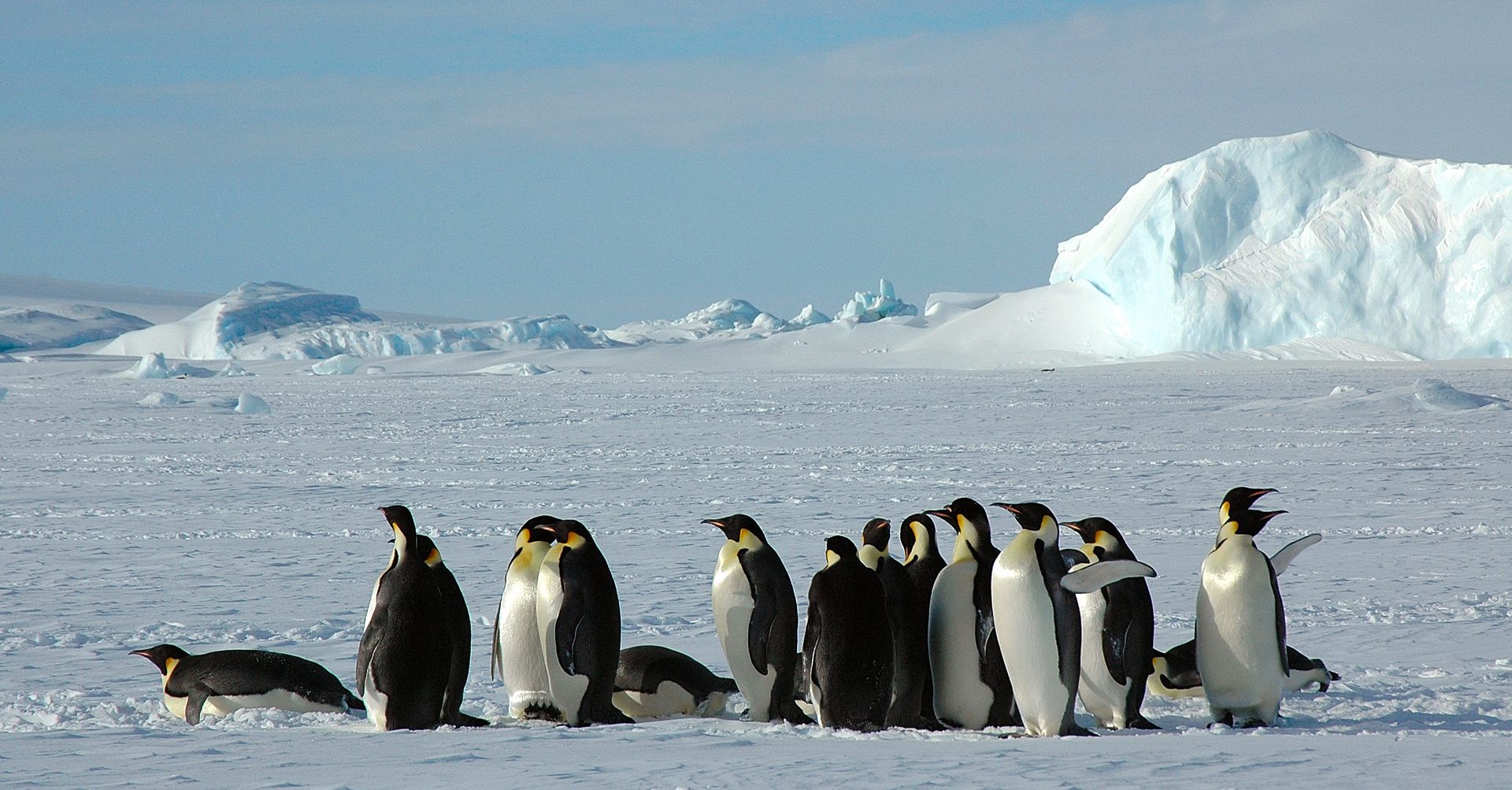
Emperor penguin
Where and how to see emperor penguins in the wild: why Antarctic Peninsula cruises miss them, which helicopter voyages and fly-in trips go to a colony and for how much, plus size, lifespan and conservation status.
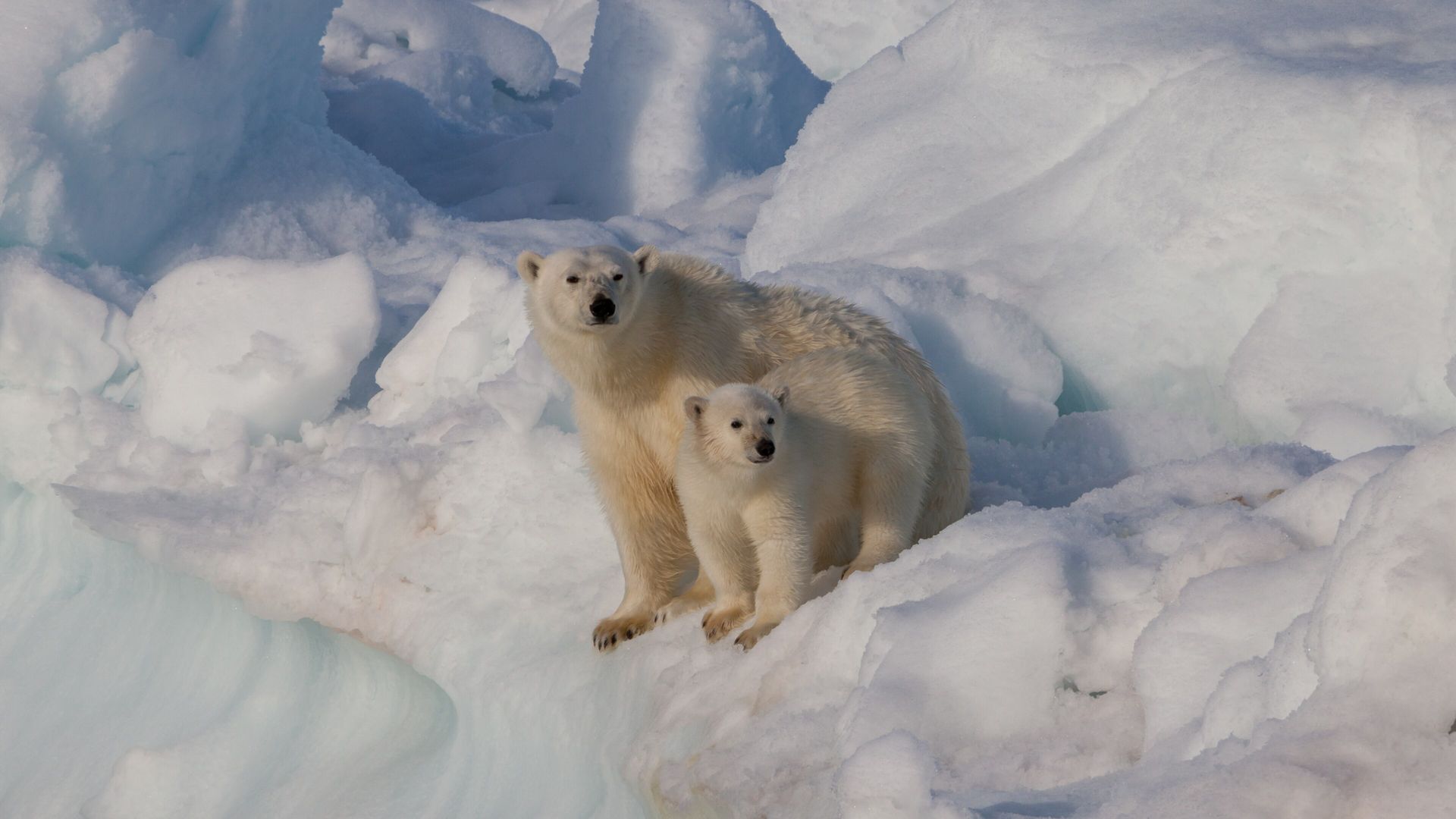
Polar bear
Where polar bears live and where to see them: Churchill in October and November, Svalbard by ship in summer, Kaktovik in Alaska, with odds, prices, the Svalbard distance and firearm rules, and why none live in Antarctica.
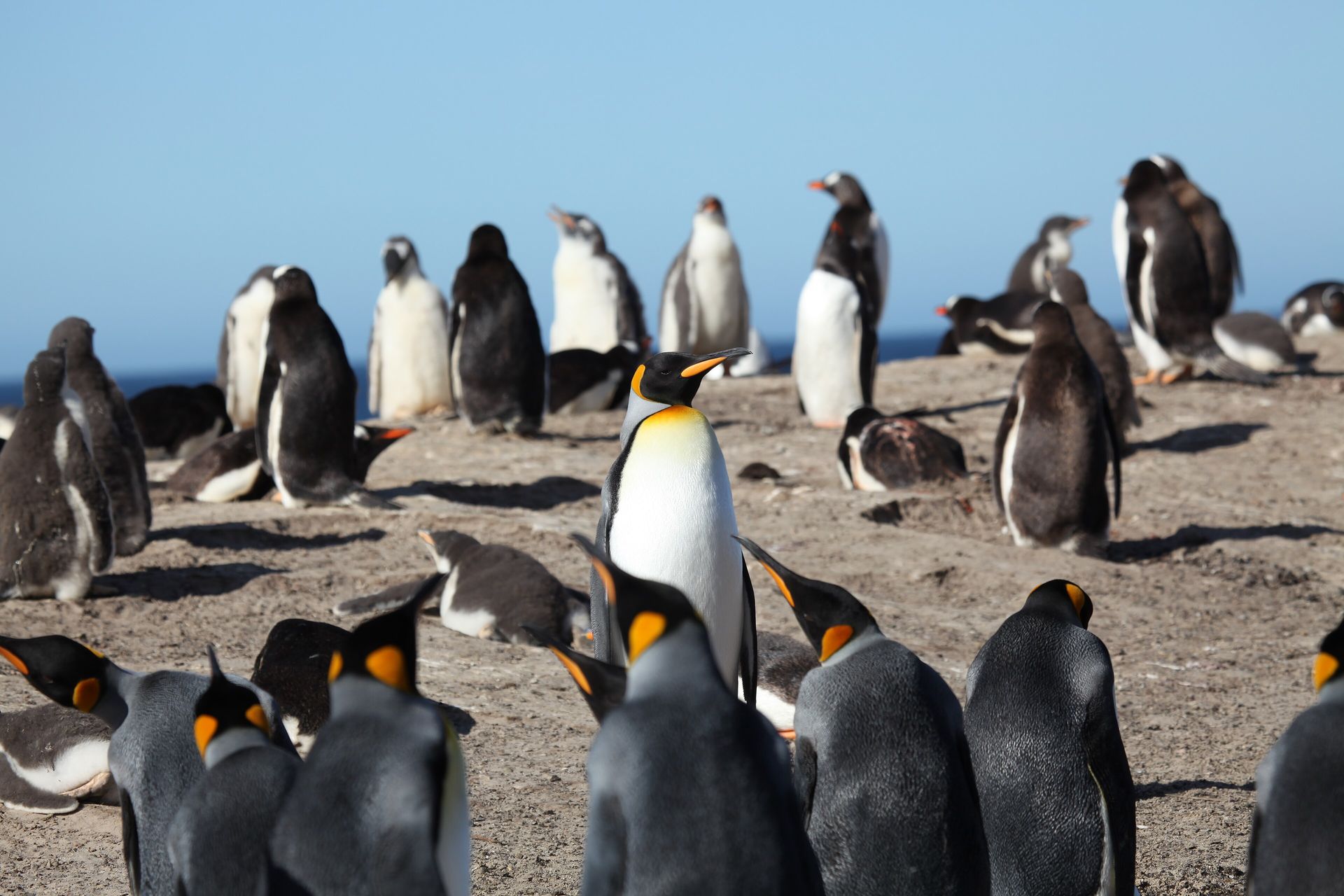
Penguin species
All 18 penguin species in one table, with scientific names, where each breeds, size and IUCN status, plus which ones you can see on an Antarctic, South Georgia, Falklands or Ross Sea trip.
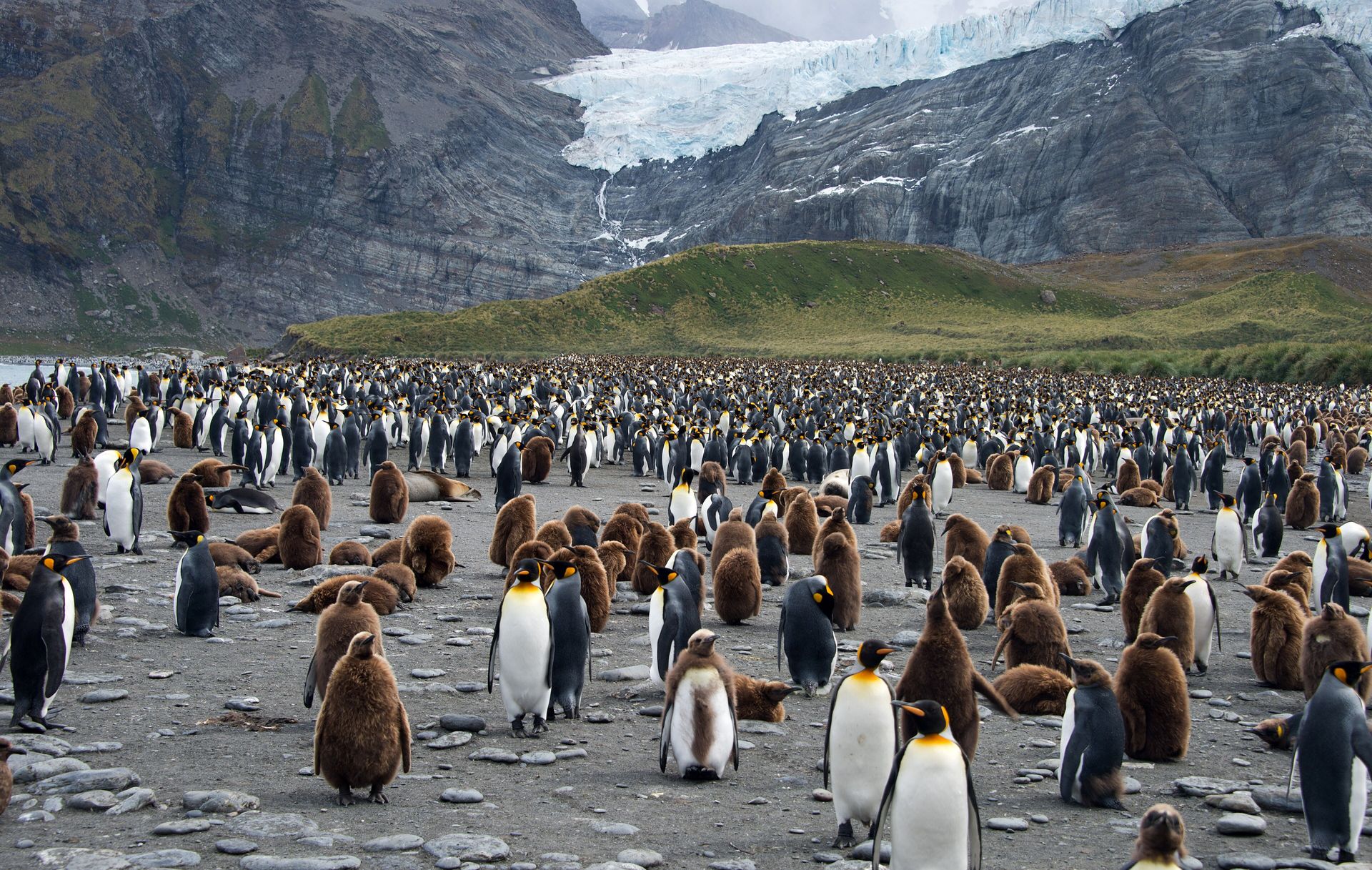
King penguin
King penguin facts for travelers: how many there are and where they breed, the South Georgia and Falklands landings that put you among them, the months for chicks, the voyages with the most time there, and the rules ashore.
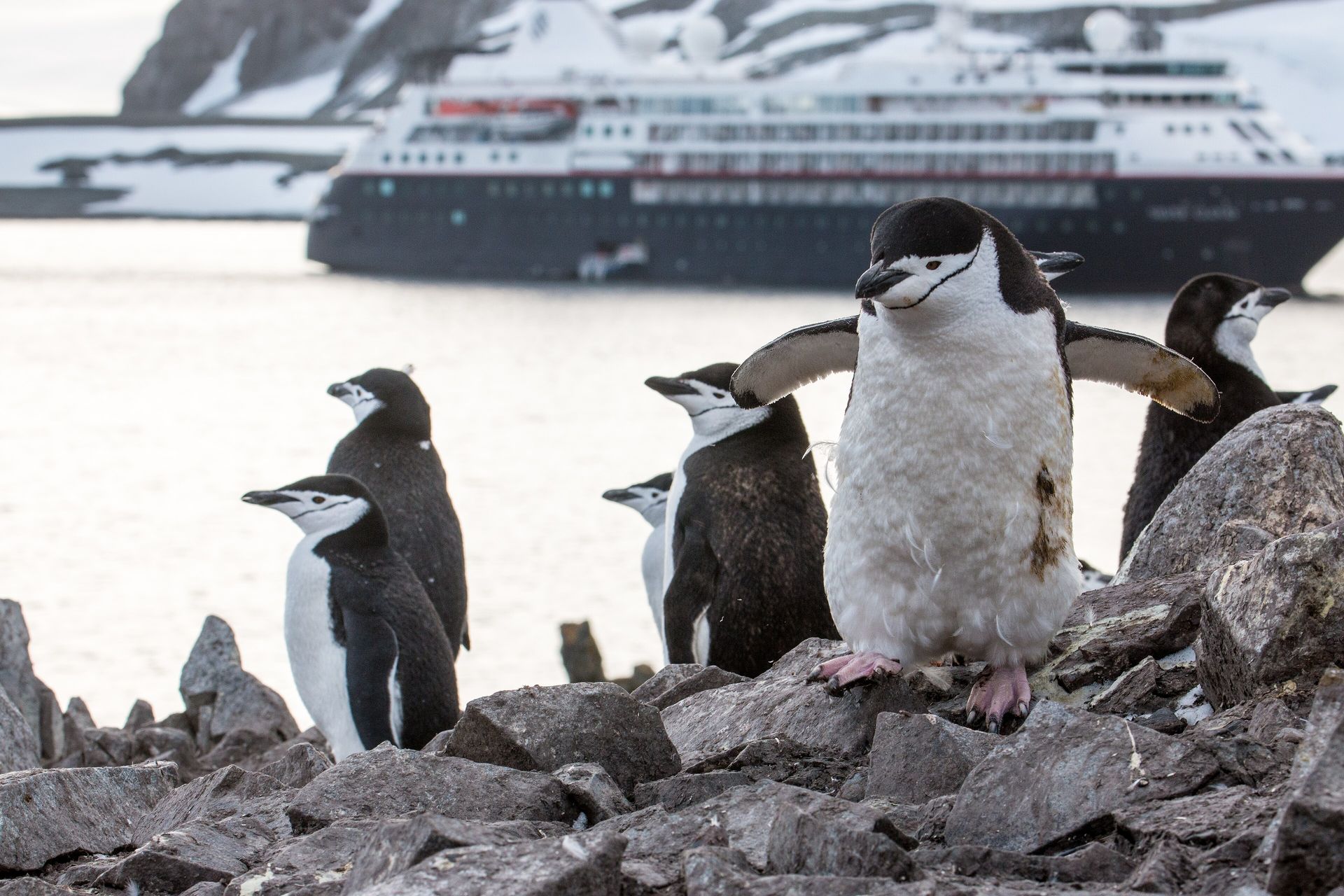
Chinstrap penguin
Chinstrap penguin facts for travelers: how many there are and where they breed, the South Shetland colonies ships land at and which ships may land, when the chicks hatch, the voyages that list them, and why numbers are falling.
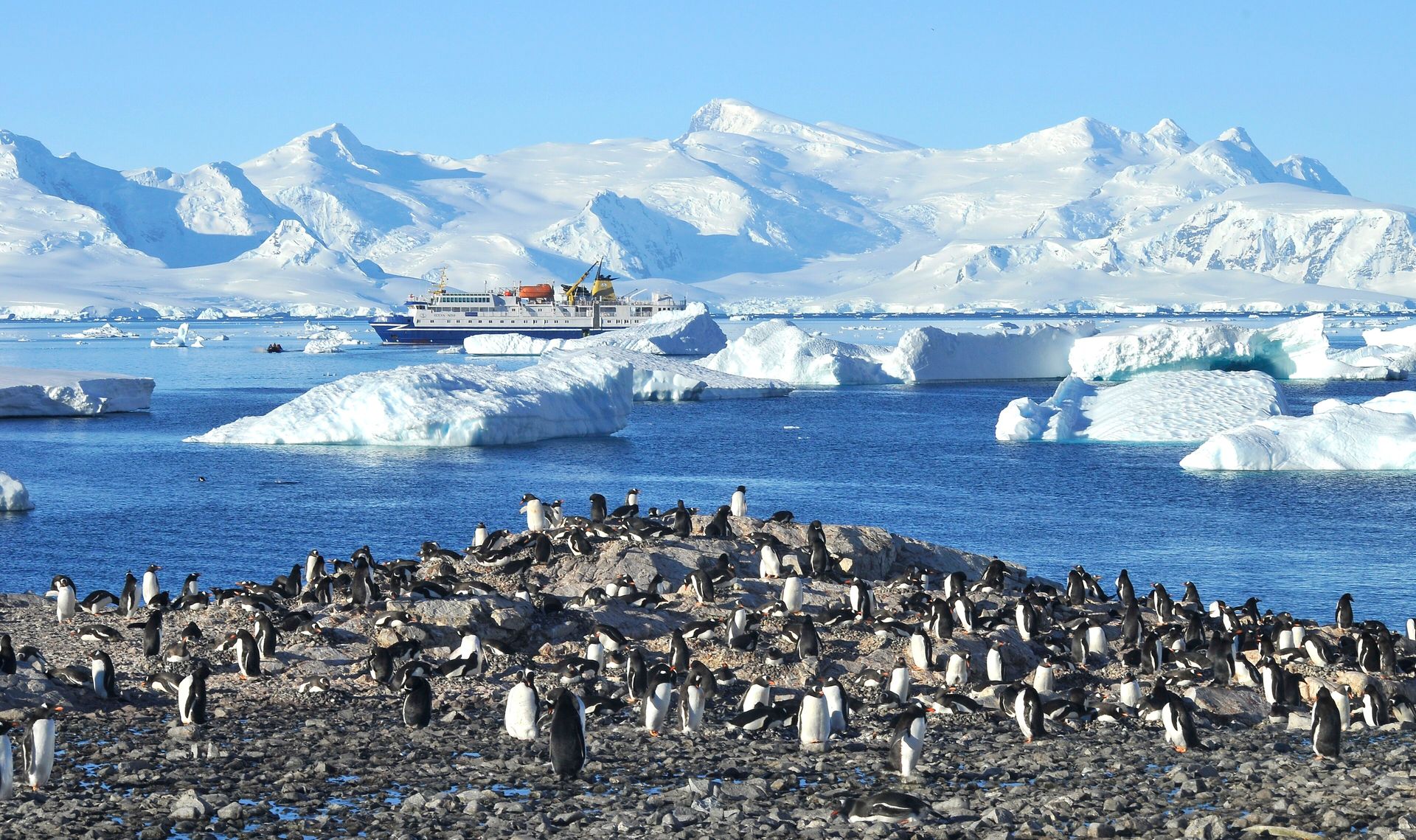
Gentoo penguin
Gentoo penguin facts for travelers: how many there are and where they breed, the Antarctic landings with the biggest colonies, when the chicks are out, the cheapest voyages that visit them, and why scientists now propose four species.
Sources
- 1.Antarctica - Whale watching | PLA32-27, Oceanwide Expeditions. Accessed October 14, 2026.
- 2.Antarctica's Whale Season (11 days), Polar Latitudes Expeditions. Accessed October 15, 2026.
- 3.Return of large fin whale feeding aggregations to historical whaling grounds in the Southern Ocean (Herr et al., 2022), Scientific Reports (Nature Portfolio). Accessed October 15, 2026.
- 4.Frequently asked questions, Government of South Georgia & the South Sandwich Islands. Accessed October 14, 2026.
- 5.Minke whale, Australian Antarctic Division (Australian Antarctic Program). Accessed October 15, 2026.
- 6.Antarctic wildlife, British Antarctic Survey. Accessed October 15, 2026.
- 7.Killer whale, Australian Antarctic Division (Australian Antarctic Program). Accessed October 15, 2026.
- 8.Killer Whale: Around the World - Antarctica, NOAA Southwest Fisheries Science Center (Robert L. Pitman, Whalewatcher 40(1), 2011). Accessed October 15, 2026.
- 9.Antarctic Marine Mammals: The World of Whales and Seals, Quark Expeditions. Accessed October 15, 2026.
- 10.Humpback whale (species page), NOAA Fisheries. Accessed October 15, 2026.
- 11.Intra-season variations in distribution and abundance of humpback whales in the West Antarctic Peninsula using cruise vessels as opportunistic platforms (Johannessen et al., 2022), Ecology and Evolution (via PubMed Central). Accessed October 14, 2026.
- 12.Killer whale (species page), NOAA Fisheries. Accessed October 15, 2026.
- 13.Fin whale (species page), NOAA Fisheries. Accessed October 15, 2026.
- 14.Blue whale (species page), NOAA Fisheries. Accessed October 15, 2026.
- 15.South Georgia blue whales five decades after the end of whaling (Calderan et al., 2020), Endangered Species Research 43: 359-373 (Inter-Research). Accessed October 15, 2026.
- 16.Blue whale, Australian Antarctic Division (Australian Antarctic Program). Accessed October 15, 2026.
- 17.Sei whale (species page), NOAA Fisheries. Accessed October 15, 2026.
- 18.Sei whale, Australian Antarctic Division (Australian Antarctic Program). Accessed October 15, 2026.
- 19.Southern right whale (species page), NOAA Fisheries. Accessed October 15, 2026.
- 20.Have whales returned to a historical hotspot of industrial whaling? The pattern of southern right whale recovery at South Georgia (Jackson et al., 2020), Endangered Species Research 43: 323-339 (Inter-Research). Accessed October 15, 2026.
- 21.South Georgia & Falklands Expedition Cruise (18 days, Santiago de Chile to Montevideo), HX Expeditions (Hurtigruten Expeditions). Accessed October 14, 2026.
- 22.Sperm whale (species page), NOAA Fisheries. Accessed October 15, 2026.
- 23.IUCN Red List categories for Antarctic whales, seals, seabirds and krill (IUCN Red List dataset on GBIF), IUCN (International Union for Conservation of Nature), published through GBIF. Accessed October 15, 2026.
- 24.Red List Status of Cetaceans (updated October 2025), IUCN SSC Cetacean Specialist Group. Accessed October 15, 2026.
- 25.Dates and Rates, Quark Expeditions. Accessed October 14, 2026.
- 26.Rates & Dates (all seasons, read 2026-10-15), Polar Latitudes Expeditions. Accessed October 15, 2026.
- 27.Dates & Rates: Antarctica & Arctic Cruises (m/v Ortelius and m/v Plancius tables, 2026-27 to 2027-28), Oceanwide Expeditions. Accessed October 15, 2026.
- 28.Sample Itinerary: 8 Days, Falklands Discovery, Falkland Islands Holidays. Accessed October 15, 2026.
- 29.Super-Aggregations of Krill and Humpback Whales in Wilhelmina Bay, Antarctic Peninsula (Nowacek et al., 2011), PLOS ONE. Accessed October 14, 2026.
- 30.Antarctic Penguins (public information leaflet, 2017), British Antarctic Survey (NERC). Accessed October 14, 2026.
- 31.Population (Abundance) Estimates, International Whaling Commission (IWC). Accessed October 15, 2026.
- 32.Return of the whales to South Georgia (news story, 20 February 2020), British Antarctic Survey. Accessed October 15, 2026.
- 33.Assessing the recovery of an Antarctic predator from historical exploitation (Zerbini et al., 2019), Royal Society Open Science. Accessed October 15, 2026.
- 34.Antarctica: Whale watching discovery and learning voyage, m/v Hondius, 17 to 27 March 2027 (HDS31-27), Oceanwide Expeditions. Accessed October 14, 2026.
- 35.Direct booking forms: cabin fares by departure (read 2026-10-15), Polar Latitudes Expeditions. Accessed October 15, 2026.
- 36.Best of Antarctica's Whale Season (12 days), Polar Latitudes Expeditions. Accessed October 15, 2026.
- 37.Spirit of Antarctica: Whale Migration (12 days, Ushuaia round trip): dates and cabin prices, Aurora Expeditions. Accessed October 14, 2026.
- 38.IAATO Marine Wildlife Watching Guidelines (Whales, Dolphins, Seals and Seabirds) for Vessel and Zodiac Operations (revised 2007), International Association of Antarctica Tour Operators (IAATO), attachment to ATCM XXX. Accessed October 15, 2026.
- 39.Terms and Conditions - Special Offers, Aurora Expeditions. Accessed October 14, 2026.